Key Laboratory of Molecular Biology on Infectious Disease, Ministry of Education, Chongqing Medical University, Chongqing, PR China.
State Key Laboratory of Respiratory Health and Multimorbidity, Key Laboratory of Pathogen Infection Prevention and Control (Peking Union Medical College), Ministry of Education, National Center of Technology Innovation for animal model, CAMS & PUMC, Beijing, PR China.
Nat Commun. 2024 Aug 13;15(1):6964. doi: 10.1038/s41467-024-51192-1.
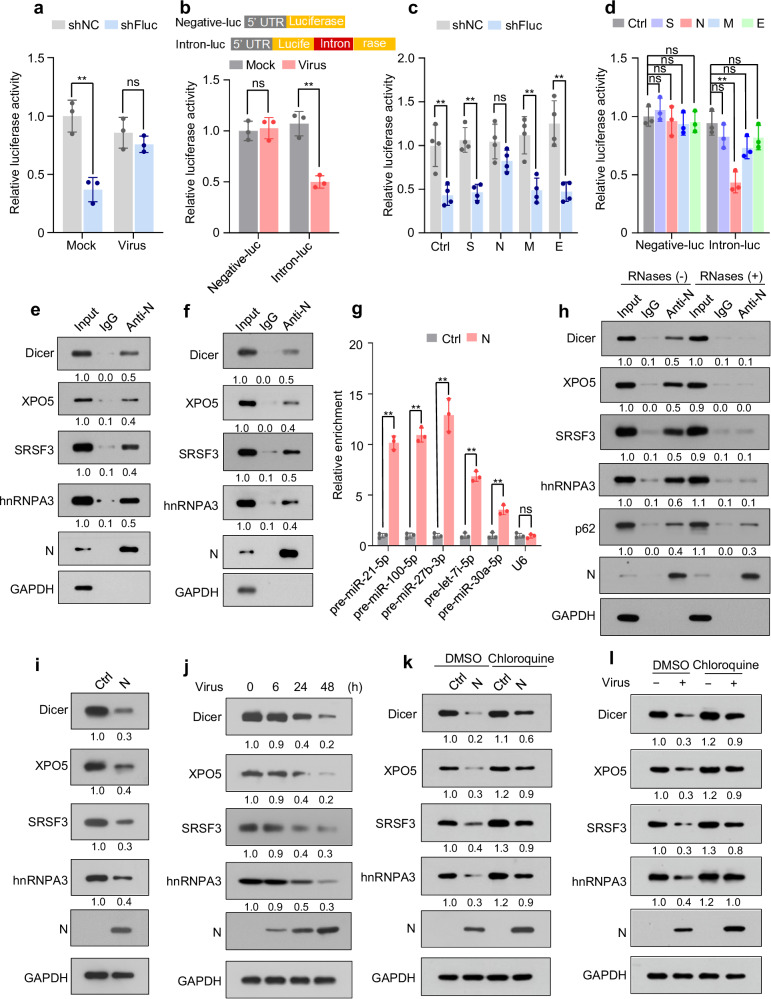
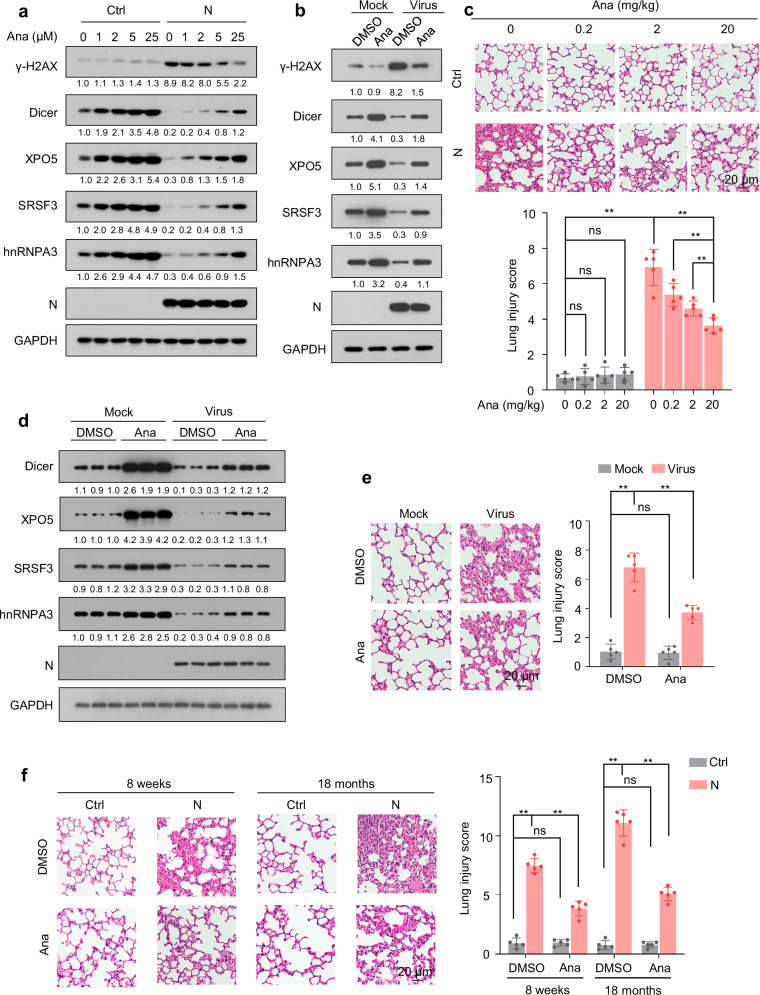
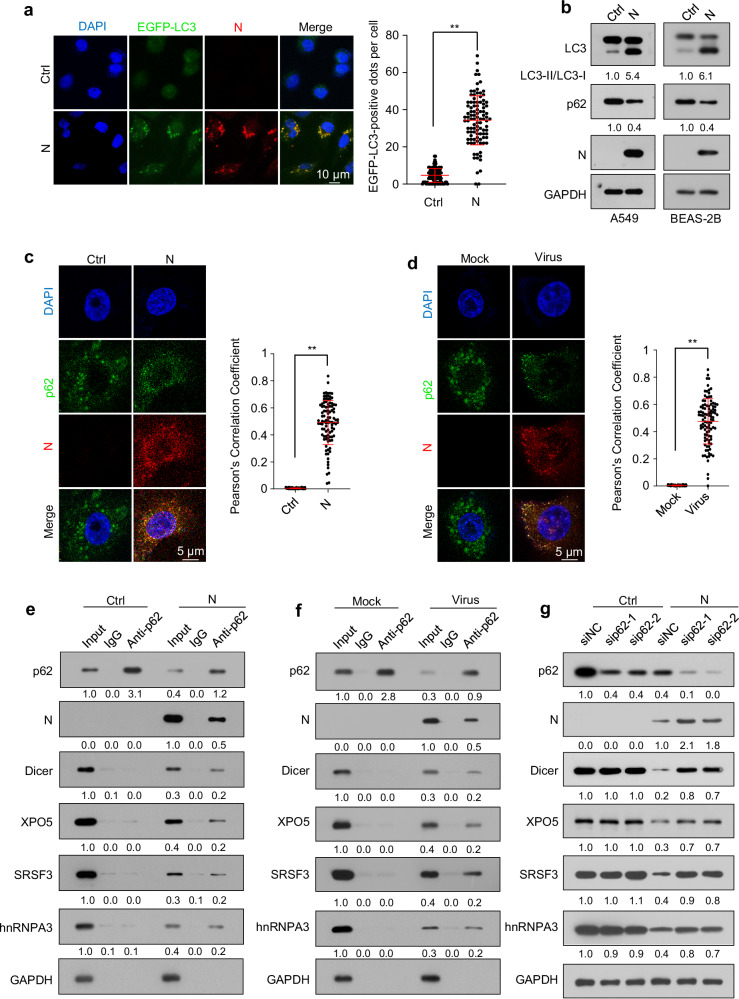
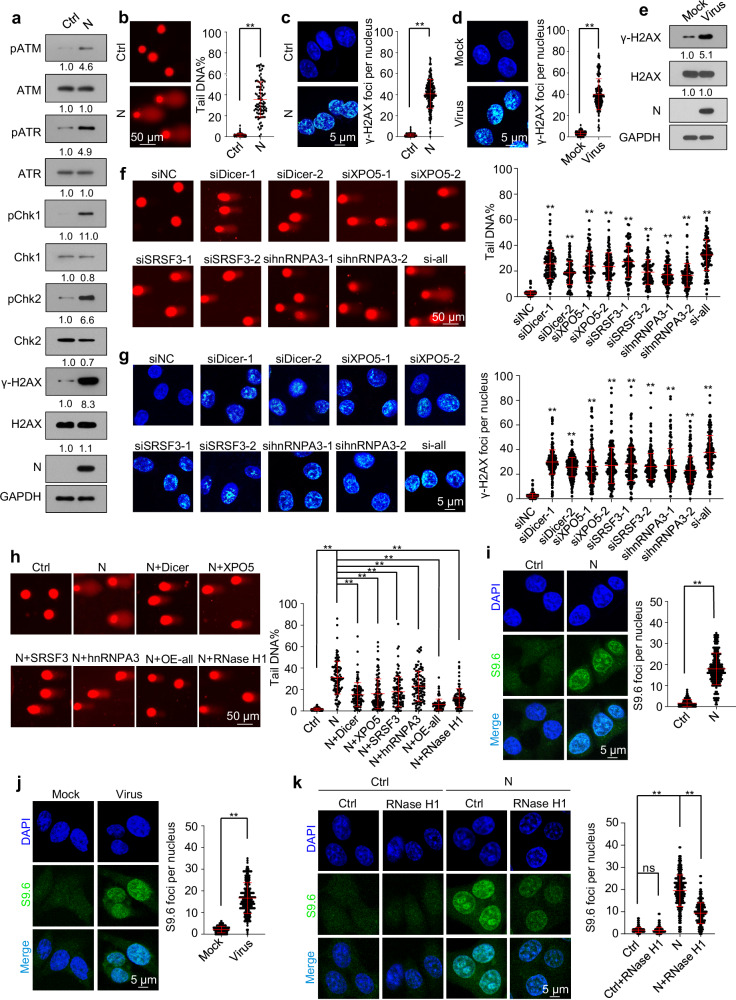
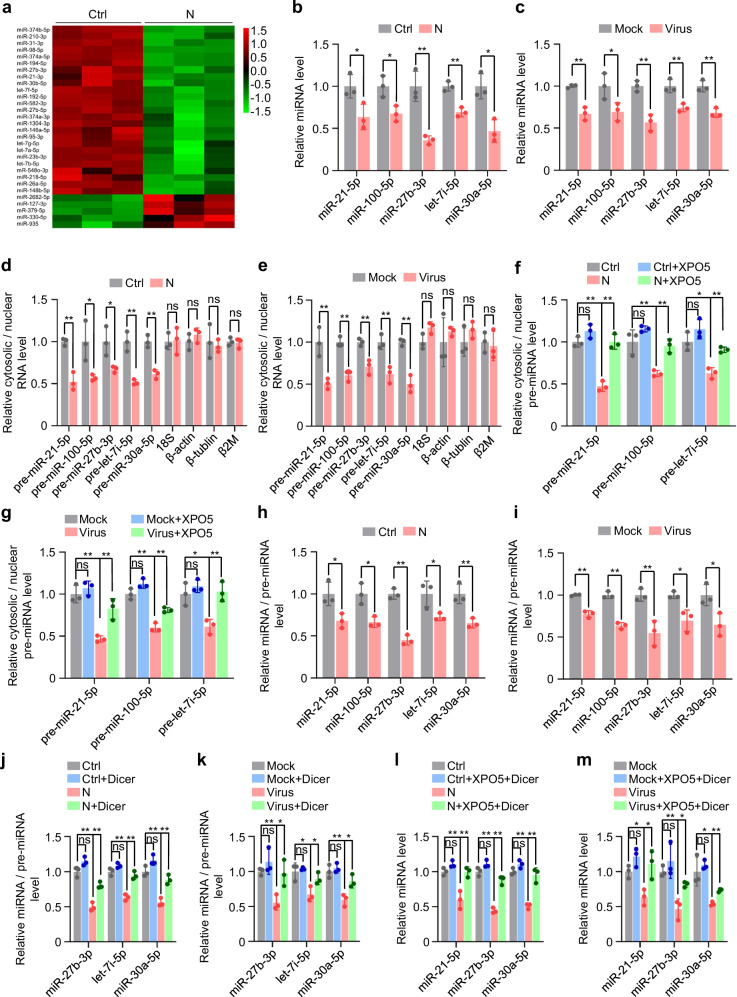
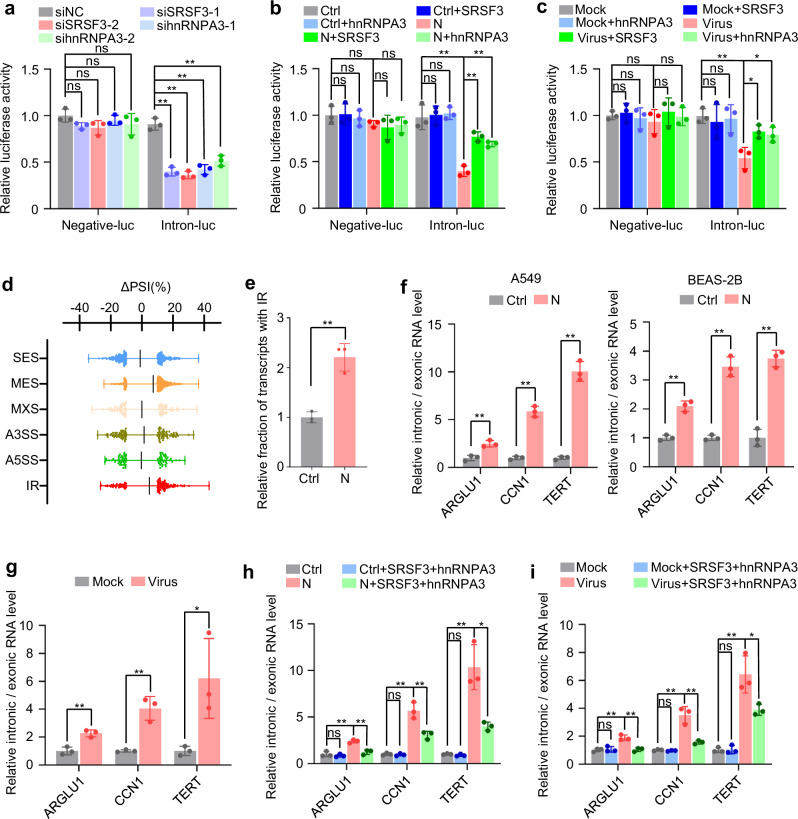
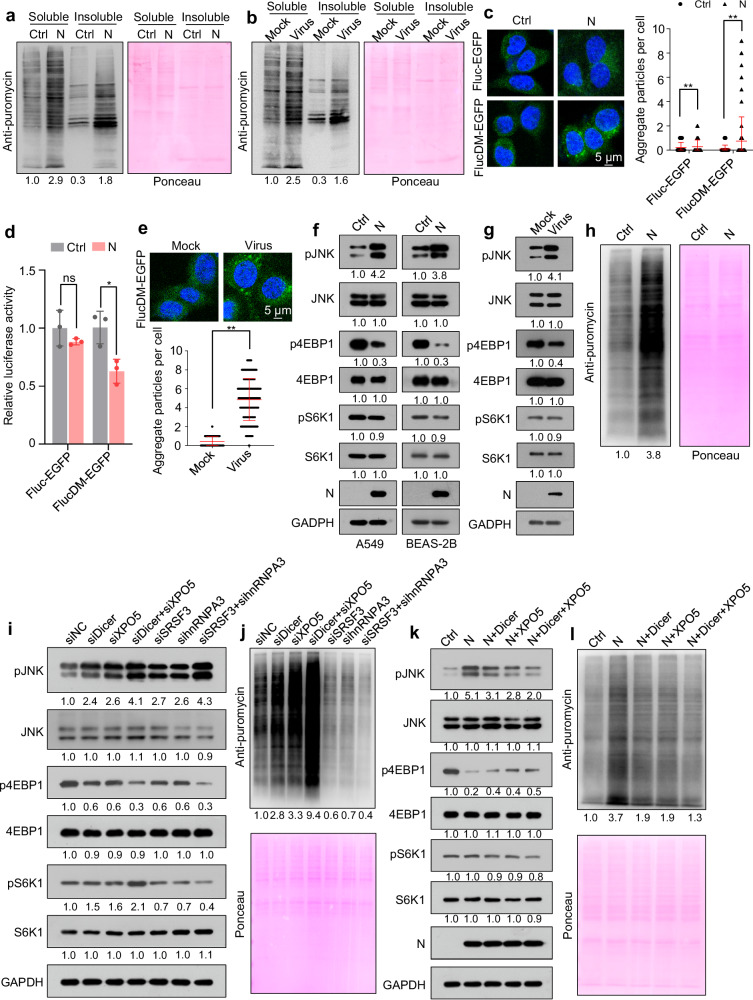
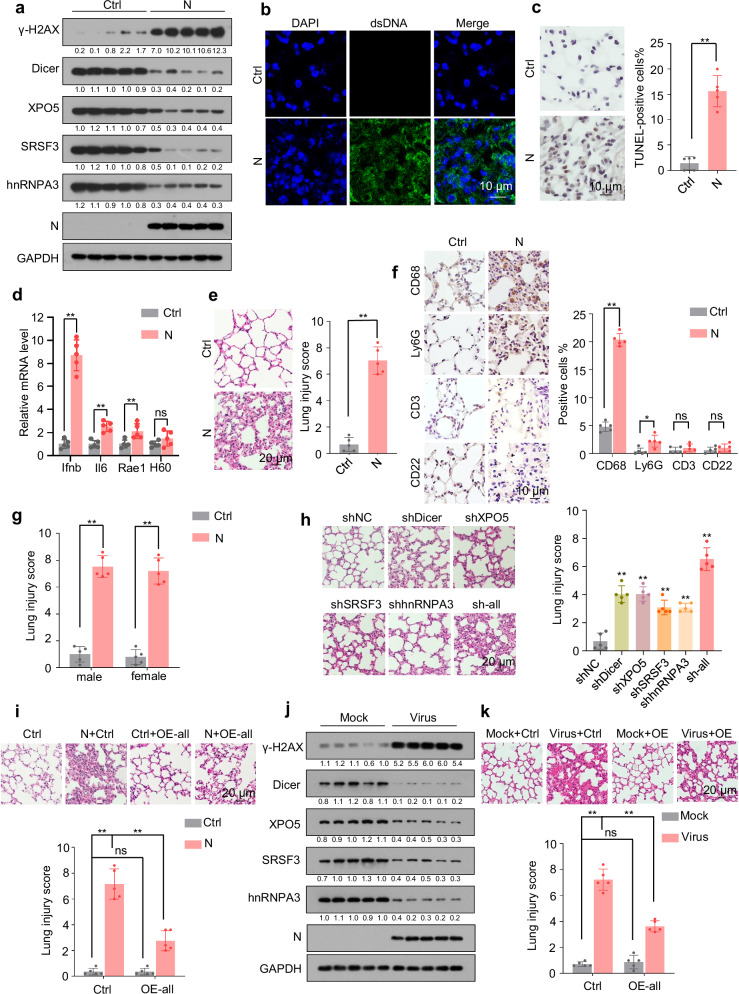
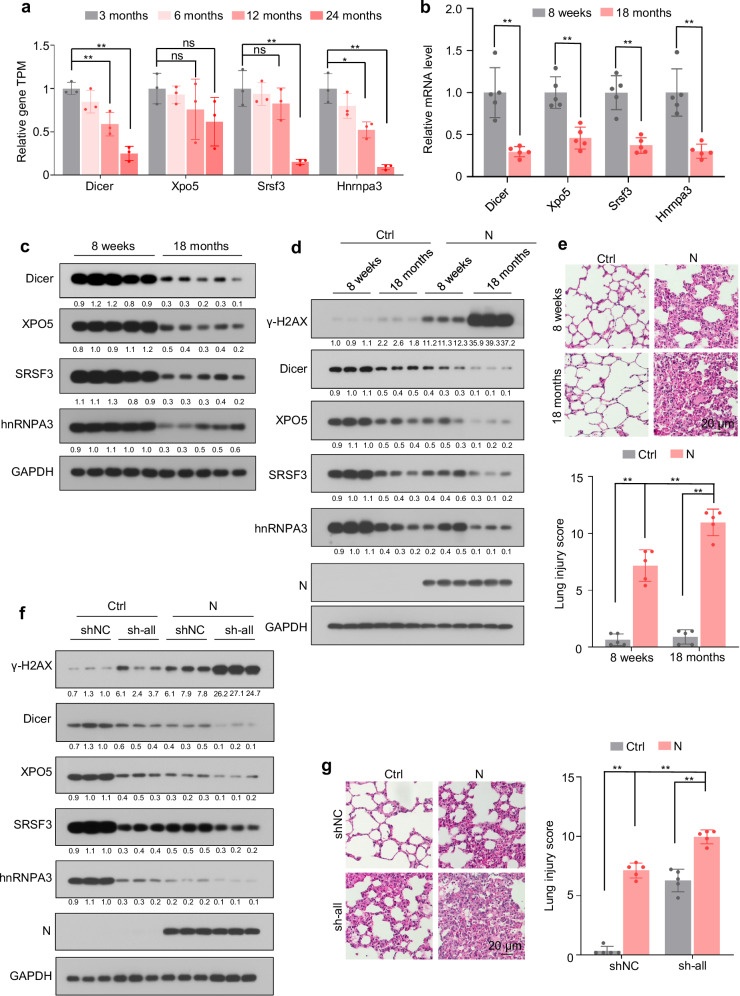
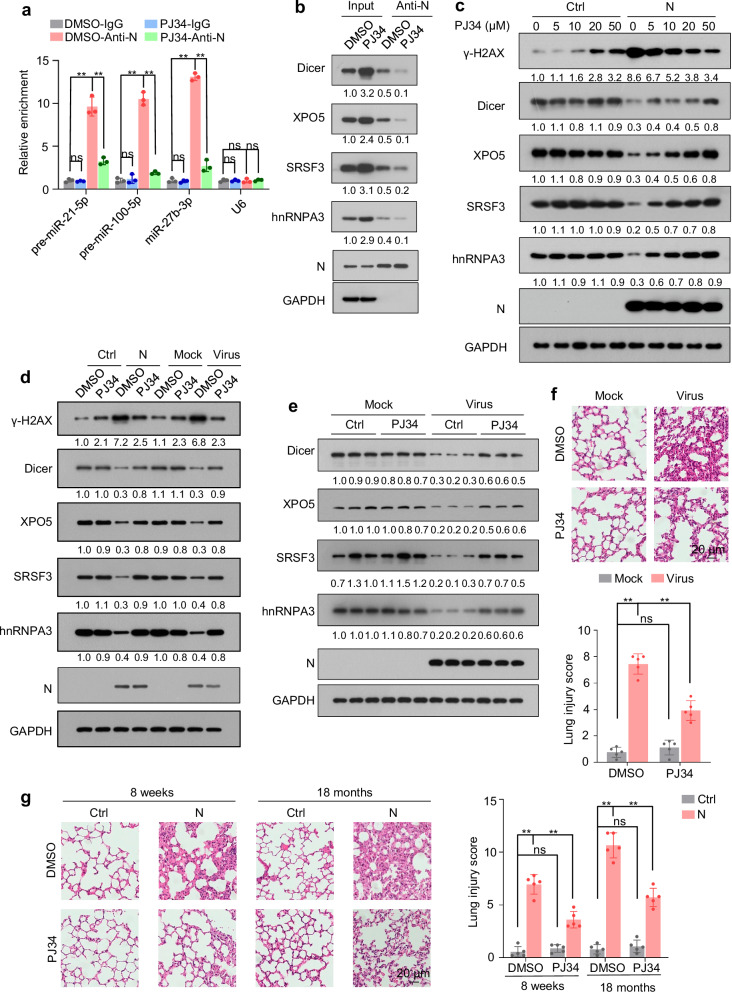
Though RNAi and RNA-splicing machineries are involved in regulating severe acute respiratory syndrome coronavirus 2 (SARS-CoV-2) replication, their precise roles in coronavirus disease 2019 (COVID-19) pathogenesis remain unclear. Herein, we show that decreased RNAi component (Dicer and XPO5) and splicing factor (SRSF3 and hnRNPA3) expression correlate with increased COVID-19 severity. SARS-CoV-2 N protein induces the autophagic degradation of Dicer, XPO5, SRSF3, and hnRNPA3, inhibiting miRNA biogenesis and RNA splicing and triggering DNA damage, proteotoxic stress, and pneumonia. Dicer, XPO5, SRSF3, and hnRNPA3 knockdown increases, while their overexpression decreases, N protein-induced pneumonia's severity. Older mice show lower expression of Dicer, XPO5, SRSF3, and hnRNPA3 in their lung tissues and exhibit more severe N protein-induced pneumonia than younger mice. PJ34, a poly(ADP-ribose) polymerase inhibitor, or anastrozole, an aromatase inhibitor, ameliorates N protein- or SARS-CoV-2-induced pneumonia by restoring Dicer, XPO5, SRSF3, and hnRNPA3 expression. These findings will aid in developing improved treatments for SARS-CoV-2-associated pneumonia.
尽管 RNAi 和 RNA 剪接机制参与调节严重急性呼吸综合征冠状病毒 2(SARS-CoV-2)复制,但它们在 2019 年冠状病毒病(COVID-19)发病机制中的确切作用仍不清楚。在此,我们表明,RNAi 成分(Dicer 和 XPO5)和剪接因子(SRSF3 和 hnRNPA3)表达的降低与 COVID-19 严重程度的增加相关。SARS-CoV-2 N 蛋白诱导 Dicer、XPO5、SRSF3 和 hnRNPA3 的自噬降解,抑制 miRNA 的生物发生和 RNA 剪接,并引发 DNA 损伤、蛋白毒性应激和肺炎。Dicer、XPO5、SRSF3 和 hnRNPA3 的敲低会增加,而过表达则会减少 N 蛋白诱导的肺炎的严重程度。老年小鼠肺组织中 Dicer、XPO5、SRSF3 和 hnRNPA3 的表达水平较低,并且比年轻小鼠更容易发生 N 蛋白诱导的肺炎。多聚(ADP-核糖)聚合酶抑制剂 PJ34 或芳香酶抑制剂阿那曲唑通过恢复 Dicer、XPO5、SRSF3 和 hnRNPA3 的表达来改善 N 蛋白或 SARS-CoV-2 诱导的肺炎。这些发现将有助于开发治疗 SARS-CoV-2 相关肺炎的新方法。