Department of Orthopaedic Surgery, Herlev and Gentofte Hospital, Copenhagen University Hospital, Denmark
Department of Orthopaedic Surgery, Herlev and Gentofte Hospital, Copenhagen University Hospital, Denmark.
Acta Orthop. 2024 Aug 15;95:433-439. doi: 10.2340/17453674.2024.41090.
Several studies from the United States report an increased risk of prolonged opioid use after shoulder replacement. We aimed to determine the incidence and risk factors of prolonged opioid use after elective shoulder replacement in a nationwide Danish population.
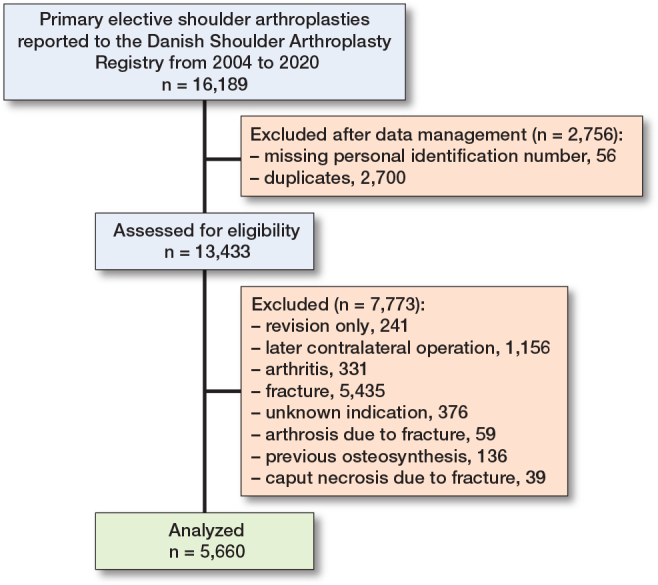
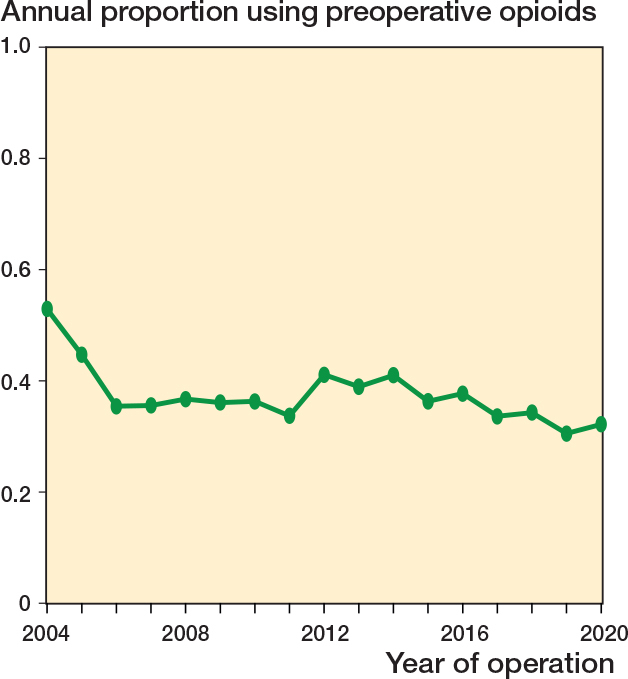
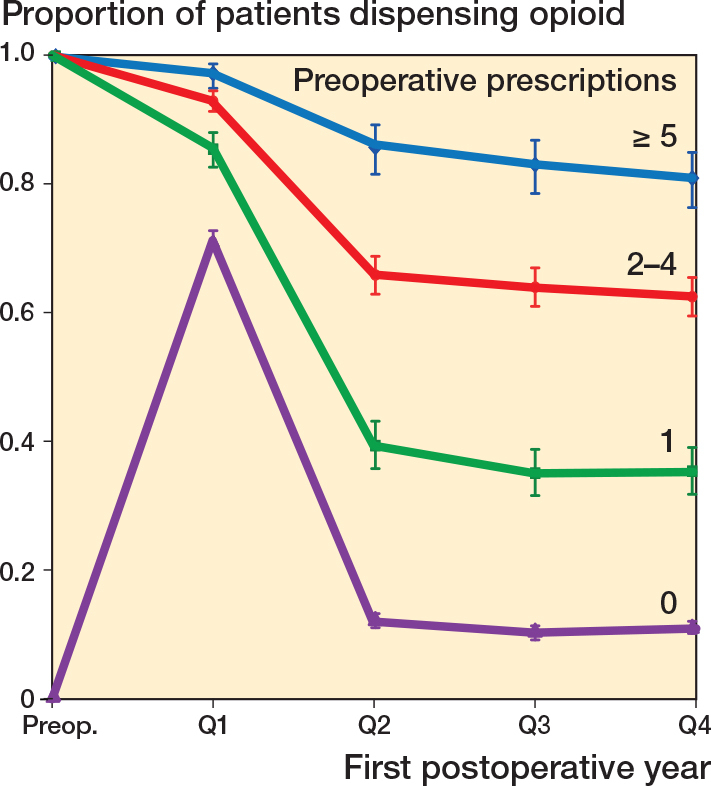
All primary elective shoulder arthroplasties reported to the Danish Shoulder Arthroplasty Registry (DSR) from 2004 to 2020 were screened for eligibility. Data on potential risk factors was retrieved from the DSR and the National Danish Patient Registry while data on medication was retrieved from the Danish National Health Service Prescription Database. Prolonged opioid use was defined as 1 or more dispensed prescriptions on and 90 days after date of surgery (Q1) and subsequently 1 or more dispensed prescriptions 91-180 days after surgery (Q2). Preoperative opioid use was defined as 1 or more dispensed prescriptions 90 days before surgery. Logistic regression models were used to estimate risk factors for prolonged opioid use.
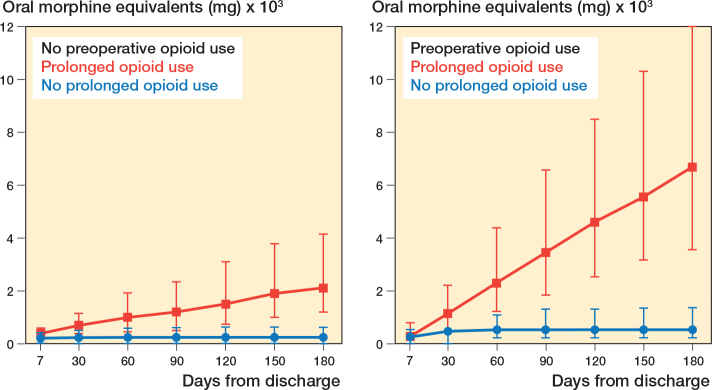
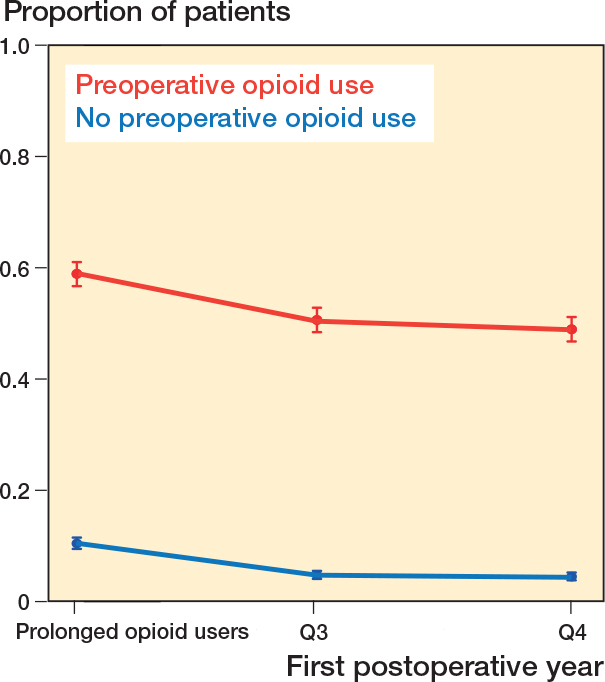
We included 5,660 patients. Postoperatively 1,584 (28%) patients were dispensed 1 or more prescriptions in Q1 and Q2 and were classified as prolonged opioid users. Among the 2,037 preoperative opioid users and the 3,623 non-opioid users, 1,201 (59%) and 383 (11%) respectively were classified as prolonged users. Preoperative opioid use, female sex, alcohol abuse, previous surgery, high Charlson Comorbidity index, and preoperative use of either antidepressants, antipsychotics, or benzodiazepines were associated with increased risk of prolonged opioid use.
The incidence of prolonged opioid use was 28%. Preoperative use of opioids was the strongest risk factor for prolonged opioid use, but several other risk factors were identified for prolonged opioid use.
美国的几项研究报告称,肩部置换术后延长使用阿片类药物的风险增加。我们旨在确定在丹麦全国范围内,选择行肩部置换术后延长使用阿片类药物的发生率和风险因素。
从 2004 年至 2020 年,对丹麦肩部置换术登记处(DSR)报告的所有原发性选择性肩部关节置换术进行筛选,以确定其是否符合入选标准。从 DSR 和丹麦国家患者登记处检索潜在风险因素的数据,而从丹麦国家卫生服务处方数据库检索药物使用数据。延长阿片类药物使用定义为在手术日期后 90 天内(Q1)和随后的 91-180 天内(Q2)开出 1 个或多个处方。术前阿片类药物使用定义为手术前 90 天内开出 1 个或多个处方。使用逻辑回归模型来估计延长阿片类药物使用的风险因素。
我们纳入了 5660 名患者。术后 1584 名(28%)患者在 Q1 和 Q2 开出了 1 个或多个处方,并被归类为延长阿片类药物使用者。在 2037 名术前阿片类药物使用者和 3623 名非阿片类药物使用者中,分别有 1201 名(59%)和 383 名(11%)被归类为延长使用者。术前阿片类药物使用、女性、酒精滥用、既往手术、高 Charlson 合并症指数以及术前使用抗抑郁药、抗精神病药或苯二氮䓬类药物与延长阿片类药物使用的风险增加相关。
延长阿片类药物使用的发生率为 28%。术前使用阿片类药物是延长阿片类药物使用的最强风险因素,但也确定了其他几个延长阿片类药物使用的风险因素。