Department of Biotechnology and Biomedicine, Technical University of Denmark, Lyngby, Denmark.
Department of Pharmacology, University of Oslo, Oslo, Norway; Department of Immunology, Oslo University Hospital Rikshospitalet, Oslo, Norway; Precision Immunotherapy Alliance (PRIMA), University of Oslo, Oslo, Norway.
Structure. 2024 Sep 5;32(9):1404-1418.e7. doi: 10.1016/j.str.2024.07.014. Epub 2024 Aug 14.
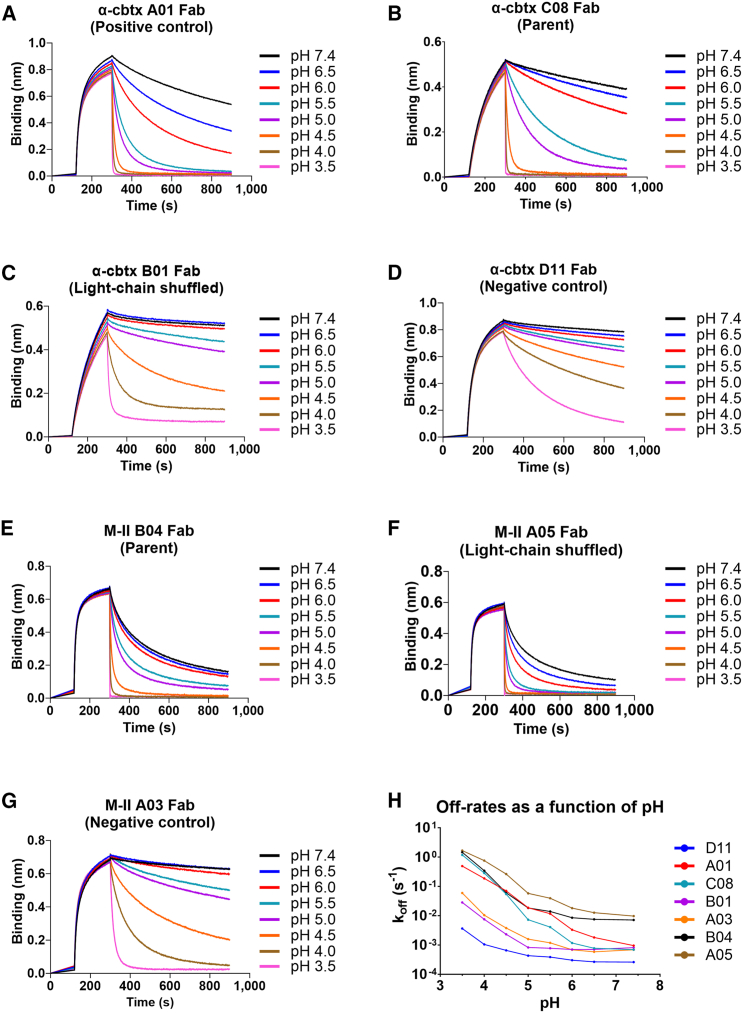
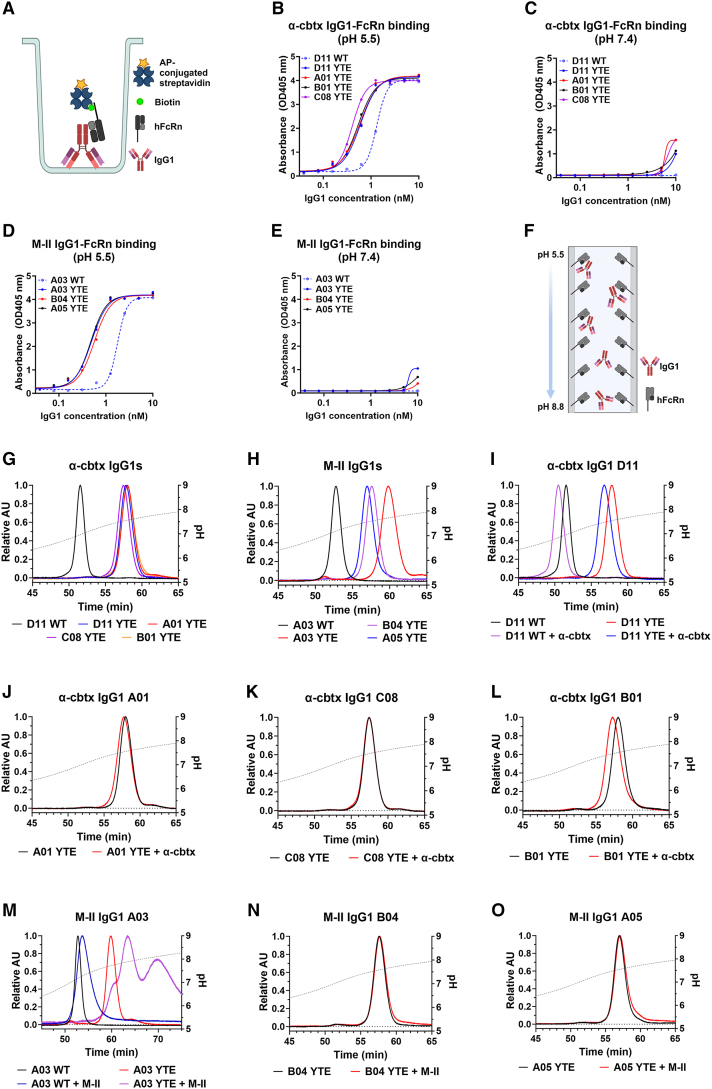
Immunoglobulin G (IgG) antibodies that bind their cognate antigen in a pH-dependent manner (acid-switched antibodies) can release their bound antigen for degradation in the acidic environment of endosomes, while the IgGs are rescued by the neonatal Fc receptor (FcRn). Thus, such IgGs can neutralize multiple antigens over time and therefore be used at lower doses than their non-pH-responsive counterparts. Here, we show that light-chain shuffling combined with phage display technology can be used to discover IgG1 antibodies with increased pH-dependent antigen binding properties, using the snake venom toxins, myotoxin II and α-cobratoxin, as examples. We reveal differences in how the selected IgG1s engage their antigens and human FcRn and show how these differences translate into distinct cellular handling properties related to their pH-dependent antigen binding phenotypes and Fc-engineering for improved FcRn binding. Our study showcases the complexity of engineering pH-dependent antigen binding IgG1s and demonstrates the effects on cellular antibody-antigen recycling.
免疫球蛋白 G(IgG)抗体以依赖 pH 的方式结合其同源抗原(酸切换抗体),可以在内涵体的酸性环境中将其结合的抗原释放出来进行降解,而 IgG 则被新生 Fc 受体(FcRn)回收。因此,此类 IgG 可以随着时间的推移中和多种抗原,因此可以以低于其非 pH 响应对应物的剂量使用。在这里,我们展示了可以使用轻链改组结合噬菌体展示技术来发现具有增强的依赖 pH 的抗原结合特性的 IgG1 抗体,以蛇毒毒素 myotoxin II 和α-cobratoxin 为例。我们揭示了所选 IgG1 与抗原和人 FcRn 结合的差异,并展示了这些差异如何转化为与 pH 依赖性抗原结合表型相关的不同细胞处理特性,以及为改善 FcRn 结合而进行的 Fc 工程。我们的研究展示了工程 pH 依赖性抗原结合 IgG1 的复杂性,并证明了对细胞抗体-抗原再循环的影响。