Antimicrobial Resistance Division, WHO, Geneva, Switzerland.
Antimicrobial Resistance Division, WHO, Geneva, Switzerland.
Lancet Microbe. 2024 Nov;5(11):100902. doi: 10.1016/S2666-5247(24)00134-4. Epub 2024 Aug 13.
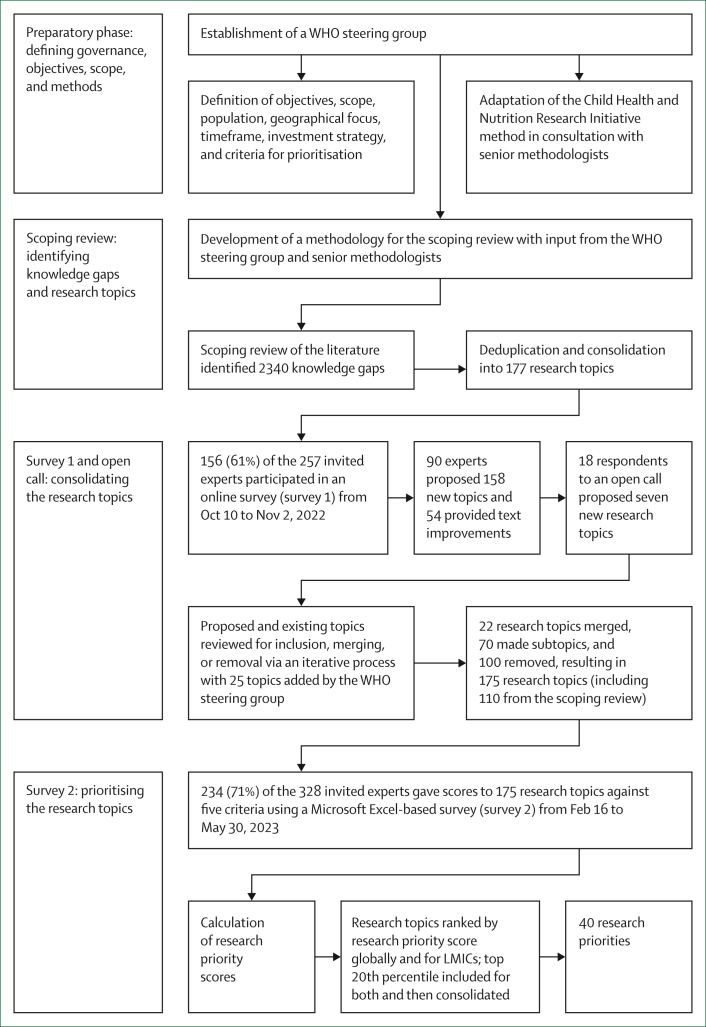
The WHO research agenda for antimicrobial resistance (AMR) in human health has identified 40 research priorities to be addressed by the year 2030. These priorities focus on bacterial and fungal pathogens of crucial importance in addressing AMR, including drug-resistant pathogens causing tuberculosis. These research priorities encompass the entire people-centred journey, covering prevention, diagnosis, and treatment of antimicrobial-resistant infections, in addition to addressing the overarching knowledge gaps in AMR epidemiology, burden and drivers, policies and regulations, and awareness and education. The research priorities were identified through a multistage process, starting with a comprehensive scoping review of knowledge gaps, with expert inputs gathered through a survey and open call. The priority setting involved a rigorous modified Child Health and Nutrition Research Initiative approach, ensuring global representation and applicability of the findings. The ultimate goal of this research agenda is to encourage research and investment in the generation of evidence to better understand AMR dynamics and facilitate policy translation for reducing the burden and consequences of AMR.
世界卫生组织(WHO)在人类健康领域的抗微生物药物耐药性(AMR)研究议程确定了 40 项优先研究事项,计划在 2030 年前完成。这些优先事项侧重于对抗微生物药物耐药性具有重要意义的细菌和真菌病原体,包括导致结核病的耐药病原体。这些研究优先事项涵盖了整个以人为本的旅程,包括预防、诊断和治疗抗微生物药物耐药性感染,此外还解决了 AMR 流行病学、负担和驱动因素、政策和法规以及意识和教育方面的知识空白。这些优先事项是通过一个多阶段的过程确定的,首先是对知识空白进行全面的范围审查,并通过调查和公开呼吁收集专家意见。优先事项的确定涉及严格的修改后的儿童健康和营养研究倡议方法,以确保全球代表性和研究结果的适用性。该研究议程的最终目标是鼓励开展研究和投资,以生成更好地了解 AMR 动态的证据,并促进政策转化,以减轻 AMR 的负担和后果。