Mummey Hannah M, Elison Weston, Korgaonkar Katha, Elgamal Ruth M, Kudtarkar Parul, Griffin Emily, Benaglio Paola, Miller Michael, Jha Alokkumar, Fox Jocelyn E Manning, McCarthy Mark I, Preissl Sebastian, Gloyn Anna L, MacDonald Patrick E, Gaulton Kyle J
Bioinformatics and Systems Biology Program, University of California San Diego, La Jolla CA.
Biomedical Sciences Program, University of California San Diego, La Jolla CA, USA.
bioRxiv. 2024 Aug 6:2024.08.03.606460. doi: 10.1101/2024.08.03.606460.
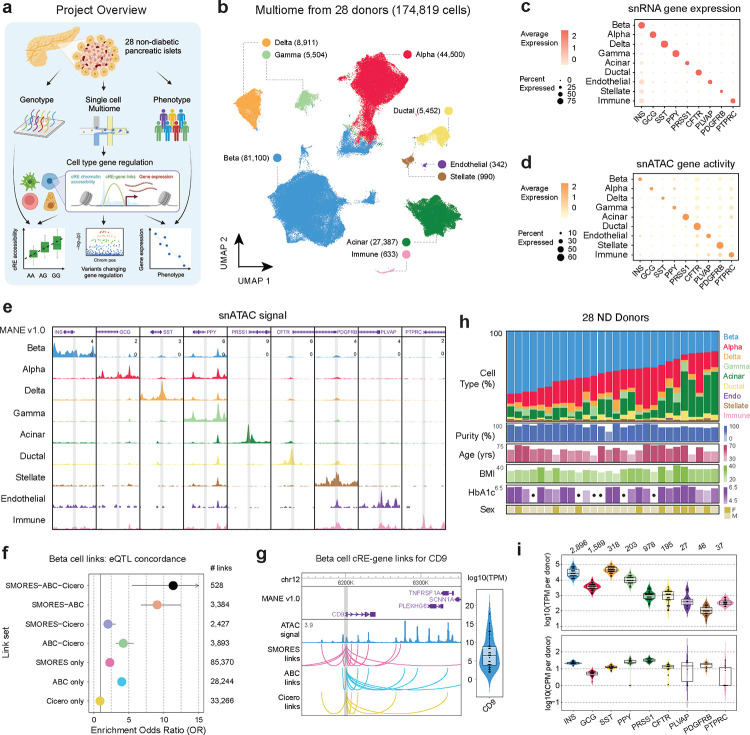
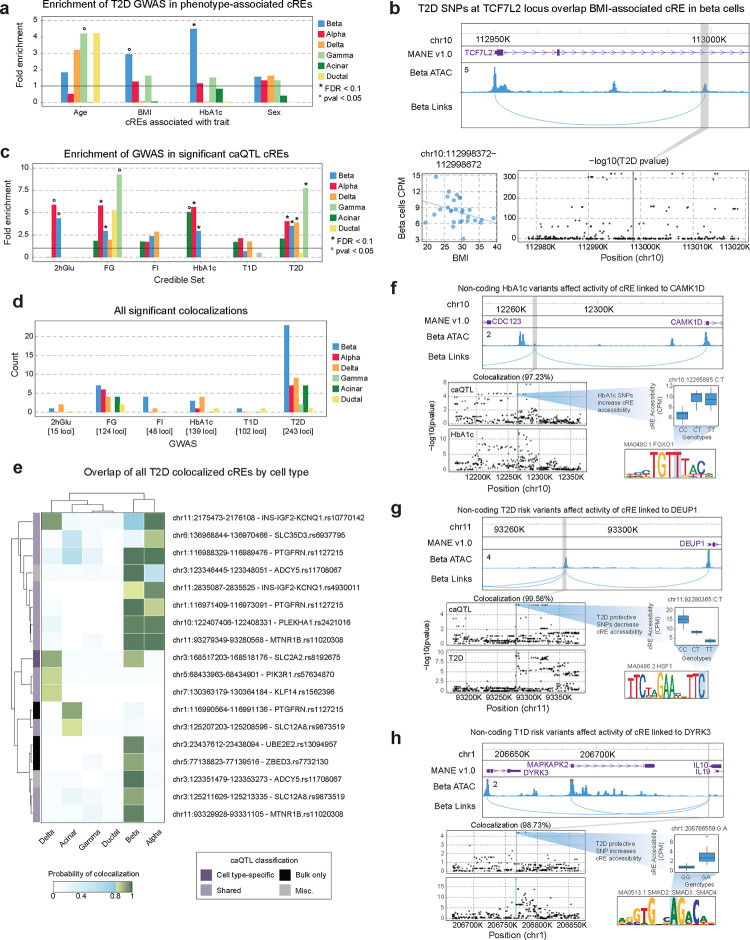
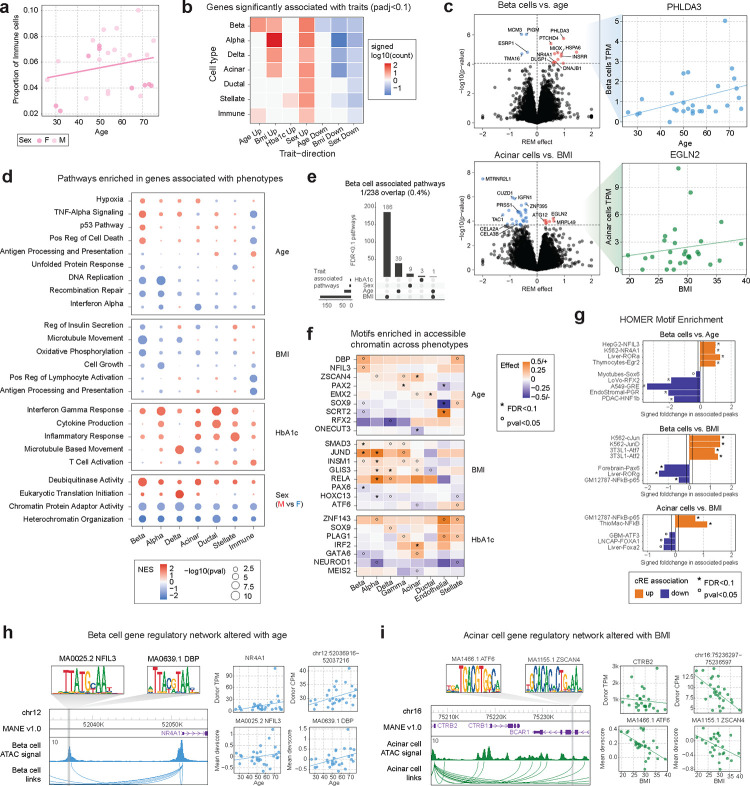
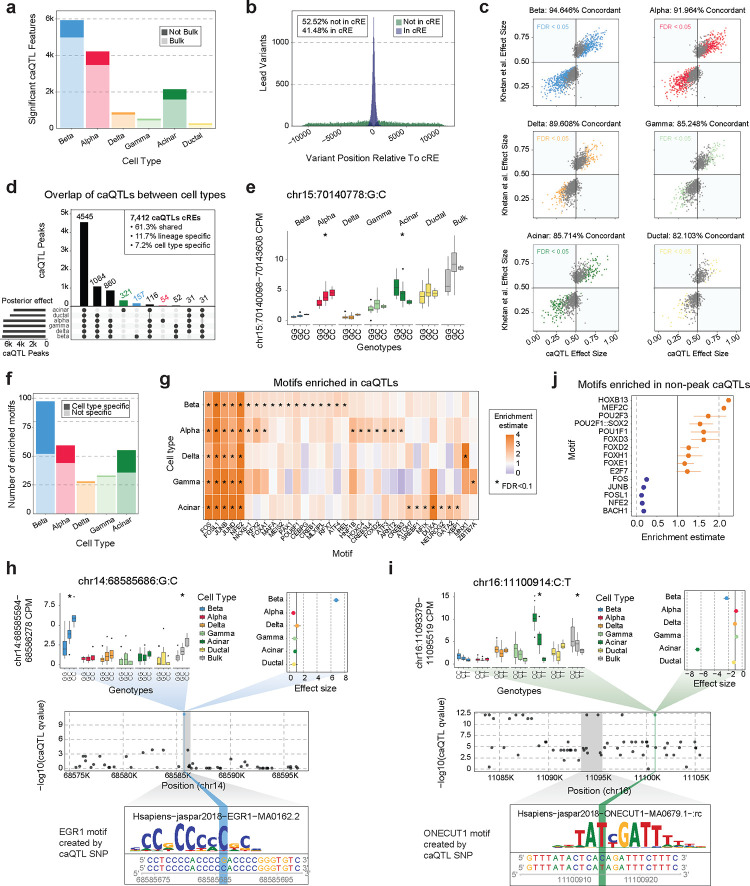
Physiological variability in pancreatic cell type gene regulation and the impact on diabetes risk is poorly understood. In this study we mapped gene regulation in pancreatic cell types using single cell multiomic (joint RNA-seq and ATAC-seq) profiling in 28 non-diabetic donors in combination with single cell data from 35 non-diabetic donors in the Human Pancreas Analysis Program. We identified widespread associations with age, sex, BMI, and HbA1c, where gene regulatory responses were highly cell type- and phenotype-specific. In beta cells, donor age associated with hypoxia, apoptosis, unfolded protein response, and external signal-dependent transcriptional regulators, while HbA1c associated with inflammatory responses and gender with chromatin organization. We identified 10.8K loci where genetic variants were QTLs for regulatory element (cRE) accessibility, including 20% with lineage- or cell type-specific effects which disrupted distinct transcription factor motifs. Type 2 diabetes and glycemic trait associated variants were enriched in both phenotype- and QTL-associated beta cell cREs, whereas type 1 diabetes showed limited enrichment. Variants at 226 diabetes and glycemic trait loci were QTLs in beta and other cell types, including 40 that were statistically colocalized, and annotating target genes of colocalized QTLs revealed genes with putatively novel roles in disease. Our findings reveal diverse responses of pancreatic cell types to phenotype and genotype in physiology, and identify pathways, networks, and genes through which physiology impacts diabetes risk.
胰腺细胞类型基因调控中的生理变异性及其对糖尿病风险的影响目前尚不清楚。在本研究中,我们结合人类胰腺分析计划中35名非糖尿病供体的单细胞数据,对28名非糖尿病供体进行单细胞多组学(联合RNA测序和ATAC测序)分析,绘制了胰腺细胞类型中的基因调控图谱。我们发现了与年龄、性别、体重指数和糖化血红蛋白(HbA1c)的广泛关联,其中基因调控反应具有高度的细胞类型和表型特异性。在β细胞中,供体年龄与缺氧、细胞凋亡、未折叠蛋白反应和外部信号依赖性转录调节因子相关,而HbA1c与炎症反应相关,性别与染色质组织相关。我们确定了10.8K个位点,其中遗传变异是调控元件(cRE)可及性的数量性状基因座(QTL),包括20%具有谱系或细胞类型特异性效应的位点,这些位点破坏了不同的转录因子基序。2型糖尿病和血糖性状相关变异在表型和QTL相关的β细胞cRE中均富集,而1型糖尿病的富集程度有限。226个糖尿病和血糖性状位点的变异在β细胞和其他细胞类型中是QTL,其中40个在统计学上共定位,对共定位QTL的靶基因进行注释揭示了在疾病中可能具有新作用的基因。我们的研究结果揭示了胰腺细胞类型在生理状态下对表型和基因型的不同反应,并确定了生理状态影响糖尿病风险的途径、网络和基因。