Hu Pengfei, Qian Youfen, Xu Yanbin, Radian Adi, Yang Yuchun, Gu Ji-Dong
Civil and Environmental Engineering, Technion - Israel Institute of Technology, Haifa 320003, Israel.
Environmental Science and Engineering Research Group, Guangdong Technion - Israel Institute of Technology, 241 Daxue Road, Shantou, Guangdong 515063, People's Republic of China.
Water Res X. 2024 Jul 10;24:100237. doi: 10.1016/j.wroa.2024.100237. eCollection 2024 Sep 1.
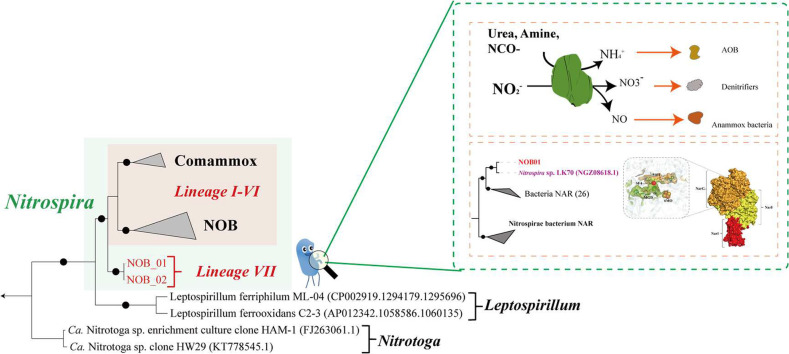
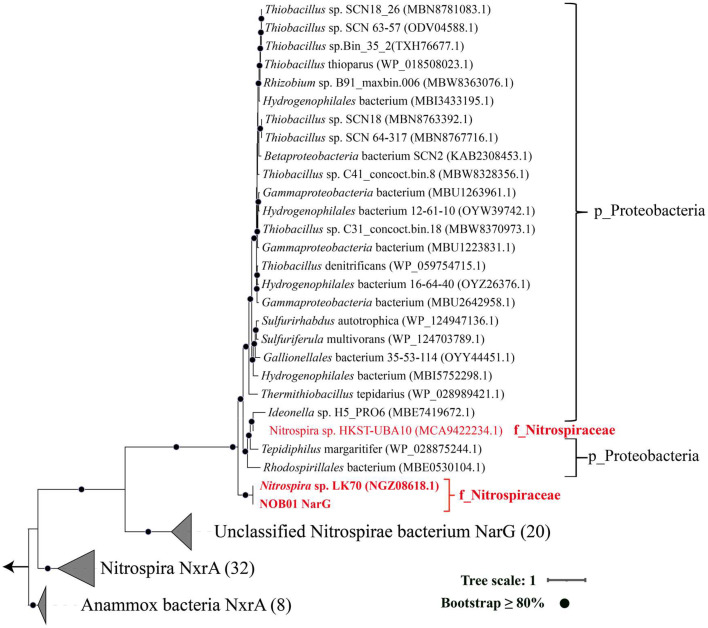
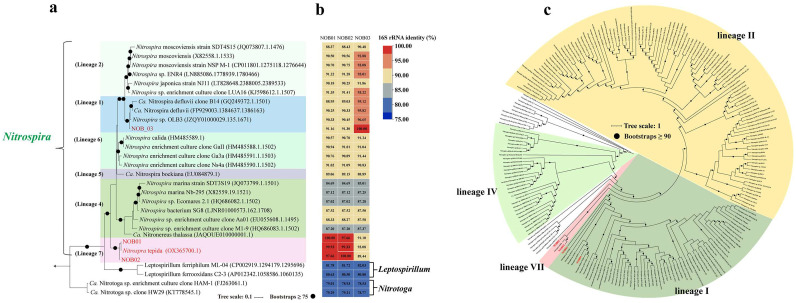
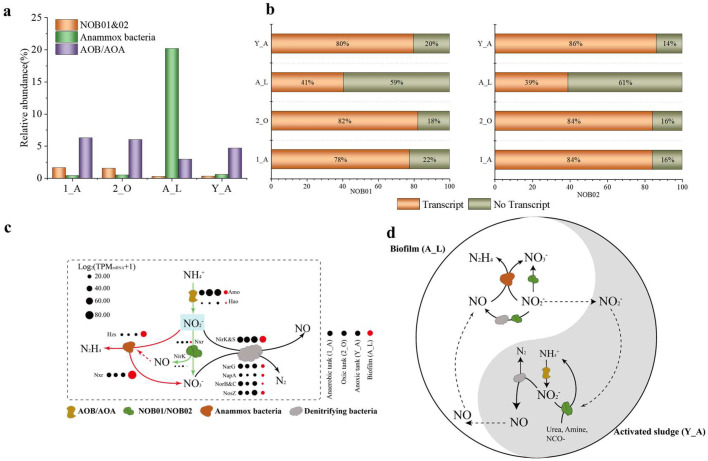
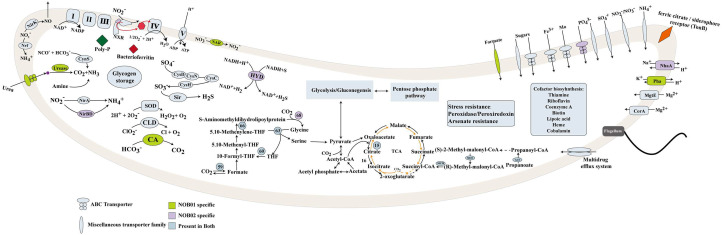
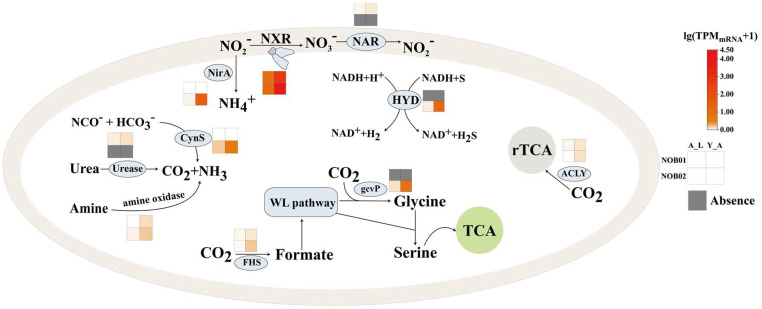
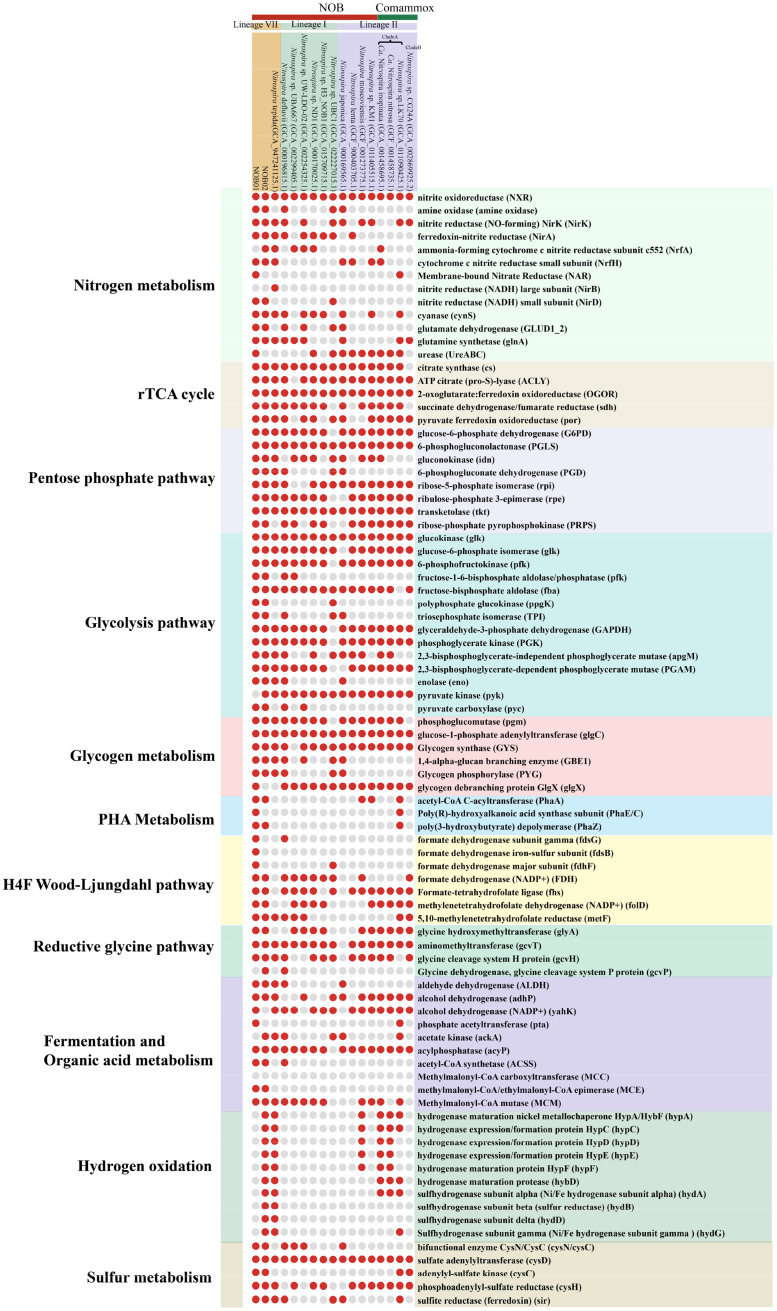
Nitrite-oxidizing bacteria (NOB) are undesirable in the anaerobic ammonium oxidation (anammox)-driven nitrogen removal technologies in the modern wastewater treatment plants (WWTPs). Diverse strategies have been developed to suppress NOB based on their physiological properties that we have understood. But our knowledge of the diversity and mechanisms employed by NOB for survival in the modern WWTPs remains limited. Here, Three NOB species (NOB01-03) were recovered from the metagenomic datasets of a full-scale WWTP treating duck breeding wastewater. Among them, NOB01 and NOB02 were classified as newly identified lineage VII, tentatively named () Nitrospira NOB01 and Nitrospira NOB02. Analyses of genomes and in situ transcriptomes revealed that these two novel NOB were active and showed a high metabolic versatility. The transcriptional activity of Nitrospira could be detected in all tanks with quite different dissolved oxygen (DO) (0.01-5.01 mg/L), illustrating Nitrospira can survive in fluctuating DO conditions. The much lower Nitrospira abundance on the anammox bacteria-enriched sponge carrier likely originated from the intensification substrate (NO ) competition from anammox and denitrifying bacteria. In particular, a highlight is that Nitrospira encoded and treanscribed cyanate hydratase (CynS), amine oxidase, urease (UreC), and copper-containing nitrite reductase (NirK) related to ammonium and NO production, driving NOB to interact with the co-existed AOB and anammox bacteria. Nitrospira strains NOB01 and NOB02 showed quite different niche preference in the same aerobic tank, which dominanted the NOB communities in activated sludge and biofilm, respectively. In addition to the common rTCA cycle for CO fixation, a reductive glycine pathway (RGP) was encoded and transcribed by NOB02 likely for CO fixation purpose. Additionally, a 3b group hydrogenase and respiratory nitrate reductase were uniquely encoded and transcribed by NOB02, which likely confer a survival advantage to this strain in the fluctuant activated sludge niche. The discovery of this new genus significantly broadens our understanding of the ecophysiology of NOB. Furthermore, the impressive metabolic versatility of the novel NOB revealed in this study advances our understanding of the survival strategy of NOB and provides valuable insight for suppressing NOB in the anammox-based WWTP.
在现代污水处理厂(WWTPs)中,亚硝酸氧化细菌(NOB)在厌氧氨氧化(anammox)驱动的脱氮技术中是不受欢迎的。基于我们所了解的NOB的生理特性,已经开发出了多种抑制NOB的策略。但是,我们对现代污水处理厂中NOB的多样性及其生存机制的了解仍然有限。在此,从处理鸭养殖废水的全规模污水处理厂的宏基因组数据集中分离出三种NOB菌株(NOB01 - 03)。其中,NOB01和NOB02被归类为新鉴定的第七谱系,暂命名为()硝化螺菌属NOB01和硝化螺菌属NOB02。基因组和原位转录组分析表明,这两种新型NOB具有活性且表现出高度的代谢多功能性。在溶解氧(DO)差异很大(0.01 - 5.01 mg/L)的所有罐体中都能检测到硝化螺菌属的转录活性,这说明硝化螺菌属能够在波动的溶解氧条件下生存。在厌氧氨氧化细菌富集的海绵载体上,硝化螺菌属的丰度低得多,这可能源于厌氧氨氧化菌和反硝化细菌对底物(NO )竞争的加剧。特别值得注意的是,硝化螺菌属编码并转录了与铵和NO产生相关的氰酸盐水合酶(CynS)、胺氧化酶、脲酶(UreC)和含铜亚硝酸还原酶(NirK),促使NOB与共存的氨氧化细菌(AOB)和厌氧氨氧化细菌相互作用。硝化螺菌属菌株NOB01和NOB02在同一个好氧池中表现出截然不同的生态位偏好,它们分别在活性污泥和生物膜中主导着NOB群落。除了常见的用于固定CO的还原性三羧酸循环(rTCA循环)外,NOB02可能为了固定CO的目的而编码并转录了一条还原性甘氨酸途径(RGP)。此外,NOB02独特地编码并转录了一种3b族氢化酶和呼吸性硝酸盐还原酶,这可能赋予该菌株在波动的活性污泥生态位中的生存优势。这一新属的发现显著拓宽了我们对NOB生态生理学的理解。此外,本研究中揭示的新型NOB令人印象深刻的代谢多功能性,推进了我们对NOB生存策略的理解,并为在基于厌氧氨氧化的污水处理厂中抑制NOB提供了有价值的见解。