Jiang He, Liu Shan, Chang Chao, Shang Yanwen, Geng Jie, Chen Qingliang
Department of Cardiology, Clinical School of Thoracic, Tianjin Medical University, Tianjin, 300051, China.
Institute of Cardiology, Clinical School of Thoracic, Tianjin Medical University, Tianjin, 300222, China.
Heliyon. 2024 Jul 26;10(15):e35239. doi: 10.1016/j.heliyon.2024.e35239. eCollection 2024 Aug 15.
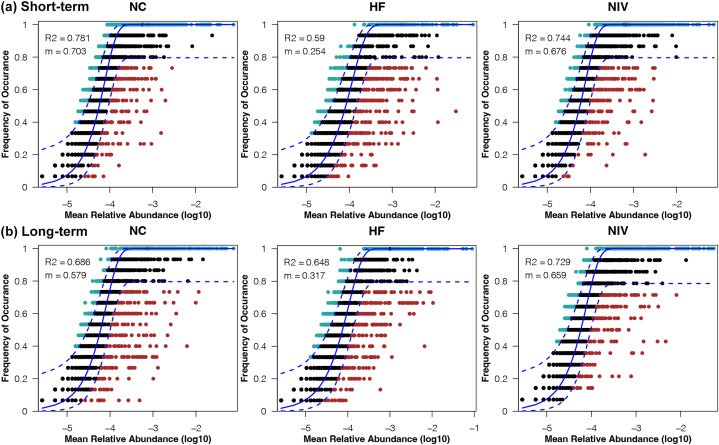
Heart failure (HF) is an increasingly prevalent disease in humans; it induces multiple symptoms and damages health. The animal gut microbiota has critical roles in host health, which might be related to HF symptoms. Currently, several options are used to treat HF, including non-invasive ventilation (NIV). However, studies on gut microbiota responses to acute HF and associated treatments effects on gut communities in patients are scarce. Here, short-term (1 week after treatments) and long-term (3 months after treatment) variations in gut microbiota variations in rats with acute HF treated were examined NIV through high-throughput sequencing of the bacterial 16S rRNA gene. Through comparison of gut microbiota alpha diversity, it was observed lower gut microbiota richness and diversity in animals with acute HF than in normal animals. Additionally, beta-diversity analysis revealed significant alterations in the gut microbiota composition induced by acute HF, as reflected by increased Firmicutes/Bacteroidetes (F/B) ratios and Proteobacteria enrichment. When network analysis results were combined with the null model, decreased stability and elevated deterministic gut microbiota assemblies were observed in animals with acute HF. Importantly, in both short- and long-term periods, NIV was found to restore gut microbiota dysbiosis to normal states in acute HF rats. Finally, it was shown that considerable gut microbiota variations existed in rats with acute HF, that underlying microbiota mechanisms regulated these changes, and confirmed that NIV is suitable for HF treatment. In future studies, these findings should be validated with different model systems or clinical samples.
心力衰竭(HF)在人类中是一种日益普遍的疾病;它会引发多种症状并损害健康。动物肠道微生物群在宿主健康中起着关键作用,这可能与HF症状有关。目前,有几种方法用于治疗HF,包括无创通气(NIV)。然而,关于肠道微生物群对急性HF的反应以及相关治疗对患者肠道群落影响的研究很少。在此,通过对细菌16S rRNA基因进行高通量测序,研究了接受NIV治疗的急性HF大鼠肠道微生物群的短期(治疗后1周)和长期(治疗后3个月)变化。通过比较肠道微生物群的α多样性,观察到急性HF动物的肠道微生物群丰富度和多样性低于正常动物。此外,β多样性分析显示,急性HF诱导的肠道微生物群组成发生了显著变化,表现为厚壁菌门/拟杆菌门(F/B)比率增加和变形菌门富集。当将网络分析结果与零模型相结合时,观察到急性HF动物的肠道微生物群组装稳定性降低,确定性升高。重要的是,在短期和长期内,均发现NIV可将急性HF大鼠的肠道微生物群失调恢复至正常状态。最后,研究表明急性HF大鼠存在相当大的肠道微生物群变化,潜在的微生物群机制调节了这些变化,并证实NIV适用于HF治疗。在未来的研究中,这些发现应在不同的模型系统或临床样本中得到验证。