The Second School of Clinical Medicine, Zhejiang Chinese Medical University, Hangzhou, Zhejiang, China.
The Second Affiliated Hospital, Zhejiang Chinese Medical University, Hangzhou, Zhejiang, China.
Front Public Health. 2024 Aug 5;12:1415398. doi: 10.3389/fpubh.2024.1415398. eCollection 2024.
Understanding the epidemiological information of a certain disease is the first step in related prevention and control work. This article aims to understand the prevalence and associated risk factors of sarcopenia among the older adult (≥60 years old) in China and to provide an evidence-based basis for early identification, management, and prevention of sarcopenia patients.
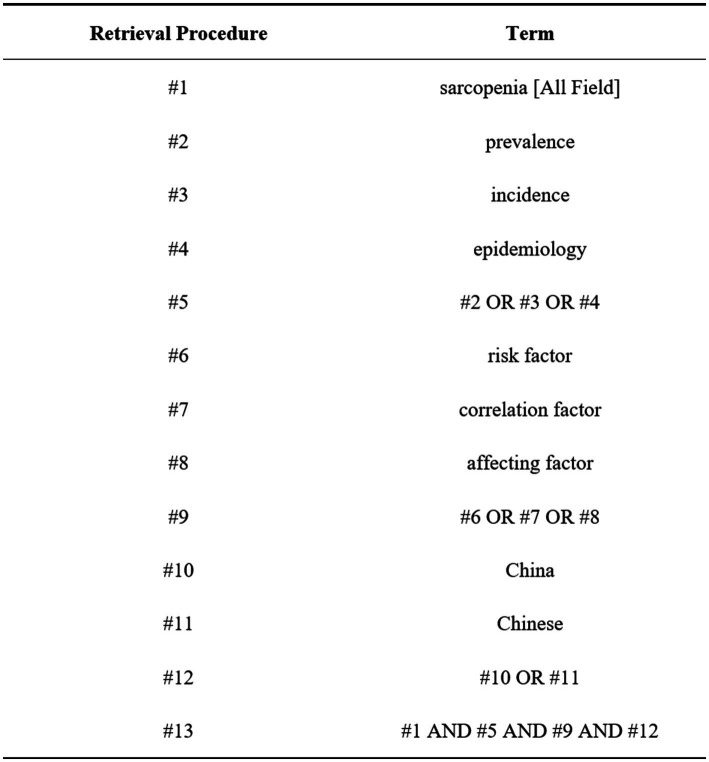
We searched seven databases: CNKI, Wanfang, VIP, PubMed, Web of Science, Embase, and Cochrane Library databases from the establishment of the database until January 31, 2024. The Quality evaluation criteria of cross-sectional studies recommended by the Agency for Healthcare Research and Quality (AHRQ) were used for literature quality evaluation. Stata 18.0 software was used for statistical analysis.
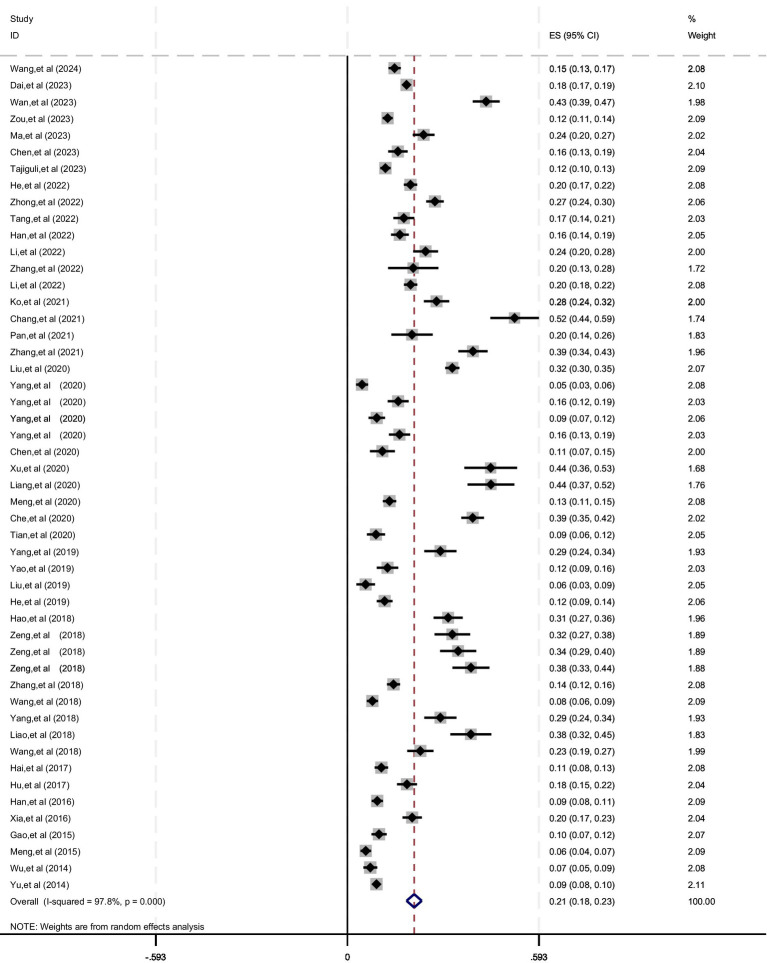
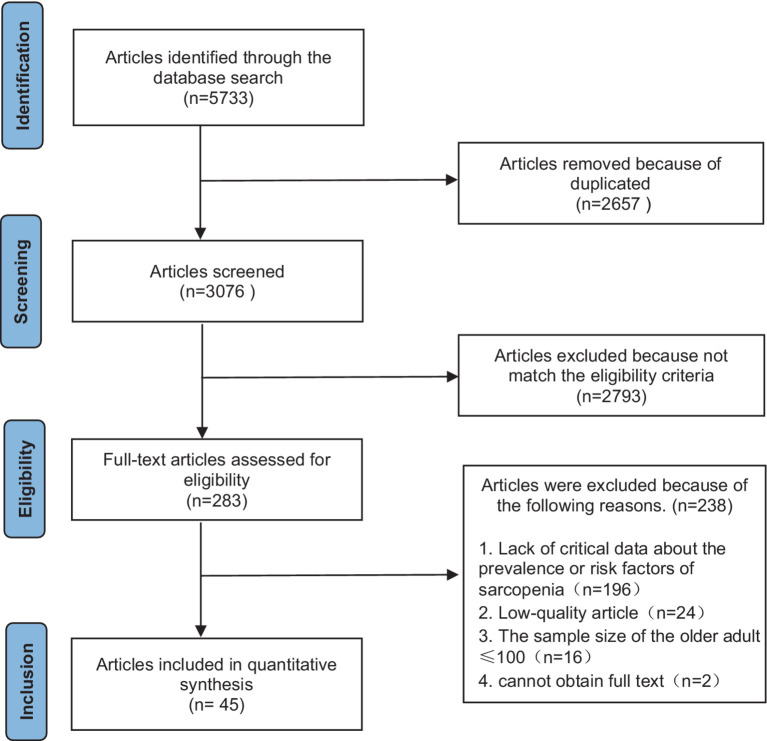
We finally included 45 studies, involving a total of 37,571 cases. After statistical analysis, we found that the prevalence of sarcopenia among the older adult in China was 20.7% [95% CI (18.3, 23.0%)]. The results of subgroup analysis suggest that: ① According to gender, the prevalence rate of sarcopenia in women (21.6%) is higher than that in men (19.2%); ② According to age, the prevalence rate of older adult people aged ≥80 (45.4%) was the highest, followed by 70-79 (27.2%) and 60-69 (15.7%). ③ According to region, the prevalence rate of the older adult in the south (21.7%) is higher than that in the north (19.0%); ④ According to the time of publication, the prevalence of sarcopenia among the older adult in China has increased (from 19.2% in 2014-2018 to 21.4% in 2019-2024); ⑤ According to the diagnostic criteria, the detection rate of AWGS (2019) is higher than that of AWGS (2014) (24.5% vs. 19.3%). Finally, aging, low BMI, low leg circumference, smoking, depression, osteoporosis, malnutrition and malnutrition risk are all risk factors for sarcopenia among the older adult in China.
The prevalence of sarcopenia in the older adult in China was higher (20.7%), which should be paid attention to by relevant health authorities. In addition, aging, low BMI, low calf circumference, smoking, depression, osteoporosis, malnutrition and malnutrition risk are risk factors for the development of sarcopenia in the older adult in China. For these high-risk populations, early identification, prevention, and intervention can be carried out to delay the occurrence and progression of sarcopenia.
了解某种疾病的流行病学信息是相关预防和控制工作的第一步。本文旨在了解中国老年人群(≥60 岁)中肌少症的患病率及其相关危险因素,为肌少症患者的早期识别、管理和预防提供循证依据。
我们检索了 7 个数据库:中国知网、万方、维普、PubMed、Web of Science、Embase 和 Cochrane Library 数据库,从数据库建立到 2024 年 1 月 31 日。使用美国医疗保健研究与质量局(AHRQ)推荐的横断面研究质量评价标准进行文献质量评价。使用 Stata 18.0 软件进行统计分析。
我们最终纳入了 45 项研究,共涉及 37571 例病例。经统计分析,我国老年人群肌少症的患病率为 20.7%[95%CI(18.3%,23.0%)]。亚组分析结果表明:①根据性别,女性肌少症的患病率(21.6%)高于男性(19.2%);②根据年龄,≥80 岁老年人(45.4%)的患病率最高,其次是 70-79 岁(27.2%)和 60-69 岁(15.7%);③根据地区,南方老年人(21.7%)的患病率高于北方(19.0%);④根据发表时间,我国老年人群肌少症的患病率呈上升趋势(从 2014-2018 年的 19.2%上升到 2019-2024 年的 21.4%);⑤根据诊断标准,AWGS(2019)的检出率高于 AWGS(2014)(24.5%比 19.3%)。最后,年龄增长、低 BMI、低小腿围、吸烟、抑郁、骨质疏松症、营养不良和营养不良风险都是中国老年人群肌少症的危险因素。
中国老年人群肌少症的患病率较高(20.7%),相关卫生部门应予以重视。此外,年龄增长、低 BMI、低小腿围、吸烟、抑郁、骨质疏松症、营养不良和营养不良风险是中国老年人群肌少症发生的危险因素。对于这些高危人群,可以进行早期识别、预防和干预,以延缓肌少症的发生和发展。