College of Agriculture, Guizhou University, Guiyang, Guizhou, China.
Lijiang Culture and Tourism College, Lijiang, Yunnan, China.
Microbiol Spectr. 2024 Oct 3;12(10):e0076324. doi: 10.1128/spectrum.00763-24. Epub 2024 Aug 20.
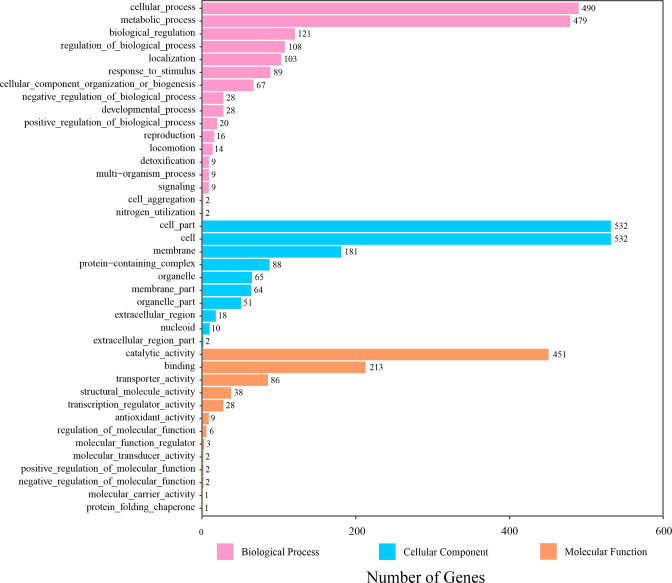
Ammonia loss is the most severe during the high-temperature stage (>50°C) of aerobic composting. Regulating ammonia volatilization during this period via thermophilic microbes can significantly improve the nitrogen content of compost and reduce air pollution due to ammonia loss. In this study, an ammonia-assimilating bacterial strain named LL-8 was screened out as having the strongest ammonia nitrogen conversion rate (32.7%) at high temperatures (50°C); it is able to significantly reduce 42.9% ammonia volatile loss in chicken manure composting when applied at a high-temperature stage. Phylogenetic analysis revealed that LL-8 was highly similar (>98%) with B8W22 and identified as . Genomic analyses indicated that the complete genome of LL-8 comprised 5,060,316 base pairs with a GC content of 32.7% and encoded 5,346 genes. Genes, such as , , , , and , that enable bacteria to assimilate ammonium nitrogen were annotated in the LL-8 genome based on the comparison to the Kyoto Encyclopedia of Genes and Genomes (KEGG) database. The results implied that the application of thermophilic ammonia-assimilating strain LL-8 would be a promising solution to reduce ammonia loss and mitigate air pollution of aerobic composting.IMPORTANCEAerobic composting is one of the essential ways to recycle organic waste, but its ammonia volatilization is severe and results in significant nitrogen loss, especially during the high-temperature period, which is also harmful to the environment. The application of thermophilic bacteria that can use ammonia as a nitrogen source at high temperatures is helpful to reduce the ammonia volatilization loss of composting. In this study, we screened and identified a bacteria strain called LL-8 with high temperature (50°C) resistance and strong ammonia-assimilating ability. It also revealed significant effects on decreasing ammonia volatile loss in composting. The whole-genome analysis revealed that LL-8 could utilize ammonium nitrogen by assimilation to decrease ammonia volatilization. Our work provides a theoretical basis for the application of this functional bacteria in aerobic composting to control nitrogen loss from ammonia volatilization.
氨损失在好氧堆肥的高温阶段(>50°C)最为严重。通过嗜热微生物调节此期间的氨挥发,可以显著提高堆肥中的氮含量,并减少因氨损失引起的空气污染。在这项研究中,筛选出一种名为 LL-8 的氨同化细菌菌株,在高温(50°C)下具有最强的氨氮转化率(32.7%);在高温阶段应用时,可显著减少鸡粪堆肥中 42.9%的氨挥发损失。系统发育分析表明,LL-8 与 B8W22 高度相似(>98%),并鉴定为. 基因组分析表明,LL-8 的完整基因组由 5060316 个碱基对组成,GC 含量为 32.7%,编码 5346 个基因。根据与京都基因与基因组百科全书(KEGG)数据库的比较,在 LL-8 基因组中注释了使细菌能够同化铵氮的基因,如 、 、 、 、 等。结果表明,应用嗜热氨同化菌株 LL-8 有望减少好氧堆肥中的氨损失和减轻空气污染。
重要性:好氧堆肥是回收有机废物的重要方法之一,但氨挥发严重,导致氮素损失很大,尤其是在高温期,这对环境也有害。应用能够在高温下将氨用作氮源的嗜热细菌有助于减少堆肥的氨挥发损失。在这项研究中,我们筛选并鉴定了一种称为 LL-8 的细菌菌株,该菌株具有高温(50°C)抗性和较强的氨同化能力。它还在减少堆肥中氨挥发损失方面表现出显著效果。全基因组分析表明,LL-8 可以通过同化利用铵氮来减少氨挥发。我们的工作为该功能细菌在好氧堆肥中应用以控制氨挥发引起的氮损失提供了理论依据。