Malopolska Centre of Biotechnology, Jagiellonian University, Krakow, Poland.
Doctoral School of Exact and Natural Sciences, Jagiellonian University, Krakow, Poland.
Microbiol Spectr. 2024 Oct 3;12(10):e0410923. doi: 10.1128/spectrum.04109-23. Epub 2024 Aug 20.
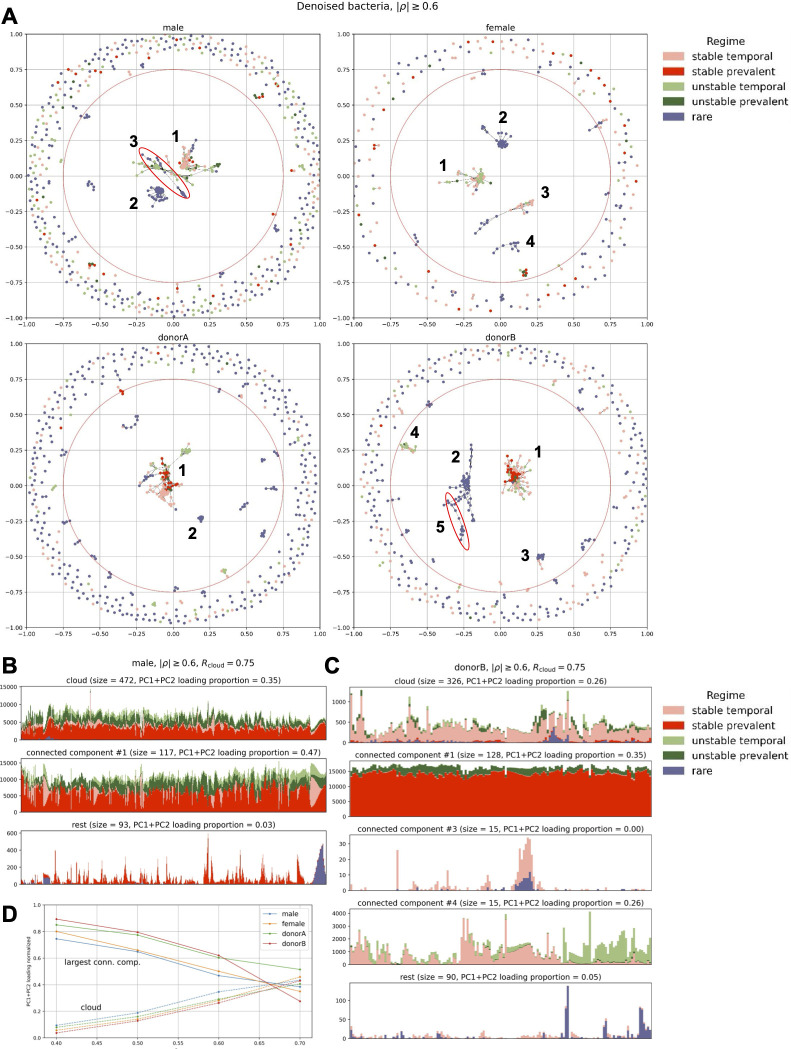
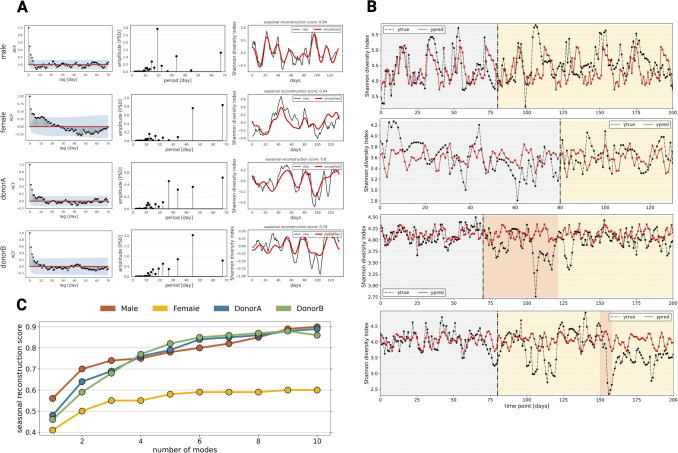
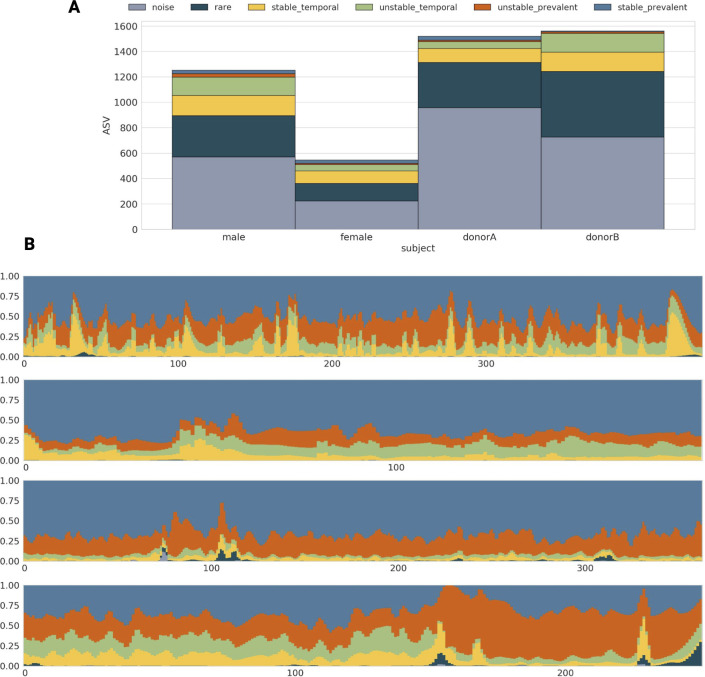
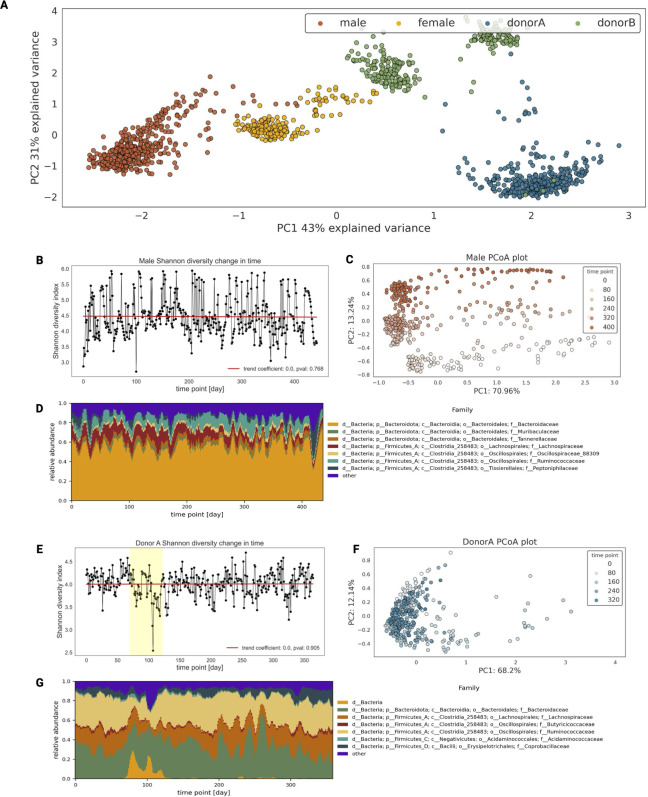
The human gut microbiome is crucial in health and disease. Longitudinal studies are becoming increasingly important compared to traditional cross-sectional approaches, as precision medicine and individualized interventions are coming to the forefront. Investigating the temporal dynamics of the microbiome is essential for comprehending its function and impact on health. This knowledge has implications for targeted therapeutic strategies, such as personalized diets or probiotic therapy. In this study, we focused on developing and implementing methods specifically designed for analyzing gut microbiome time series. Our statistical framework provides researchers with tools to examine the temporal behavior of the gut microbiome. Key features of our framework include statistical tests for time series properties, predictive modeling, classification of bacterial species based on stability and noise, and clustering analyses to identify groups of bacteria with similar temporal patterns. We analyzed dense amplicon sequencing time series from four generally healthy subjects. Using our developed statistical framework, we analyzed both the overall community dynamics and the behavior of individual bacterial species. We showed six longitudinal regimes within the gut microbiome and discussed their features. Additionally, we explored whether specific bacterial clusters undergo similar fluctuations, suggesting potential functional relationships and interactions within the microbiome. Our development of specialized methods for analyzing human gut microbiome time series significantly enhances the understanding of its dynamic nature and implications for human health. The guidelines and tools provided by our framework support scientists in studying the complex dynamics of the gut microbiome, fostering further research and advancements in microbiome analysis. The gut microbiome is integral to human health, influencing various diseases. Longitudinal studies offer deeper insights into its temporal dynamics compared to cross-sectional approaches. In this study, we developed a statistical framework for analyzing the time series of the human gut microbiome. This framework provides robust tools for examining microbial community dynamics over time. It includes statistical tests for time series properties, predictive modeling, classification of bacterial species based on stability and noise, and clustering analyses. Our approach significantly enhances the methodologies available to researchers, promoting further exploration and innovation in microbiome analysis.
This project developed innovative methods to analyze gut microbiome time series data, offering fresh insights into its dynamic nature. Unlike many studies that focus on static snapshots, we found that the healthy gut microbiome is predictably stable over time, with only a small subset of bacteria showing significant changes. By identifying groups of bacteria with diverse temporal behaviors and clusters that change together, we pave the way for more effective probiotic therapies and dietary interventions, addressing the overlooked dynamic aspects of gut microbiome changes.
人类肠道微生物组在健康和疾病中起着至关重要的作用。与传统的横断面方法相比,纵向研究变得越来越重要,因为精准医学和个体化干预措施正成为前沿。研究微生物组的时间动态对于理解其功能和对健康的影响至关重要。这一知识对于靶向治疗策略具有重要意义,例如个性化饮食或益生菌治疗。在这项研究中,我们专注于开发和实施专门用于分析肠道微生物组时间序列的方法。我们的统计框架为研究人员提供了研究肠道微生物组时间行为的工具。我们框架的关键特点包括时间序列属性的统计检验、预测建模、基于稳定性和噪声的细菌物种分类,以及识别具有相似时间模式的细菌组的聚类分析。我们分析了来自四个一般健康受试者的密集扩增子测序时间序列。使用我们开发的统计框架,我们分析了整个群落动态和单个细菌物种的行为。我们展示了肠道微生物组中的六个纵向阶段,并讨论了它们的特征。此外,我们还探讨了特定的细菌聚类是否经历类似的波动,这表明微生物组内可能存在潜在的功能关系和相互作用。我们专门开发的用于分析人类肠道微生物组时间序列的方法显著增强了对其动态性质及其对人类健康影响的理解。我们框架提供的指导方针和工具支持科学家研究肠道微生物组的复杂动态,促进了微生物组分析的进一步研究和进展。肠道微生物组是人类健康的重要组成部分,影响着各种疾病。与横断面方法相比,纵向研究提供了对其时间动态的更深入了解。在这项研究中,我们开发了一种用于分析人类肠道微生物组时间序列的统计框架。该框架提供了用于研究随时间变化的微生物群落动态的强大工具。它包括时间序列属性的统计检验、预测建模、基于稳定性和噪声的细菌物种分类,以及聚类分析。我们的方法显著增强了研究人员可用的方法,促进了微生物组分析的进一步探索和创新。
本项目开发了分析肠道微生物组时间序列数据的创新方法,为其动态性质提供了新的见解。与许多关注静态快照的研究不同,我们发现健康的肠道微生物组在时间上可预测地稳定,只有一小部分细菌表现出显著变化。通过识别具有不同时间行为的细菌组和一起变化的聚类,我们为更有效的益生菌治疗和饮食干预铺平了道路,解决了肠道微生物组变化中被忽视的动态方面。