
家庭式经颅直流电刺激治疗双相抑郁:一项关于临床疗效、可接受性及不良事件的开放标签治疗研究
Home-based transcranial direct current stimulation in bipolar depression: an open-label treatment study of clinical outcomes, acceptability and adverse events.
作者信息
Ghazi-Noori Ali-Reza, Woodham Rachel D, Rezaei Hakimeh, Sharif Mhd Saeed, Bramon Elvira, Ritter Philipp, Bauer Michael, Young Allan H, Fu Cynthia H Y
机构信息
School of Psychology, University of East London, Arthur Edwards Building, Water Lane, London, E15 4LZ, UK.
Technische Universität Dresden, Dresden, Germany.
出版信息
Int J Bipolar Disord. 2024 Aug 20;12(1):30. doi: 10.1186/s40345-024-00352-9.
BACKGROUND
Current treatments for bipolar depression have limited effectiveness, tolerability and acceptability. Transcranial direct current stimulation (tDCS) is a novel non-invasive brain stimulation method that has demonstrated treatment efficacy for major depressive episodes. tDCS is portable, safe, and individuals like having sessions at home. We developed a home-based protocol with real-time remote supervision. In the present study, we have examined the clinical outcomes, acceptability and feasibility of home-based tDCS treatment in bipolar depression.
RESULTS
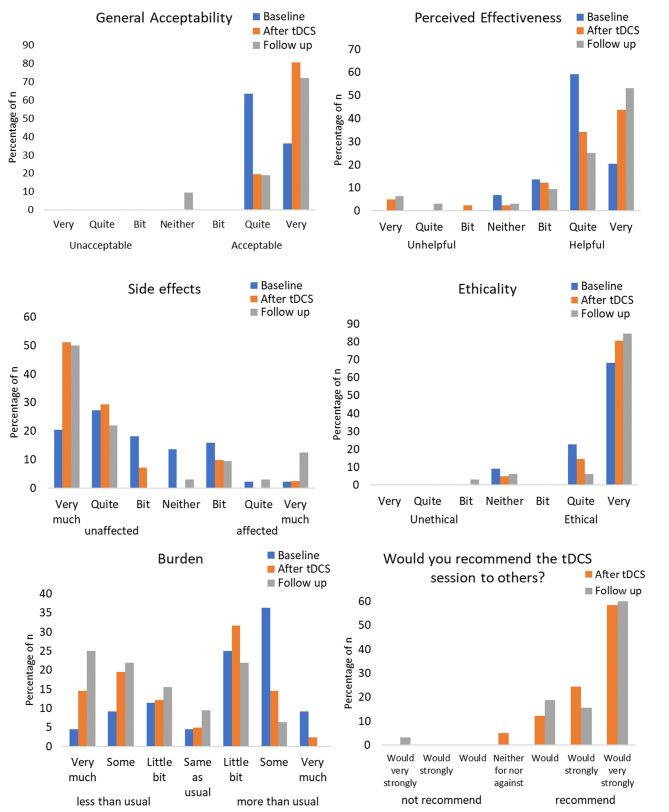
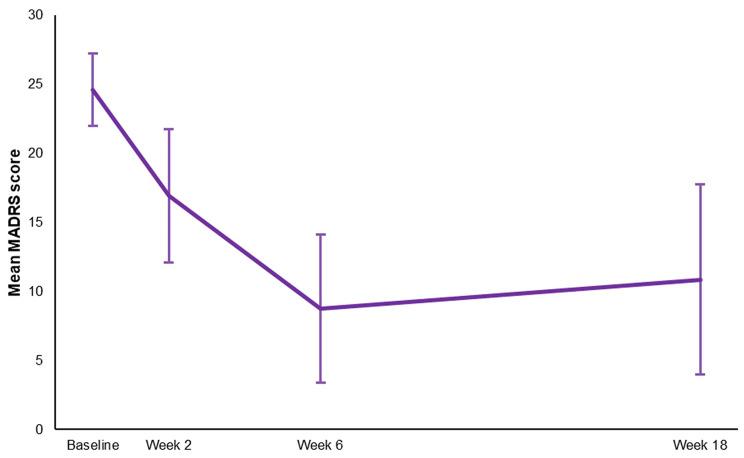
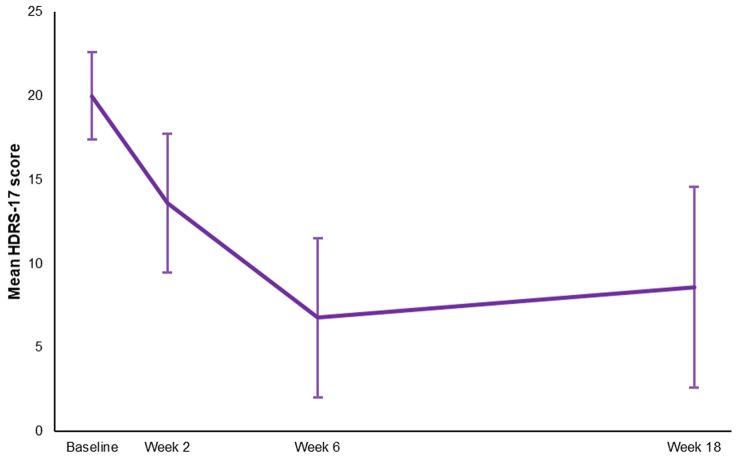
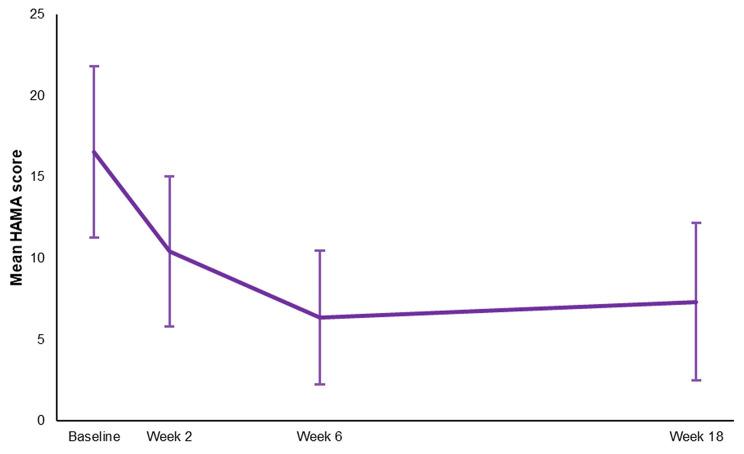
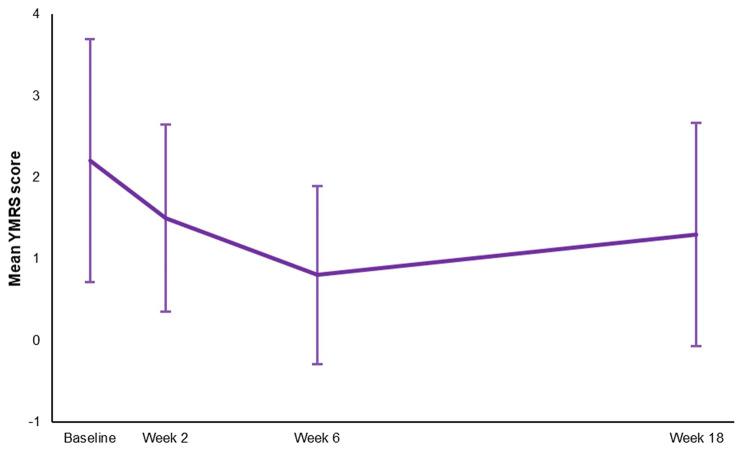
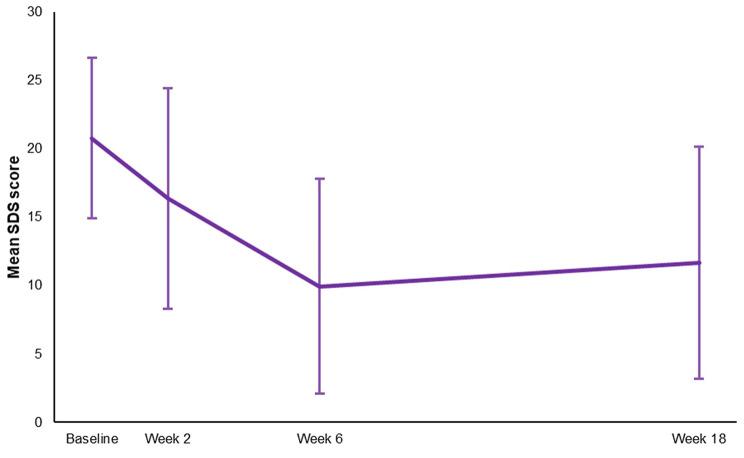
Participants were 44 individuals with bipolar disorder (31 women), mean age 47.27 ± 12.89 years, in current depressive episode of at least moderate severity (mean Montgomery Asberg Depression Rating Scale (MADRS) score 24.59 ± 2.64). tDCS was provided in bilateral frontal montage, F3 anode, F4 cathode, 2 mA, for 30 min, in a 6-week trial, for total 21 sessions, a follow up visit was conducted 5 months from baseline. Participants maintained their current treatment (psychotherapy, antidepressant or mood stabilising medication) or maintained being medication-free. A research team member was present by video conference at each session. 93.2% participants (n = 41) completed the 6-week treatment and 72.7% of participants (n = 32) completed the 5 month follow up. There was a significant improvement in depressive symptoms following treatment (mean MADRS 8.77 ± 5.37) which was maintained at the 5 month follow up (mean MADRS 10.86 ± 6.90), rate of clinical response was 77.3% (MADRS improvement of 50% or greater from baseline), and rate of clinical remission was 47.7% (MADRS rating of 9 or less). Acceptability was endorsed as "very acceptable" or "quite acceptable" by all participants. No participants developed mania or hypomania.
CONCLUSIONS
In summary, home-based tDCS with real-time supervision was associated with significant clinical improvements and high acceptability in bipolar depression. Due to the open-label design, efficacy findings are preliminary.
TRIAL REGISTRATION
ClinicalTrials.gov number NCT05436613 registered on 23 June 2022 https//www.
CLINICALTRIALS
gov/study/NCT05436613.
背景
目前用于双相抑郁的治疗方法在有效性、耐受性和可接受性方面都很有限。经颅直流电刺激(tDCS)是一种新型的非侵入性脑刺激方法,已被证明对重度抑郁发作有治疗效果。tDCS便于携带、安全,而且患者喜欢在家中进行治疗。我们开发了一种基于家庭的治疗方案,并进行实时远程监督。在本研究中,我们考察了基于家庭的tDCS治疗双相抑郁的临床疗效、可接受性和可行性。
结果
参与者为44例双相情感障碍患者(31名女性),平均年龄47.27±12.89岁,处于当前至少中度严重程度的抑郁发作期(蒙哥马利-阿斯伯格抑郁量表(MADRS)平均得分24.59±2.64)。在一项为期6周的试验中,采用双侧额叶电极片、F3为阳极、F4为阴极、2毫安、持续30分钟的tDCS治疗,共进行21次治疗,从基线开始5个月后进行随访。参与者维持其当前治疗(心理治疗、抗抑郁药或心境稳定剂)或维持未用药状态。每次治疗时,研究团队成员通过视频会议在场。93.2%的参与者(n = 41)完成了6周的治疗,72.7%的参与者(n = 32)完成了5个月的随访。治疗后抑郁症状有显著改善(MADRS平均得分8.77±5.37),在5个月随访时仍保持(MADRS平均得分10.86±6.90),临床缓解率为77.3%(MADRS得分较基线改善50%或更多),临床治愈率为47.7%(MADRS评分为9分或更低)。所有参与者都认可其可接受性为“非常可接受”或“相当可接受”。没有参与者出现躁狂或轻躁狂发作。
结论
总之,基于家庭的实时监督tDCS治疗双相抑郁可带来显著的临床改善且具有较高的可接受性。由于本研究为开放标签设计,疗效结果为初步结果。
试验注册
ClinicalTrials.gov编号NCT05436613,于2022年6月23日注册https//www.
CLINICALTRIALS
gov/study/NCT05436613。

 Zotero 插件