State Key Laboratory of Microbial Metabolism, Joint International Research Laboratory of Metabolic and Developmental Sciences, and School of Life Sciences and Biotechnology, Shanghai Jiao Tong University, Shanghai, China.
Center for Environmental Diagnostics and Bioremediation, University of West Florida, Pensacola, United States.
Elife. 2024 Aug 20;13:e95555. doi: 10.7554/eLife.95555.
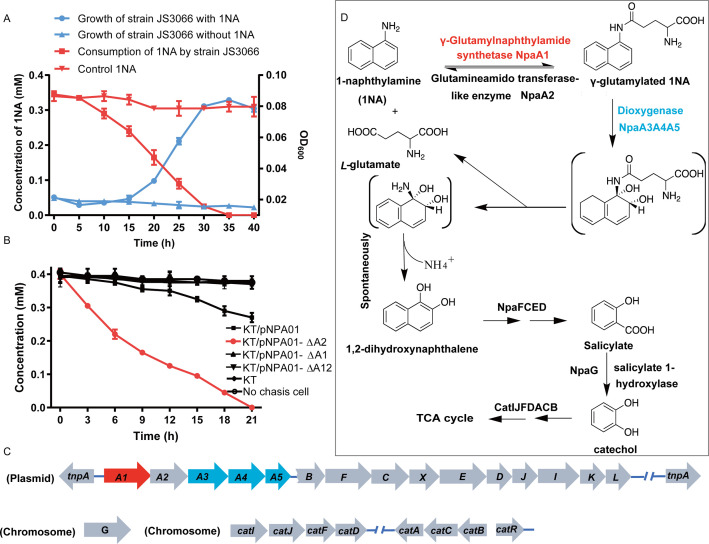
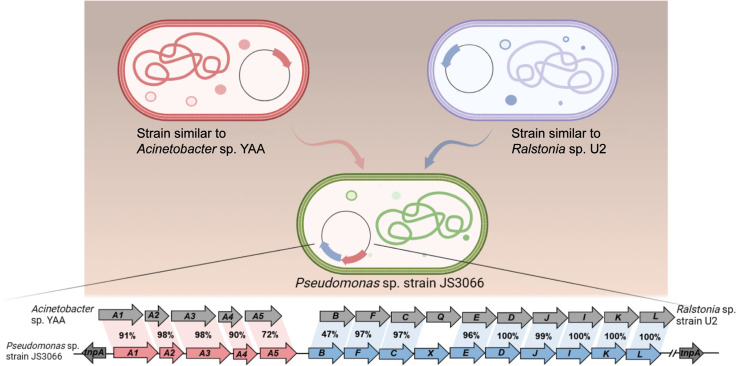
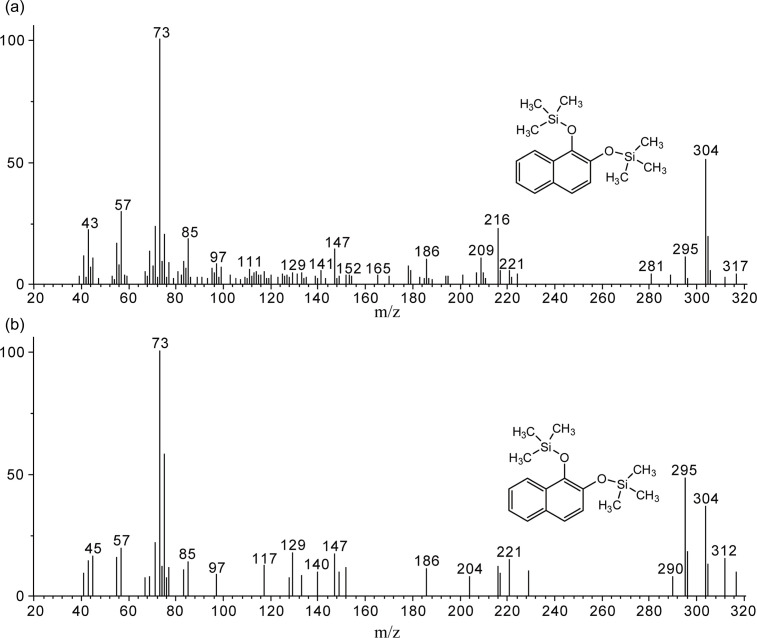
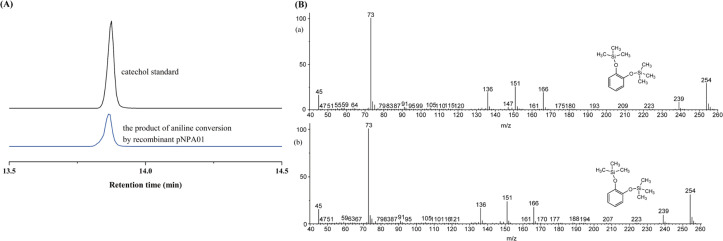
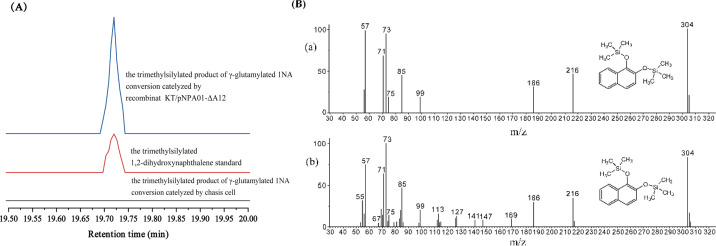
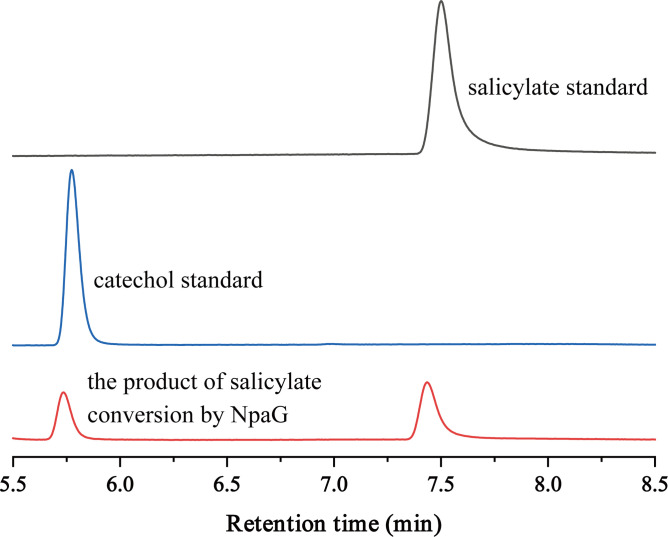
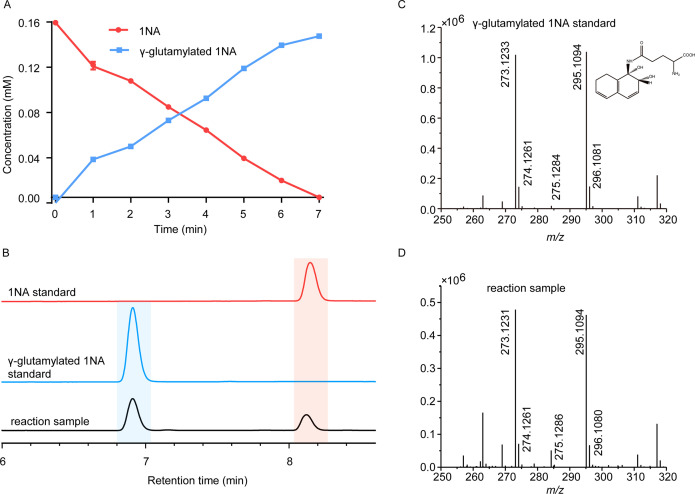
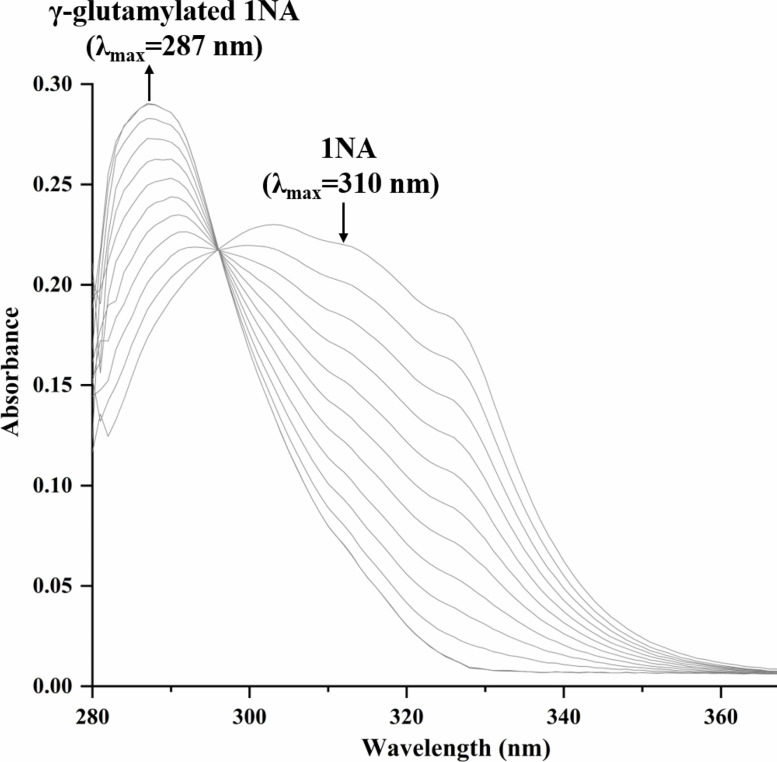
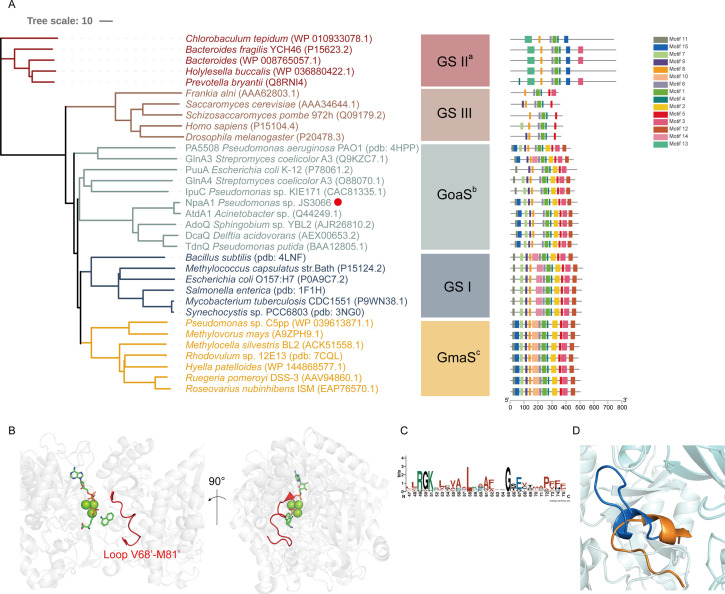
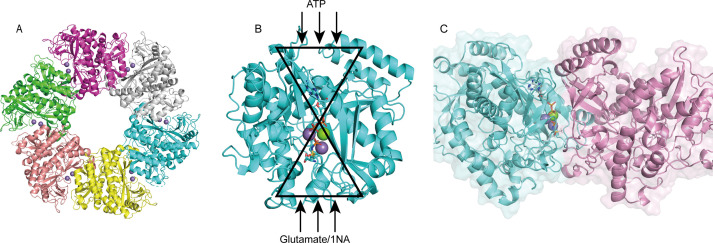
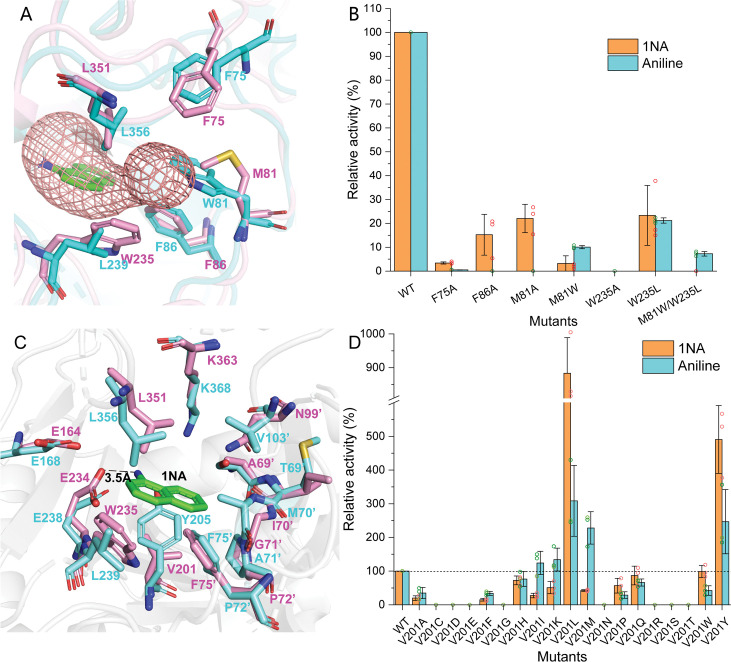
1-Naphthylamine (1NA), which is harmful to human and aquatic animals, has been used widely in the manufacturing of dyes, pesticides, and rubber antioxidants. Nevertheless, little is known about its environmental behavior and no bacteria have been reported to use it as the growth substrate. Herein, we describe a pathway for 1NA degradation in the isolate sp. strain JS3066, determine the structure and mechanism of the enzyme NpaA1 that catalyzes the initial reaction, and reveal how the pathway evolved. From genetic and enzymatic analysis, a five gene-cluster encoding a dioxygenase system was determined to be responsible for the initial steps in 1NA degradation through glutamylation of 1NA. The γ-glutamylated 1NA was subsequently oxidized to 1,2-dihydroxynaphthalene which was further degraded by the well-established pathway of naphthalene degradation via catechol. A glutamine synthetase-like (GS-like) enzyme (NpaA1) initiates 1NA glutamylation, and this enzyme exhibits a broad substrate selectivity toward a variety of anilines and naphthylamine derivatives. Structural analysis revealed that the aromatic residues in the 1NA entry tunnel and the V201 site in the large substrate-binding pocket significantly influence NpaA1's substrate preferences. The findings enhance understanding of degrading polycyclic aromatic amines, and will also enable the application of bioremediation at naphthylamine contaminated sites.
1-萘胺(1NA)对人类和水生动物有害,广泛应用于染料、农药和橡胶抗氧化剂的生产。然而,人们对其环境行为知之甚少,也没有报道称有细菌将其用作生长基质。在此,我们描述了分离株 sp. 菌株 JS3066 中 1NA 降解途径,确定了催化初始反应的酶 NpaA1 的结构和机制,并揭示了该途径是如何进化的。通过遗传和酶分析,确定了一个编码双加氧酶系统的五基因簇,负责通过 1NA 的谷氨酰化来进行 1NA 降解的初始步骤。随后,γ-谷氨酰化的 1NA 被氧化为 1,2-二羟基萘,然后通过已建立的萘降解途径通过儿茶酚进一步降解。一种谷氨酰胺合成酶样(GS-样)酶(NpaA1)启动 1NA 谷氨酰化,该酶对各种苯胺和萘胺衍生物表现出广泛的底物选择性。结构分析表明,1NA 入口隧道中的芳香残基和大底物结合口袋中的 V201 位点显着影响 NpaA1 的底物偏好。这些发现增进了对多环芳烃胺降解的理解,并将使生物修复在萘胺污染场所的应用成为可能。