Department of Public Health Medicine, Faculty of Medicine, Universiti Teknologi MARA Sungai Buloh, 47000, Shah Alam, Selangor Darul Ehsan, Malaysia.
Training Management Division, Ministry of Health, Menara Prisma Aras 6, Persiaran Perdana, Persint 3, 62675, Wilayah Persekutuan Putrajaya, Malaysia.
Sci Rep. 2024 Aug 20;14(1):19302. doi: 10.1038/s41598-024-69947-7.
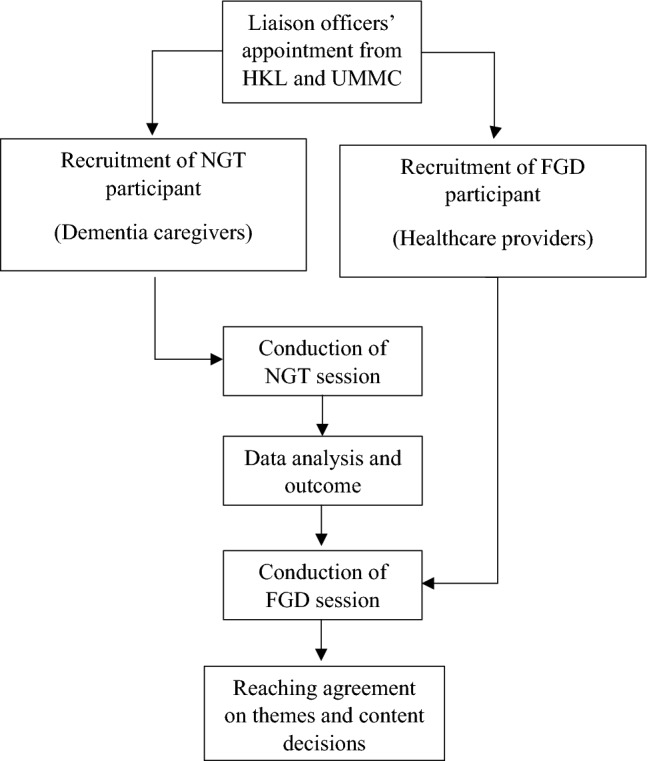
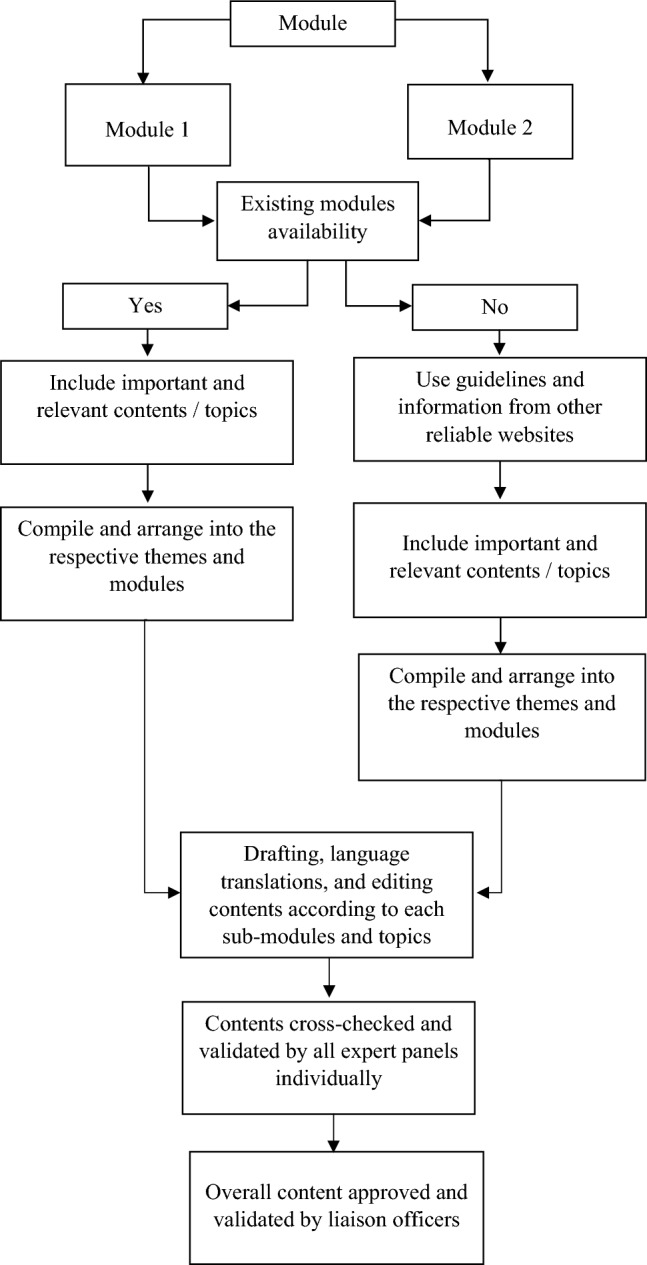
Dementia significantly impacts caregivers, particularly in low and middle-income countries where support is often inadequate. Given the gap in affordable and culturally relevant digital resources for Malaysian dementia caregivers, we developed "Demensia KITA," a mobile application (app) specifically tailored to their needs. This study utilized a theoretical framework proposed from existing literature and the "Model of Carer Stress and Burden". This paper discusses our app content development, highlighting key findings and challenges. To assess caregivers' needs, the Nominal Group Technique (NGT) with five dementia caregivers was conducted, followed by a Focus Group Discussion (FGD) with eight medical professionals. Both sessions were conducted online via Google Meet. In the NGT, ideas were generated, organized, prioritized, reviewed, and refined by medical professionals in the FGD. Content relevant to addressing the complexities of dementia caregiving was then discussed. Topics were either adapted from established modules or newly developed from credible sources. Subsequently, these were organized into modules and themes, and subsequently underwent expert validation. From the NGT, three key domains emerged: Knowledge, Services, and Support. These were further organized into two modules: 'Patient Care for Caregivers' and 'Caregiver Wellbeing'. Within these, twelve sub-modules were identified, covering a range of topics including basic knowledge on dementia, patient care, nutritional management, oral and dental care, simple exercises, daily activity and memory rehabilitation, service directories, support groups, emotional and stress management, welfare assistance, and daily motivation. This framework was developed to address the specific needs of dementia caregivers in terms of psychoeducation, psychosocial and caregiving skills, incorporating expert opinions in the field. This study corroborates the feasibility of online methods for mobile health app content development and encourages similar research. Future studies should evaluate Demensia KITA's effectiveness in alleviating caregiver burden across all regions, assess users' acceptance, and ensure it meets the evolving needs of Malaysian caregivers with regular updates.
痴呆症对照顾者影响重大,尤其是在中低收入国家,这些国家的支持往往不足。鉴于马来西亚痴呆症照顾者缺乏负担得起且文化上相关的数字资源,我们专门为他们的需求开发了“Demensia KITA”移动应用程序(app)。本研究利用了现有文献和“照顾者压力和负担模型”提出的理论框架。本文讨论了我们的应用程序内容开发,重点介绍了关键发现和挑战。为了评估照顾者的需求,我们使用名义团体技术(NGT)对五名痴呆症照顾者进行了研究,随后对八名医疗专业人员进行了焦点小组讨论(FGD)。两次会议都是通过 Google Meet 在线进行的。在 NGT 中,由医疗专业人员在 FGD 中生成、组织、优先排序、审查和完善想法。然后讨论了与解决痴呆症照顾复杂性相关的内容。主题要么改编自已建立的模块,要么从可靠来源新开发。随后,这些内容被组织成模块和主题,并随后进行了专家验证。从 NGT 中,出现了三个关键领域:知识、服务和支持。这些领域进一步组织成两个模块:“患者照顾照顾者”和“照顾者健康”。在这些模块中,确定了十二个子模块,涵盖了从痴呆症基本知识、患者护理、营养管理、口腔和牙齿护理、简单运动、日常活动和记忆康复、服务目录、支持小组、情绪和压力管理、福利援助到日常动力等一系列主题。该框架是为了满足痴呆症照顾者在心理教育、心理社会和照顾技能方面的特定需求而制定的,纳入了该领域的专家意见。本研究证实了在线方法在移动健康应用程序内容开发方面的可行性,并鼓励开展类似研究。未来的研究应评估 Demensia KITA 在减轻所有地区照顾者负担方面的有效性,评估用户的接受程度,并确保通过定期更新满足马来西亚照顾者不断变化的需求。