Department of Rural Systems Engineering, Global Smart Farm Convergence Major, Seoul National University, Seoul, 08826, South Korea.
Department of Rural Systems Engineering, Global Smart Farm Convergence Major, Research Institute of Agriculture and Life Sciences, Seoul National University, Seoul, 08826, South Korea.
Sci Rep. 2024 Aug 20;14(1):19236. doi: 10.1038/s41598-024-70232-w.
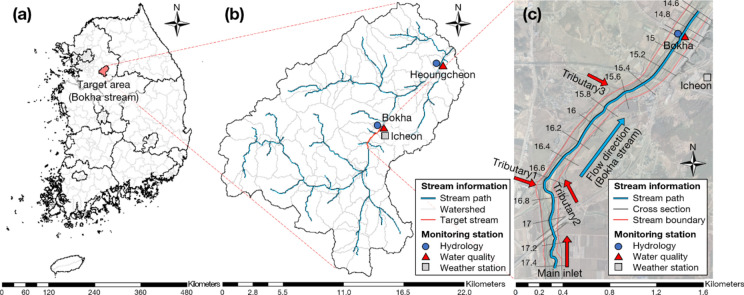
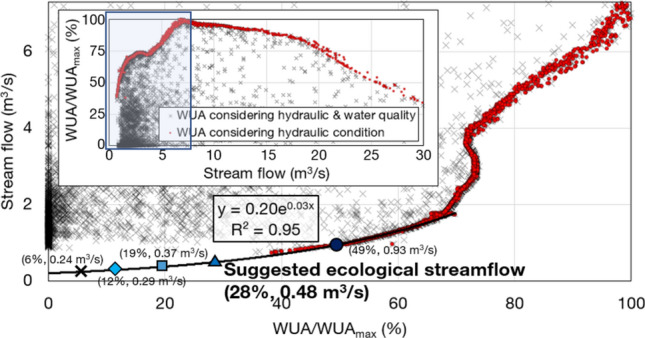
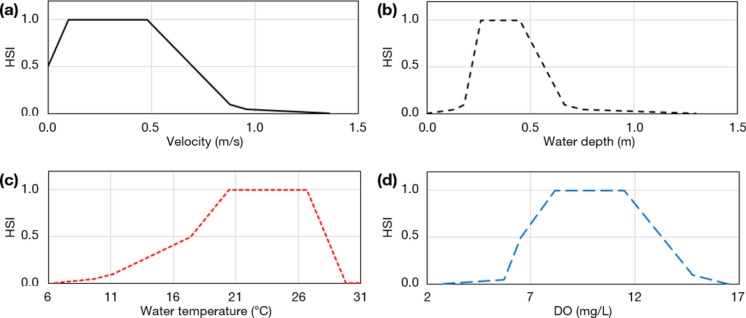
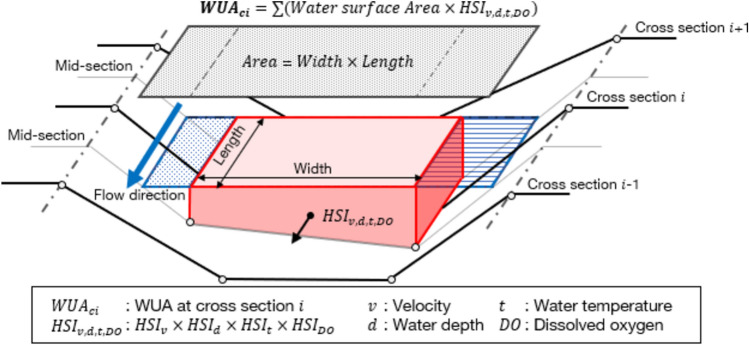
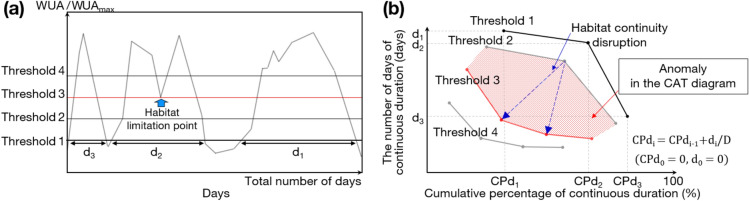
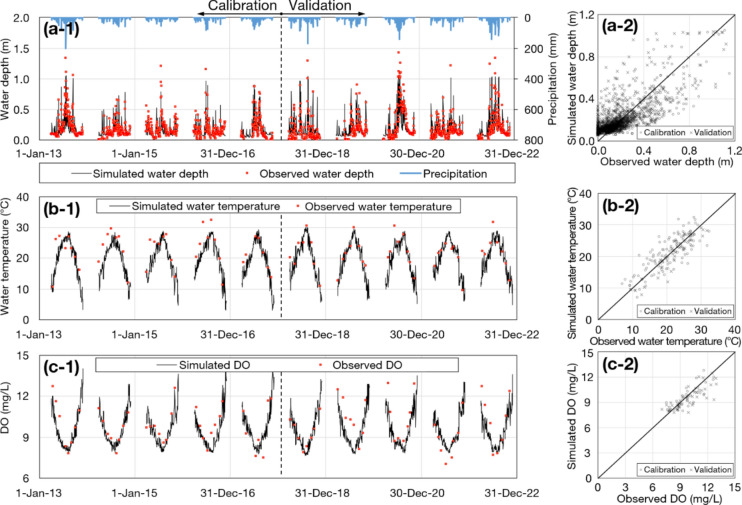
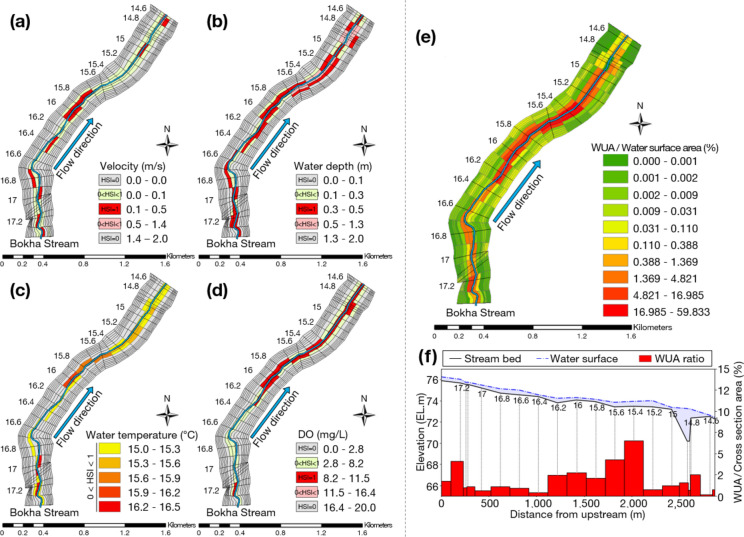
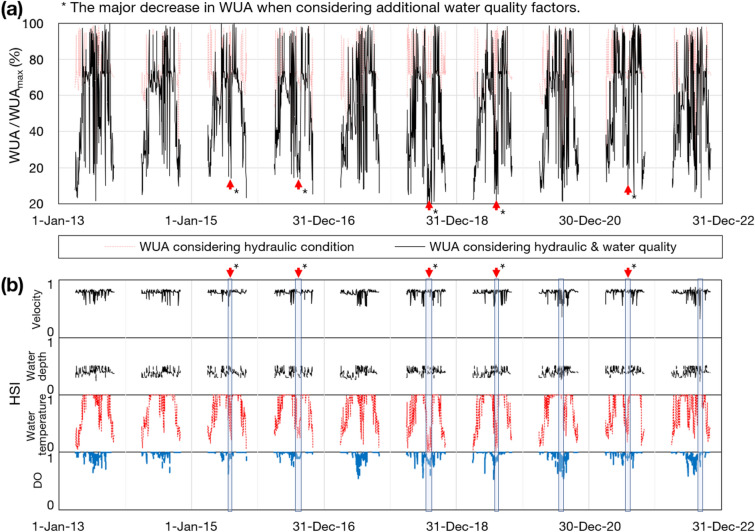
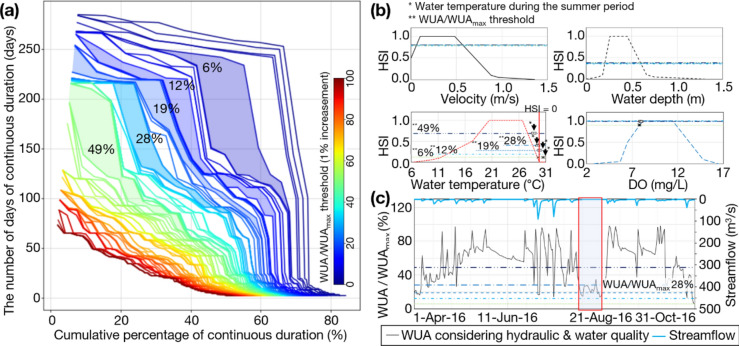
The objective of this study was to evaluate fish habitat suitability by simulating hydrodynamic and water quality factors using SWAT and HEC-RAS linked simulation considering time-series analysis. A 2.9 km reach of the Bokha stream was selected for the habitat evaluation of Zacco platypus, with hydrodynamic and water quality simulations performed using the SWAT and HEC-RAS linked approach. Based on simulated 10-year data, the aquatic habitat was assessed using the weighted usable area (WUA), and minimum ecological streamflow was proposed from continuous above threshold (CAT) analysis. High water temperature was identified as the most influential habitat indicator, with its impact being particularly pronounced in shallow streamflow areas during hot summer seasons. The time-series analysis identified a 28% threshold of WUA/WUA, equivalent to a streamflow of 0.48 m/s, as the minimum ecological streamflow necessary to mitigate the impact of rising water temperatures. The proposed habitat modeling method, linking watershed-stream models, could serve as a useful tool for ecological stream management.
本研究旨在通过使用 SWAT 和 HEC-RAS 链接模拟考虑时间序列分析的水动力和水质因素来评估鱼类栖息地适宜性。选择 Bokha 溪流的 2.9 公里河段来评估 Zacco platypus 的栖息地,使用 SWAT 和 HEC-RAS 链接方法进行水动力和水质模拟。基于模拟的 10 年数据,使用加权可用面积 (WUA) 评估水生生境,并从连续超过阈值 (CAT) 分析中提出最小生态流量。高水温被确定为最具影响力的栖息地指标,其影响在夏季炎热时期的浅水流区域尤为明显。时间序列分析确定了 WUA/WUA 的 28%阈值,相当于 0.48 m/s 的流量,作为缓解水温升高影响所需的最小生态流量。所提出的连接流域-溪流模型的栖息地建模方法可以作为生态溪流管理的有用工具。