Department of Cardiology, Beijing Anzhen Hospital, Capital Medical University, Beijing, 100029, China.
Beijing Institute of Heart, Lung and Blood Vessel Diseases, Beijing Anzhen Hospital, Capital Medical University, Beijing, 100029, China.
Part Fibre Toxicol. 2024 Aug 21;21(1):34. doi: 10.1186/s12989-024-00596-4.
Microplastics, widely present in the environment, are implicated in disease pathogenesis through oxidative stress and immune modulation. Prevailing research, primarily based on animal and cell studies, falls short in elucidating microplastics' impact on human cardiovascular health. This cross-sectional study detected blood microplastic concentrations in patients presenting with chest pain using pyrolysis-gas chromatography/mass spectrometry and evaluating inflammatory and immune markers through flow cytometry, to explore the potential effects of microplastic on acute coronary syndrome.
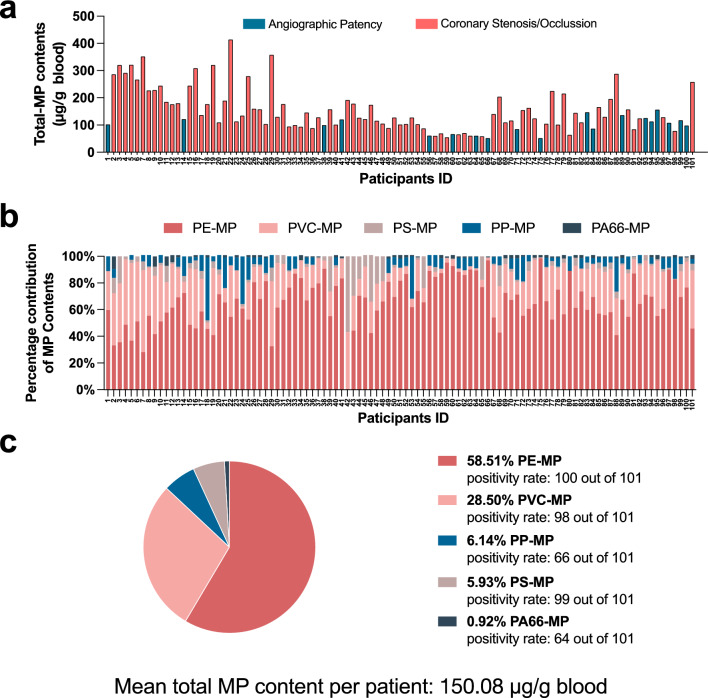
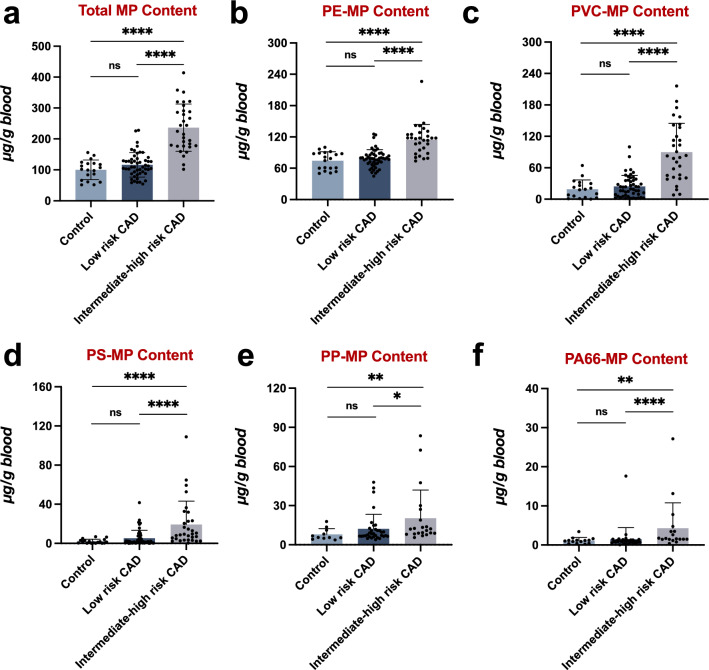
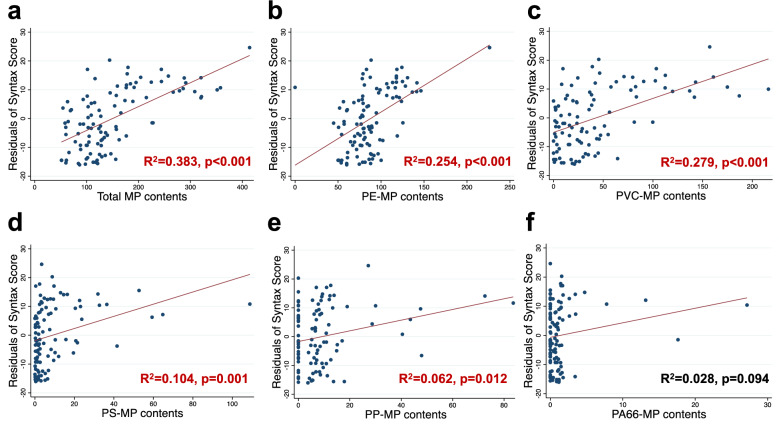
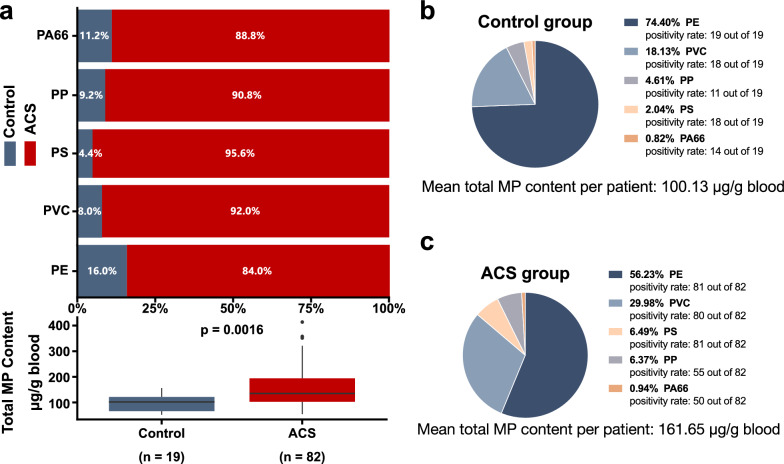
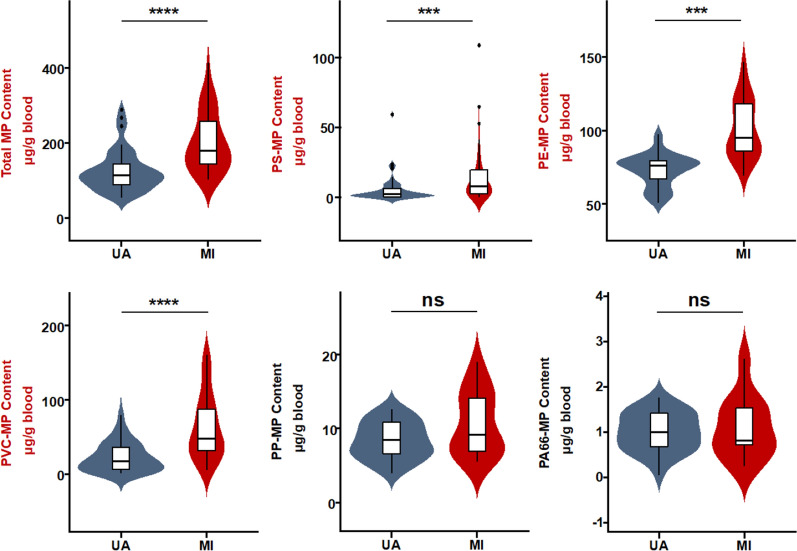
The study included 101 participants, comprising 19 controls and 82 acute coronary syndrome cases. Notably, acute coronary syndrome patients exhibited elevated microplastic concentrations, with those suffering from acute myocardial infarction presenting higher loads compared to those with unstable angina. Furthermore, patients at intermediate to high risk of coronary artery disease displayed significantly higher microplastic accumulations than their low-risk counterparts. A significant relationship was observed between increased microplastic levels and enhanced IL-6 and IL-12p70 contents, alongside elevated B lymphocyte and natural killer cell counts.
These results suggest an association between microplastics and both vascular pathology complexity and immunoinflammatory response in acute coronary syndrome, underscoring the critical need for targeted research to delineate the mechanisms of this association.
1 Blood microplastic levels escalate from angiographic patency, to angina patients, peaking in myocardial infarction patients. 2 Microplastics in acute coronary syndrome patients are predominantly PE, followed by PVC, PS, and PP. 3 Microplastics may induce immune cell-associated inflammatory responses in acute coronary syndrome patients.
微塑料广泛存在于环境中,通过氧化应激和免疫调节与疾病发病机制有关。目前的研究主要基于动物和细胞研究,无法阐明微塑料对人类心血管健康的影响。本横断面研究使用热裂解-气相色谱/质谱法检测胸痛患者的血液微塑料浓度,并通过流式细胞术评估炎症和免疫标志物,以探讨微塑料对急性冠状动脉综合征的潜在影响。
该研究纳入了 101 名参与者,包括 19 名对照者和 82 名急性冠状动脉综合征患者。值得注意的是,急性冠状动脉综合征患者的微塑料浓度升高,急性心肌梗死患者的微塑料负荷高于不稳定型心绞痛患者。此外,中高危冠状动脉疾病患者的微塑料积累明显高于低危患者。微塑料水平升高与 IL-6 和 IL-12p70 含量增加以及 B 淋巴细胞和自然杀伤细胞计数升高之间存在显著相关性。
这些结果表明微塑料与急性冠状动脉综合征中的血管病理复杂性和免疫炎症反应之间存在关联,强调了有必要针对该关联的机制进行靶向研究。