Environmental Health Science and Research Bureau, Health Canada, Ottawa, Canada.
Centre for Arctic Health & Molecular Epidemiology, Department of Public Health, Aarhus University, Aarhus, Denmark.
Int J Circumpolar Health. 2024 Dec;83(1):2386140. doi: 10.1080/22423982.2024.2386140. Epub 2024 Aug 22.
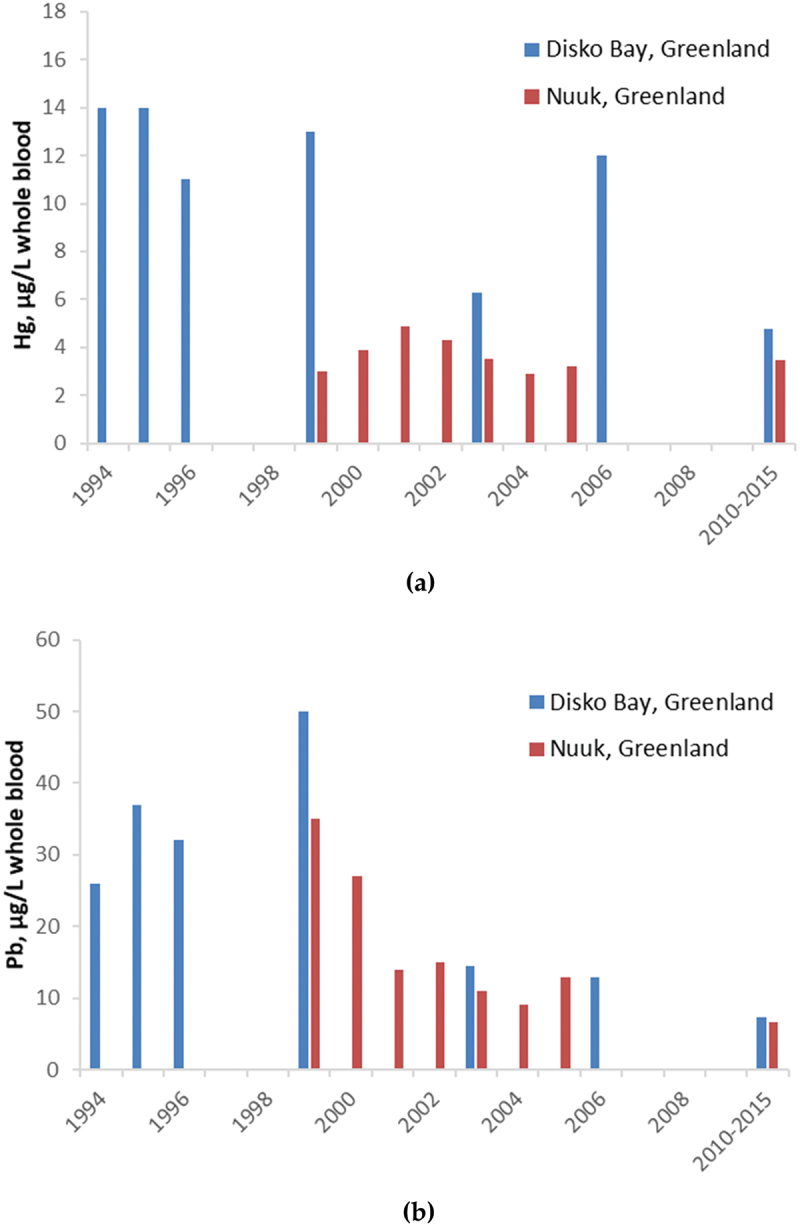
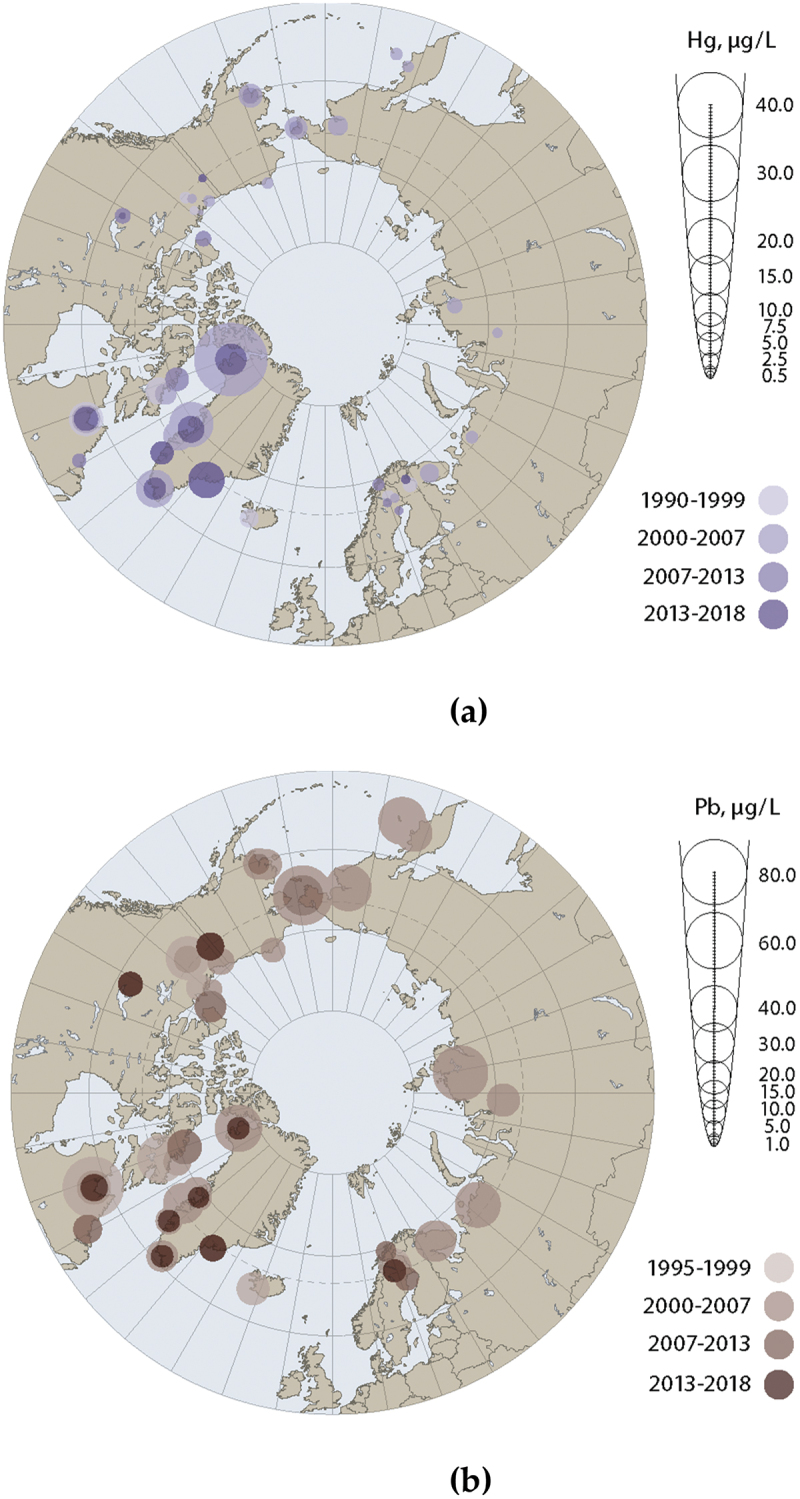
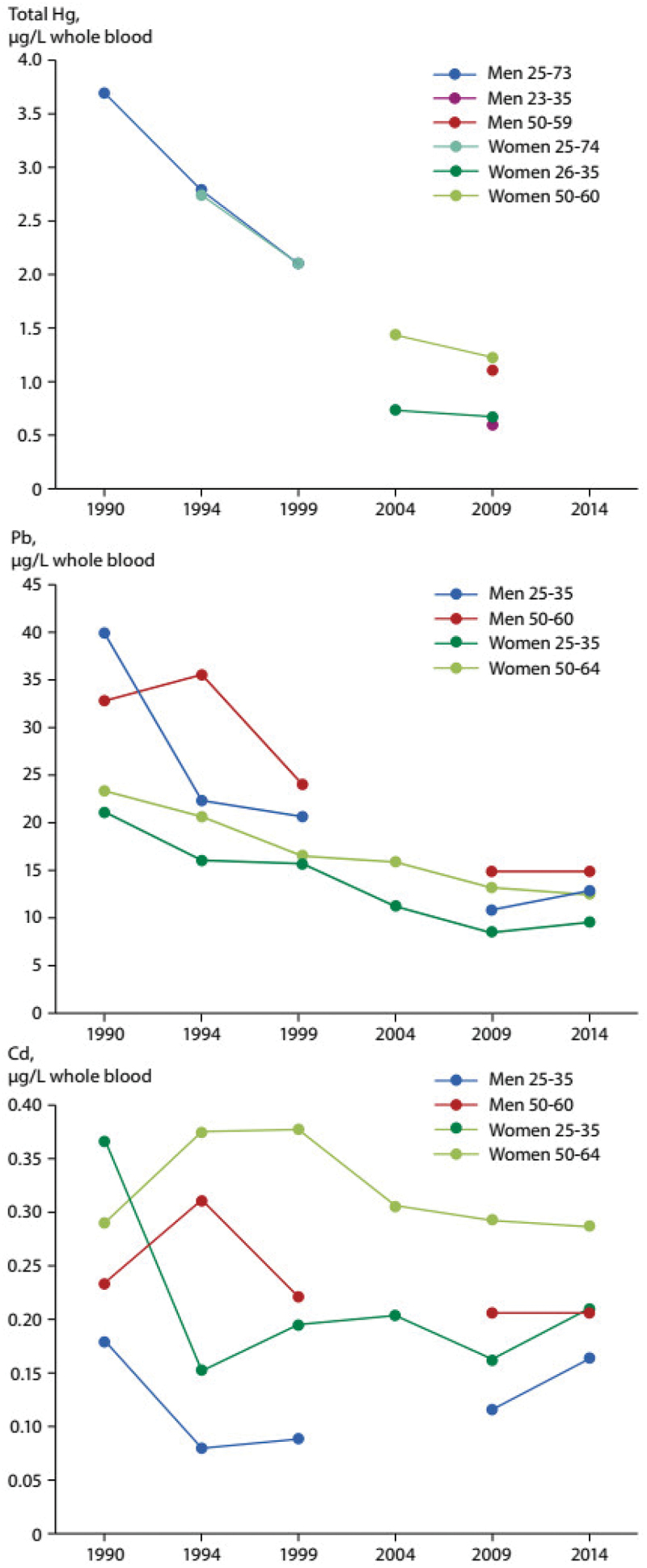
The 2021 Arctic Monitoring Assessment Program (AMAP)'s Human Health Assessment report presents a summary of the presence of contaminants in human populations across the circumpolar Arctic and provides an update to the previous assessment released in 2015. The primary objective of this paper is to summarise some of these findings by describing the current levels of metals across the Arctic, including key regional and temporal trends based on available national data and literature, and highlight knowledge gaps. Many Arctic populations continue to have elevated levels of these contaminants, and the highest levels of mercury (Hg) were observed in populations from Greenland, Faroe Islands, and Nunavik (Canada). Still, concentrations of several metals are declining in Arctic populations in regions where time trends data exist, although the declines are not consistent across all regions. The 2021 AMAP human health assessment report and this paper provide an extensive summary of levels of metals and trace elements in adults, pregnant women, and children across the Arctic.
2021 年北极监测评估计划(AMAP)的人类健康评估报告总结了环北极地区人类群体中污染物的存在情况,并提供了 2015 年发布的上一次评估的更新。本文的主要目的是通过描述当前北极地区金属的水平来总结其中的一些发现,包括基于现有国家数据和文献的关键区域和时间趋势,并突出知识差距。许多北极地区的人群仍然存在这些污染物的高含量,而在格陵兰、法罗群岛和努纳维克(加拿大)的人群中观察到最高水平的汞 (Hg)。尽管在存在时间趋势数据的地区,一些金属的浓度在北极地区的人群中正在下降,但下降并非在所有地区都一致。2021 年 AMAP 人类健康评估报告和本文提供了对北极地区成年人、孕妇和儿童体内金属和微量元素水平的广泛总结。