Liu Hai-Feng, Hu Xiao-Zhong, Liu Cong-Yun, Guo Zheng-Hong, Lu Rui, Xiang Mei, Wang Ya-Yu, Yin Zhao-Qing, Wang Min, Sui Ming-Ze, Yang Jia-Wu, Fu Hong-Min
Department of Pulmonary and Critical Care Medicine, Yunnan Key Laboratory of Children's Major Disease Research, Yunnan Medical Center for Pediatric Diseases, Kunming Children's Hospital, Kunming Medical University, Kunming, 650034, China.
Department of Pediatrics, The People's Hospital of Lincang, Lincang, 677000, China.
Heliyon. 2024 Jul 31;10(15):e35571. doi: 10.1016/j.heliyon.2024.e35571. eCollection 2024 Aug 15.
The significant rebound of influenza A (H1N1) virus activity, particularly among children, with rapidly growing number of hospitalized cases is of major concern in the post-COVID-19 era. The present study was performed to establish a prediction model of severe case in pediatric patients hospitalized with H1N1 infection during the post-COVID-19 era.
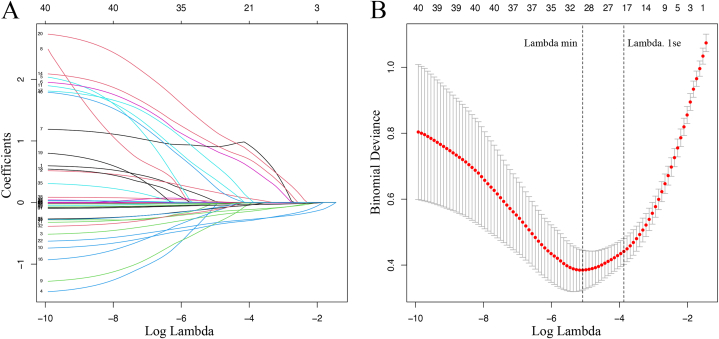
This is a multicenter retrospective study across nine public tertiary hospitals in Yunnan, China, recruiting pediatric H1N1 inpatients hospitalized at five of these centers between February 1 and July 1, 2023, into the development dataset. Screening of 40 variables including demographic information, clinical features, and laboratory parameters were performed utilizing Least Absolute Shrinkage and Selection Operator (LASSO) regression and logistic regression to determine independent risk factors of severe H1N1 infection, thus constructing a prediction nomogram. Receiver operating characteristic (ROC) curve, calibration curve, as well as decision curve analysis (DCA) were employed to evaluate the model's performance. Data from four independent cohorts comprised of pediatric H1N1 inpatients from another four hospitals between July 25 and October 31, 2023, were utilized to externally validate this nomogram.
The development dataset included 527 subjects, 122 (23.1 %) of whom developed severe H1N1 infection. The external validation dataset included 352 subjects, 72 (20.5 %) of whom were eventually confirmed as severe H1N1 infection. The LASSO regression identified 19 candidate predictors, with logistic regression further narrowing down to 11 independent risk factors, including underlying conditions, prematurity, fever duration, wheezing, poor appetite, leukocyte count, neutrophil-lymphocyte ratio (NLR), erythrocyte sedimentation rate (ESR), lactate dehydrogenase (LDH), interleukin-10 (IL-10), and tumor necrosis factor-α (TNF-α). By integrating these 11 factors, a predictive nomogram was established. In terms of prediction of severe H1N1 infection, excellent discriminative capacity, favorable accuracy, and satisfactory clinical usefulness of this model were internally and externally validated via ROC curve, calibration curve, and DCA, respectively.
Our study successfully established and validated a novel nomogram model integrating underlying conditions, prematurity, fever duration, wheezing, poor appetite, leukocyte count, NLR, ESR, LDH, IL-10, and TNF-α. This nomogram can effectively predict the occurrence of serious case in pediatric H1N1 inpatients during the post-COVID-19 era, facilitating the early recognition and more efficient clinical management of such patients.
甲型流感(H1N1)病毒活动显著反弹,尤其是在儿童中,住院病例数迅速增加,这是新冠疫情后时代的主要关注点。本研究旨在建立一个预测模型,用于预测新冠疫情后时代因H1N1感染住院的儿科患者的重症病例。
这是一项在中国云南九家公立三级医院开展的多中心回顾性研究,将2023年2月1日至7月1日期间在其中五家中心住院的儿科H1N1患者纳入开发数据集。利用最小绝对收缩和选择算子(LASSO)回归及逻辑回归对40个变量进行筛选,这些变量包括人口统计学信息、临床特征和实验室参数,以确定H1N1严重感染的独立危险因素,从而构建预测列线图。采用受试者工作特征(ROC)曲线、校准曲线以及决策曲线分析(DCA)来评估模型的性能。来自另外四家医院2023年7月25日至10月31日期间儿科H1N1住院患者的四个独立队列的数据用于对该列线图进行外部验证。
开发数据集包括527名受试者,其中122名(23.1%)发生了H1N1严重感染。外部验证数据集包括352名受试者,其中72名(20.5%)最终被确认为H1N1严重感染。LASSO回归确定了19个候选预测因子,逻辑回归进一步将其缩小至11个独立危险因素,包括基础疾病、早产、发热持续时间、喘息、食欲不佳、白细胞计数、中性粒细胞与淋巴细胞比值(NLR)、红细胞沉降率(ESR)、乳酸脱氢酶(LDH)、白细胞介素-10(IL-10)和肿瘤坏死因子-α(TNF-α)。通过整合这11个因素,建立了一个预测列线图。在预测H1N1严重感染方面,分别通过ROC曲线、校准曲线和DCA在内部和外部验证了该模型具有出色的辨别能力、良好的准确性和令人满意的临床实用性。
我们的研究成功建立并验证了一个整合基础疾病、早产、发热持续时间、喘息、食欲不佳、白细胞计数、NLR、ESR、LDH、IL-10和TNF-α的新型列线图模型预测模型。该列线图可以有效预测新冠疫情后时代儿科H1N1住院患者重症病例的发生,有助于对此类患者进行早期识别和更有效的临床管理。