Gou Erya, Yang Qilin, Chen Jieru, Kong Tianyu, Tang Zhiwei, Wen Qirui, Huang Wenxing, Yang Guangqian, Li Wenling, Wen Deliang, Zhang Zhenhui
Department of Critical Care, The Second Affiliated Hospital of Guangzhou Medical University, No. 250 Changgang East Road, Haizhu District, Guangzhou, China.
Information Center, The Second Affiliated Hospital of Guangzhou Medical University, No. 250 Changgang East Road, Haizhu District, Guangzhou, China.
Heliyon. 2024 Jul 16;10(15):e34697. doi: 10.1016/j.heliyon.2024.e34697. eCollection 2024 Aug 15.
The Albumin-Bilirubin (ALBI) score, recommended for assessing the prognosis of hepatocellular carcinoma patients, has garnered attention. The efficacy of ALBI score in forecasting the risk of death in sepsis patients remains limited. We designed two cohort studies to assess the association between ALBI score and in-hospital mortality in patients with sepsis.
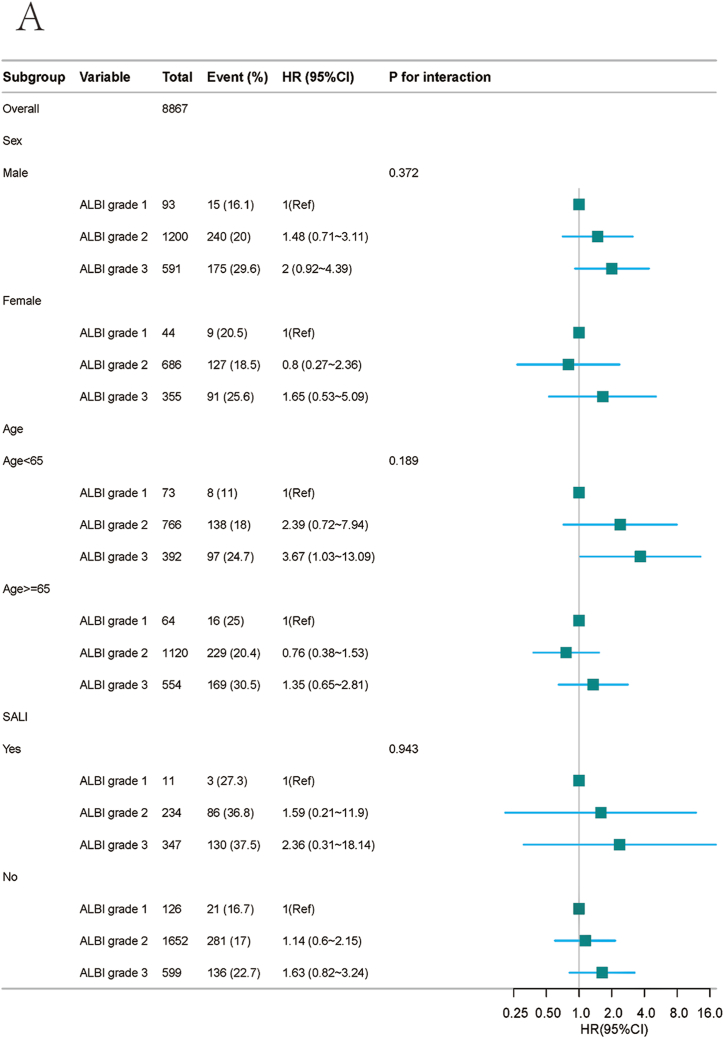
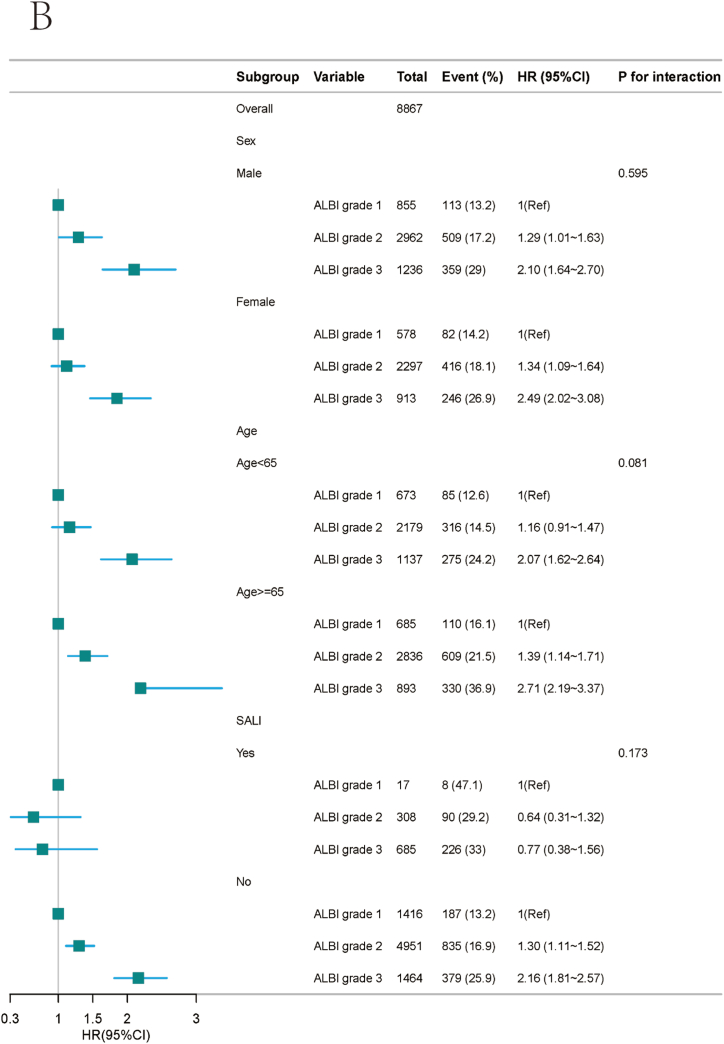
A retrospective analysis was conducted utilizing data from the Second Affiliated Hospital of Guangzhou Medical University and the Medical Information Mart for Intensive Care IV(MIMIC-IV). Patients diagnosed with sepsis were included in the analysis. The primary outcome was the in-hospital mortality. Multivariate Cox regression analysis was conducted to assess the independent association between the ALBI score and mortality, with adjustment for potential confounders. Subgroup analysis was conducted to assess the robustness of the findings.
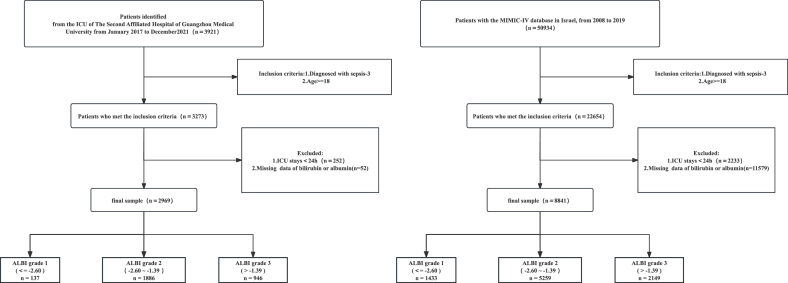
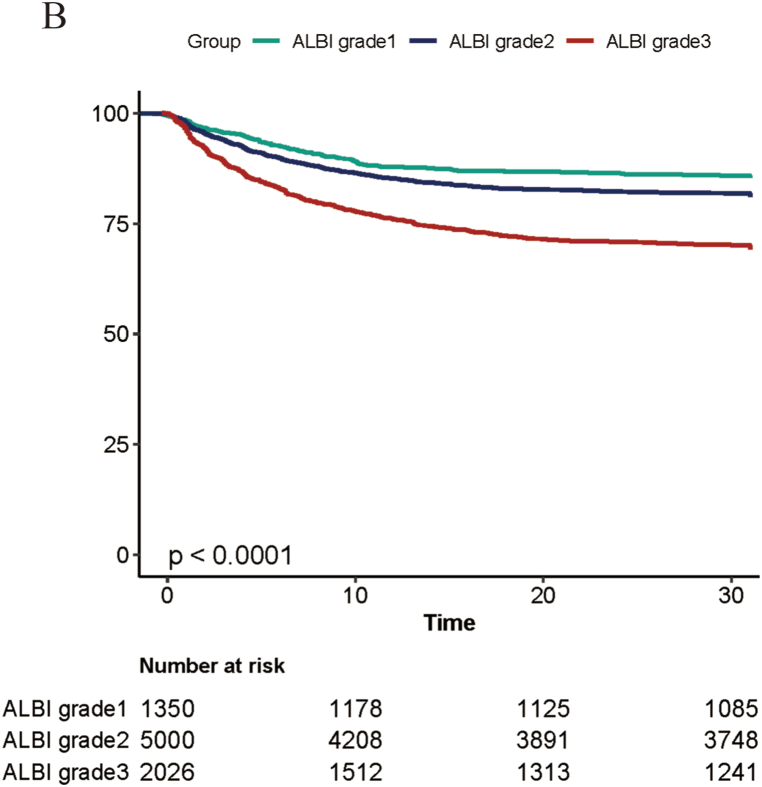
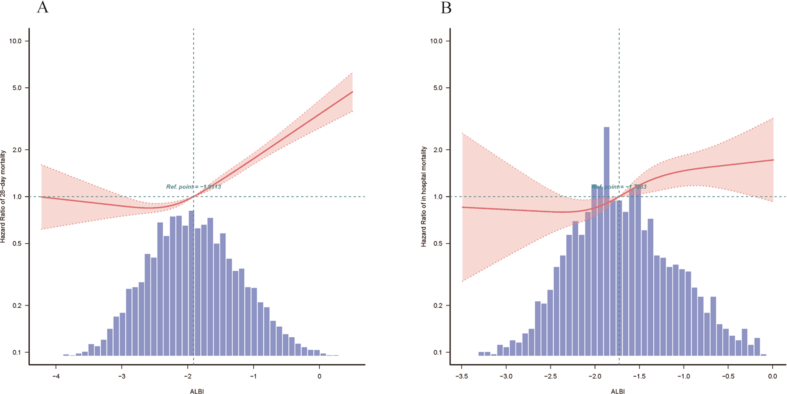
The Guangzhou Sepsis Cohort (GZSC) of the Second Affiliated Hospital of Guangzhou Medical University comprised 2969 participants, while the MIMIC-IV database included 8841 participants. The ALBI score were categorized into < -2.60, -2.60∼-1.39, and >-1.39. After adjusting for confounders, a linear relationship was observed between ALBI score and mortality. Patients with a high ALBI grade were associated with higher in-hospital mortality in both the GZSC (HR: 1.52, 95%CI: 1.24-1.87, p < 0.001) and the MIMIC-IV database (HR: 1.57, 95%CI: 1.46-1.70, p < 0.001).
A high ALBI score is associated with higher in-hospital mortality among sepsis patients in ICU.
用于评估肝细胞癌患者预后的白蛋白-胆红素(ALBI)评分已受到关注。ALBI评分在预测脓毒症患者死亡风险方面的有效性仍然有限。我们设计了两项队列研究,以评估ALBI评分与脓毒症患者院内死亡率之间的关联。
利用广州医科大学附属第二医院和重症监护医学信息集市IV(MIMIC-IV)的数据进行回顾性分析。分析纳入诊断为脓毒症的患者。主要结局是院内死亡率。进行多变量Cox回归分析,以评估ALBI评分与死亡率之间的独立关联,并对潜在混杂因素进行校正。进行亚组分析以评估研究结果的稳健性。
广州医科大学附属第二医院的广州脓毒症队列(GZSC)包括2969名参与者,而MIMIC-IV数据库包括8841名参与者。ALBI评分分为<-2.60、-2.60至-1.39和>-1.39。校正混杂因素后,观察到ALBI评分与死亡率之间存在线性关系。在GZSC(HR:1.52,95%CI:1.24-1.87,p<0.001)和MIMIC-IV数据库(HR:1.57,95%CI:1.46-1.70,p<0.001)中,ALBI分级高的患者院内死亡率均较高。
高ALBI评分与ICU中脓毒症患者较高的院内死亡率相关。