Legchenko Ekaterina, Chouvarine Philippe, Qadri Fatimunnisa, Specker Edgar, Nazaré Marc, Wesolowski Radoslaw, Matthes Susann, Bader Michael, Hansmann Georg
Department of Pediatric Cardiology and Critical Care, Hannover Medical School, Hannover, Germany.
Max-Delbrück-Center for Molecular Medicine, Berlin, Germany.
JACC Basic Transl Sci. 2024 Jun 5;9(7):890-902. doi: 10.1016/j.jacbts.2024.04.006. eCollection 2024 Jul.
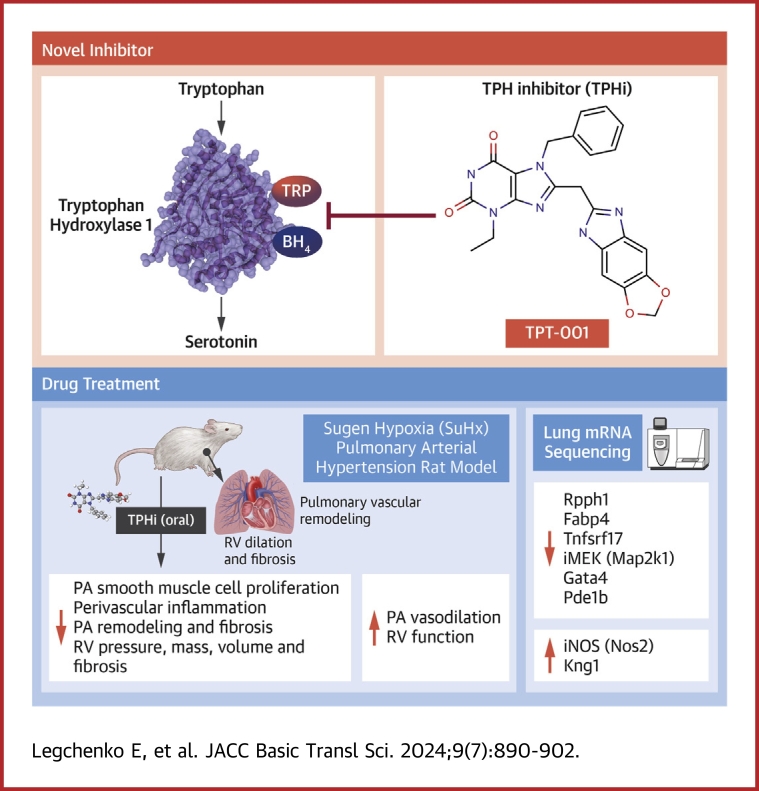
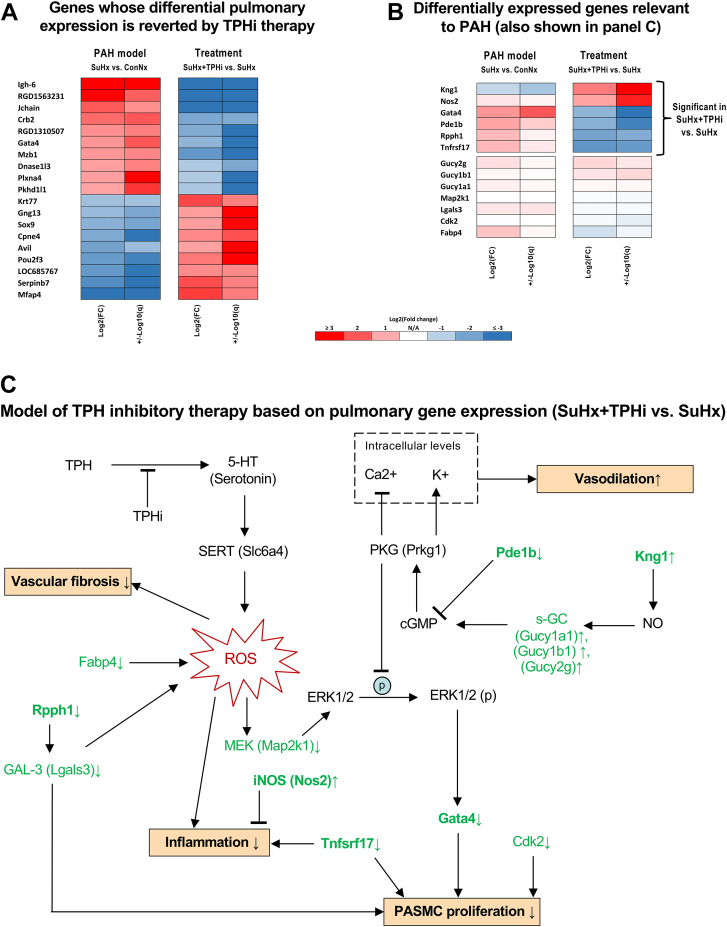
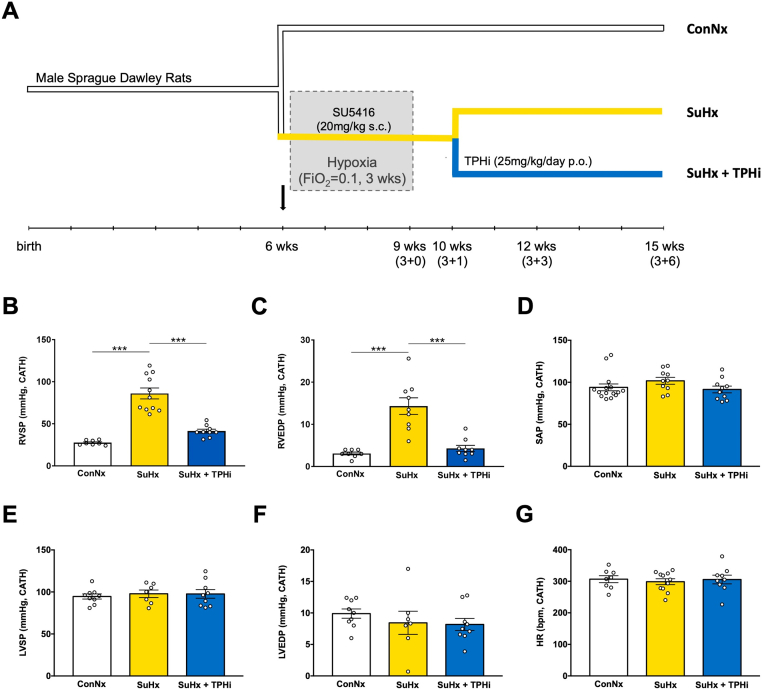
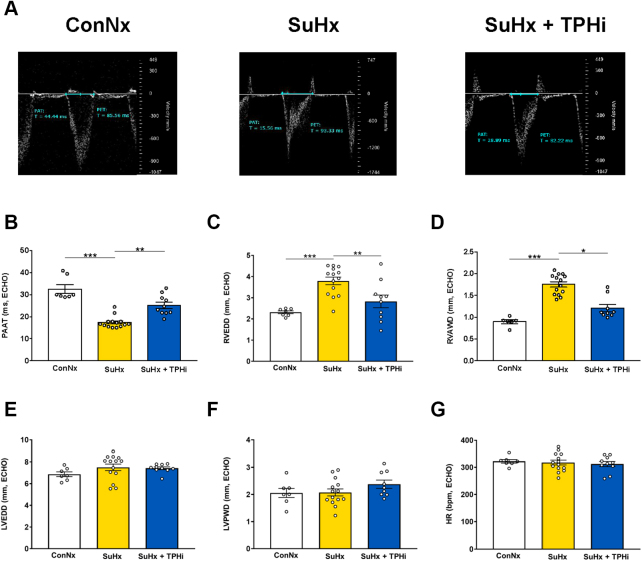
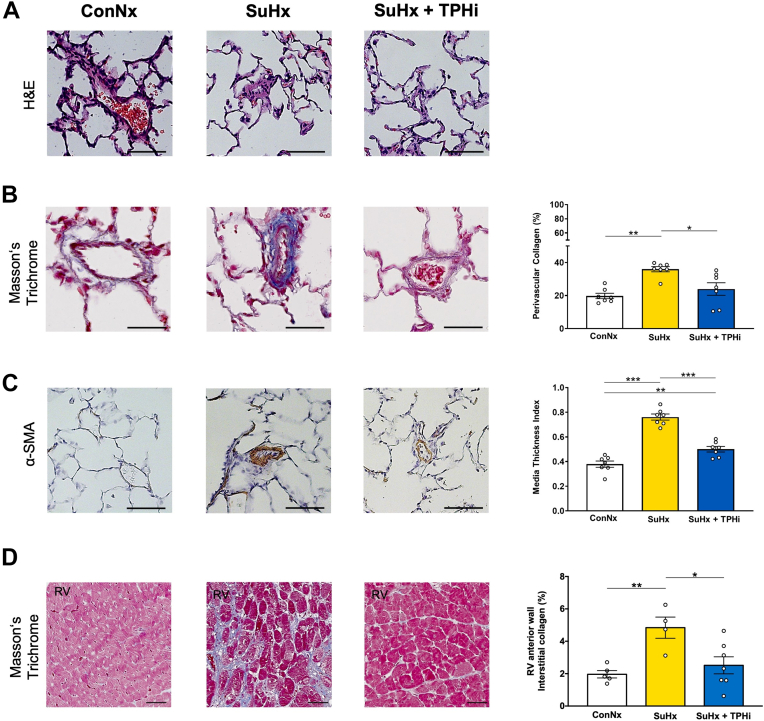
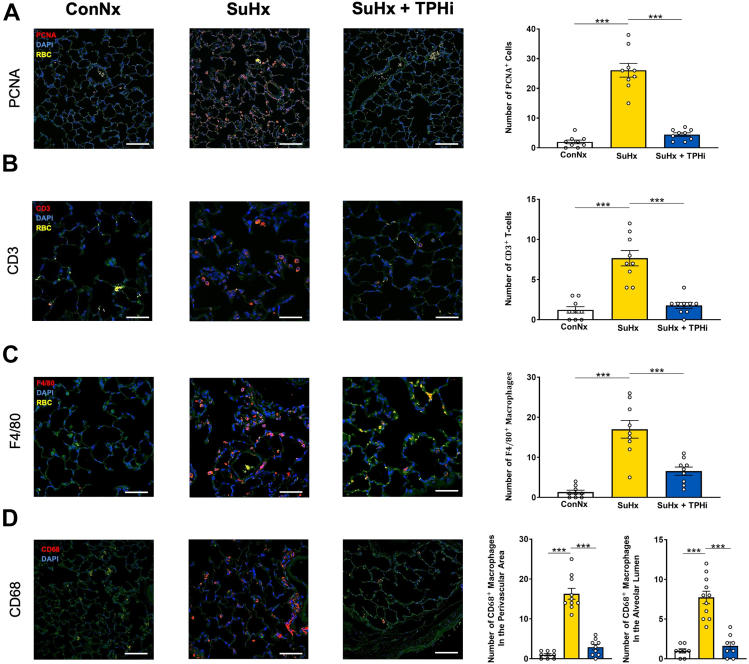
The serotonin pathway has long been proposed as a promising target for pulmonary arterial hypertension (PAH)-a progressive and uncurable disease. We developed a highly specific inhibitor of the serotonin synthesizing enzyme tryptophan hydroxylase 1 (TPH1), TPT-001 (TPHi). In this study, the authors sought to treat severe PAH in the Sugen/hypoxia (SuHx) rat model with the oral TPHi TPT-001. Male Sprague Dawley rats were divided into 3 groups: 1) ConNx, control animals; 2) SuHx, injected subcutaneously with SU5416 and exposed to chronic hypoxia for 3 weeks, followed by 6 weeks in room air; and 3) SuHx+TPHi, SuHx animals treated orally with TPHi for 5 weeks. Closed-chest right- and left heart catheterization and echocardiography were performed. Lungs were subject to histologic and mRNA sequencing analyses. Compared with SuHx-exposed rats, which developed severe PAH and right ventricular (RV) dysfunction, TPHi-treated SuHx rats had greatly lowered RV systolic (mean ± SEM: 41 ± 2.3 mm Hg vs 86 ± 6.5 mm Hg; < 0.001) and end-diastolic (mean ± SEM: 4 ± 0.7 mm Hg vs 14 ± 1.7 mm Hg; < 0.001) pressures, decreased RV hypertrophy and dilation (all not significantly different from control rats), and reversed pulmonary vascular remodeling. We identified perivascular infiltration of CD3 T cells and proinflammatory F4/80 and CD68 macrophages and proliferating cell nuclear antigen-positive alveolar epithelial cells all suppressed by TPHi treatment. Whole-lung mRNA sequencing in SuHx rats showed distinct gene expression patterns related to pulmonary arterial smooth muscle cell proliferation (Rpph1, Lgals3, Gata4), reactive oxygen species, inflammation (Tnfsrf17, iNOS), and vasodilation (Pde1b, Kng1), which reversed expression with TPHi treatment. Inhibition of TPH1 with a new class of drugs (here, TPT-001) has the potential to attenuate or even reverse severe PAH and associated RV dysfunction in vivo by blocking the serotonin pathway.
血清素通路长期以来一直被认为是肺动脉高压(PAH)——一种进行性且无法治愈的疾病——的一个有前景的治疗靶点。我们开发了一种血清素合成酶色氨酸羟化酶1(TPH1)的高特异性抑制剂TPT - 001(TPHi)。在本研究中,作者试图用口服TPHi TPT - 001治疗Sugen/低氧(SuHx)大鼠模型中的重度PAH。雄性Sprague Dawley大鼠被分为3组:1)ConNx,对照动物;2)SuHx,皮下注射SU5416并暴露于慢性低氧3周,随后在室内空气中饲养6周;3)SuHx + TPHi,用TPHi口服治疗5周的SuHx动物。进行了闭胸式左右心导管插入术和超声心动图检查。对肺进行了组织学和mRNA测序分析。与出现重度PAH和右心室(RV)功能障碍的SuHx暴露大鼠相比,TPHi治疗的SuHx大鼠的RV收缩压(平均值±标准误:41±2.3 mmHg对86±6.5 mmHg;<0.001)和舒张末期压力(平均值±标准误:4±0.7 mmHg对14±1.7 mmHg;<0.001)大大降低,RV肥厚和扩张减轻(均与对照大鼠无显著差异),并且肺血管重塑得到逆转。我们发现TPHi治疗可抑制CD3 T细胞、促炎F4/80和CD68巨噬细胞的血管周围浸润以及增殖细胞核抗原阳性的肺泡上皮细胞。SuHx大鼠的全肺mRNA测序显示了与肺动脉平滑肌细胞增殖(Rpph1、Lgals3、Gata4)、活性氧、炎症(Tnfsrf17、iNOS)和血管舒张(Pde1b、Kng1)相关的独特基因表达模式,TPHi治疗可使其表达逆转。用一类新型药物(此处为TPT - 001)抑制TPH1有可能通过阻断血清素通路在体内减轻甚至逆转重度PAH及相关的RV功能障碍。