Institute of Translational Medicine, Shanghai University, Shanghai 200444, P.R. China; Organoid Research Center, Shanghai University, Shanghai 200444, P.R. China; National Center for Translational Medicine (Shanghai) SHU Branch, Shanghai University, Shanghai 200444, P.R. China.
Institute of Translational Medicine, Shanghai University, Shanghai 200444, P.R. China; Organoid Research Center, Shanghai University, Shanghai 200444, P.R. China; National Center for Translational Medicine (Shanghai) SHU Branch, Shanghai University, Shanghai 200444, P.R. China.
Cell Rep Med. 2024 Sep 17;5(9):101694. doi: 10.1016/j.xcrm.2024.101694. Epub 2024 Aug 21.
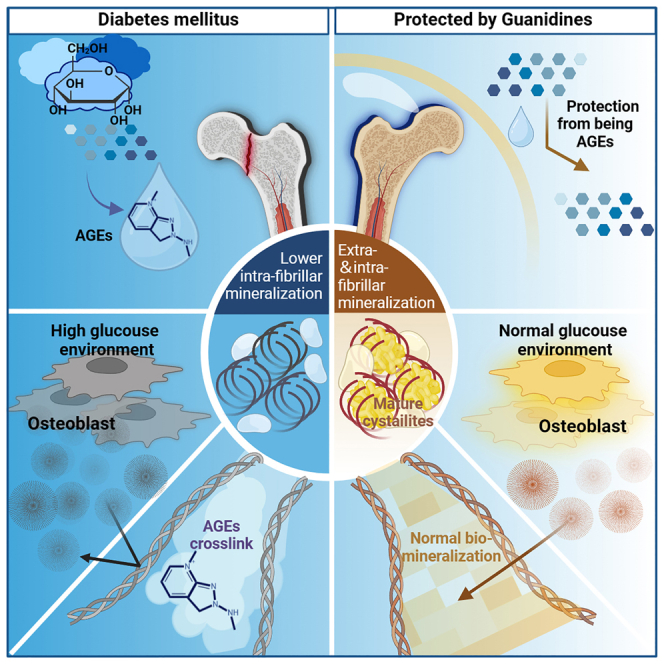
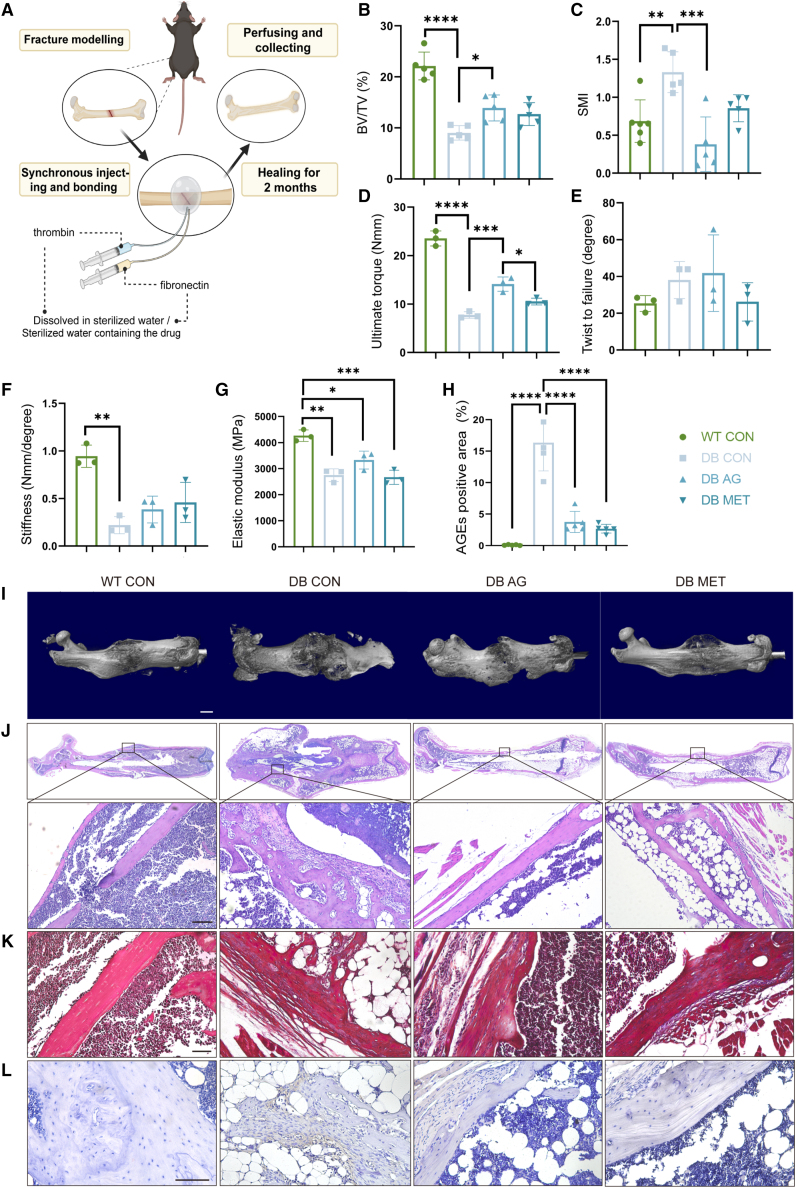
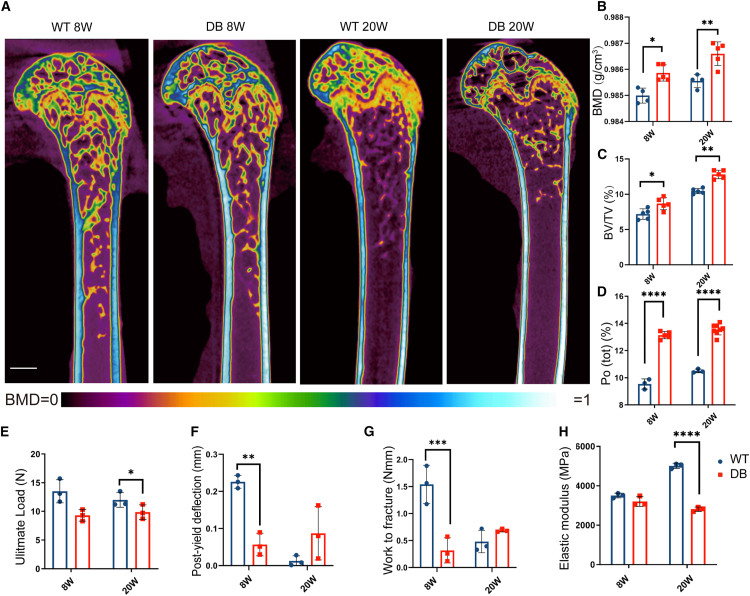
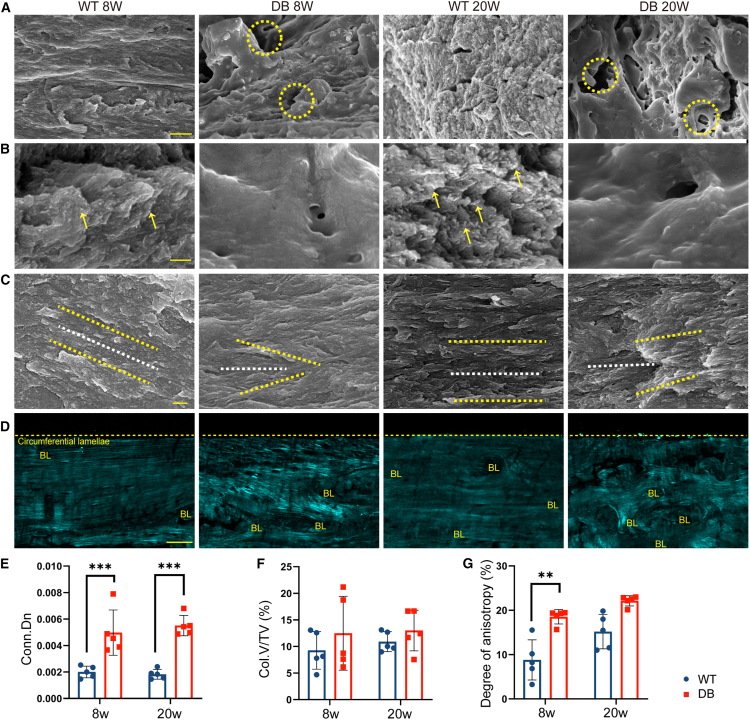
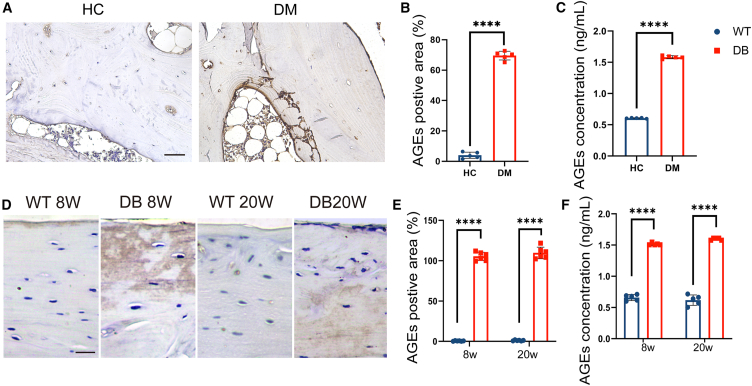
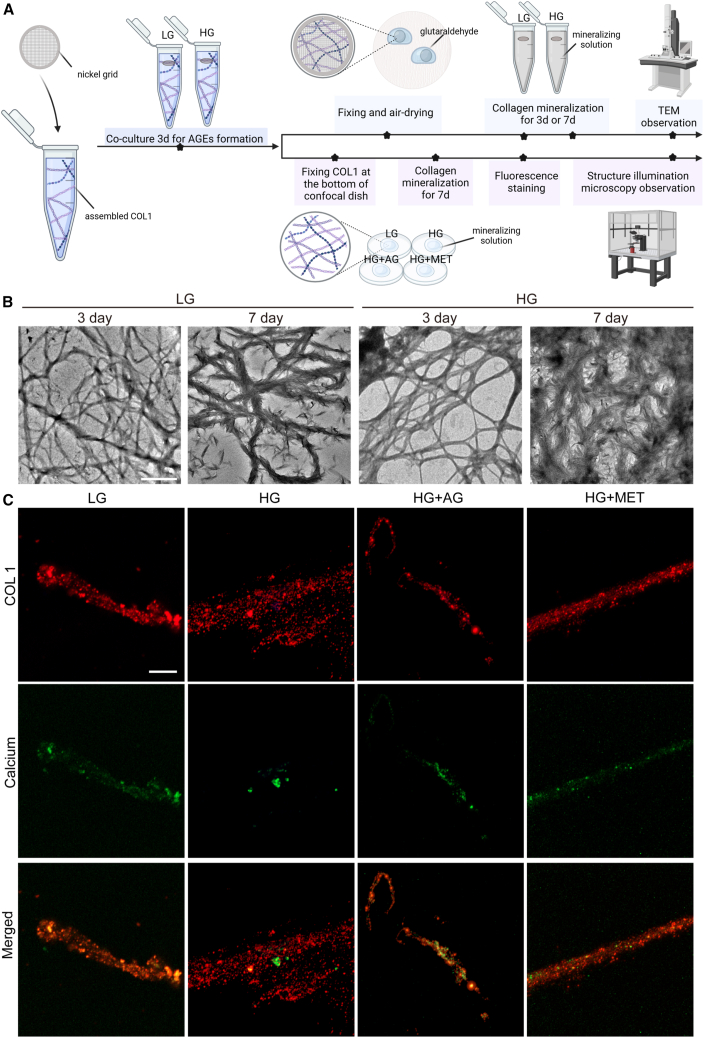
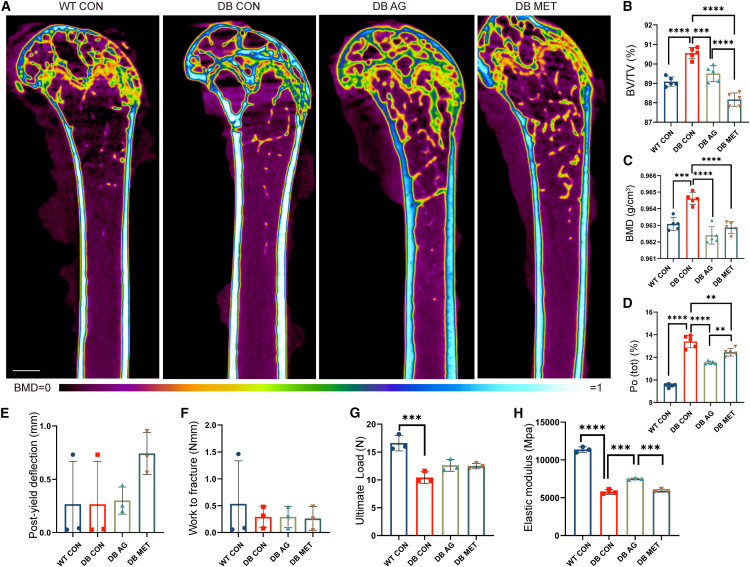
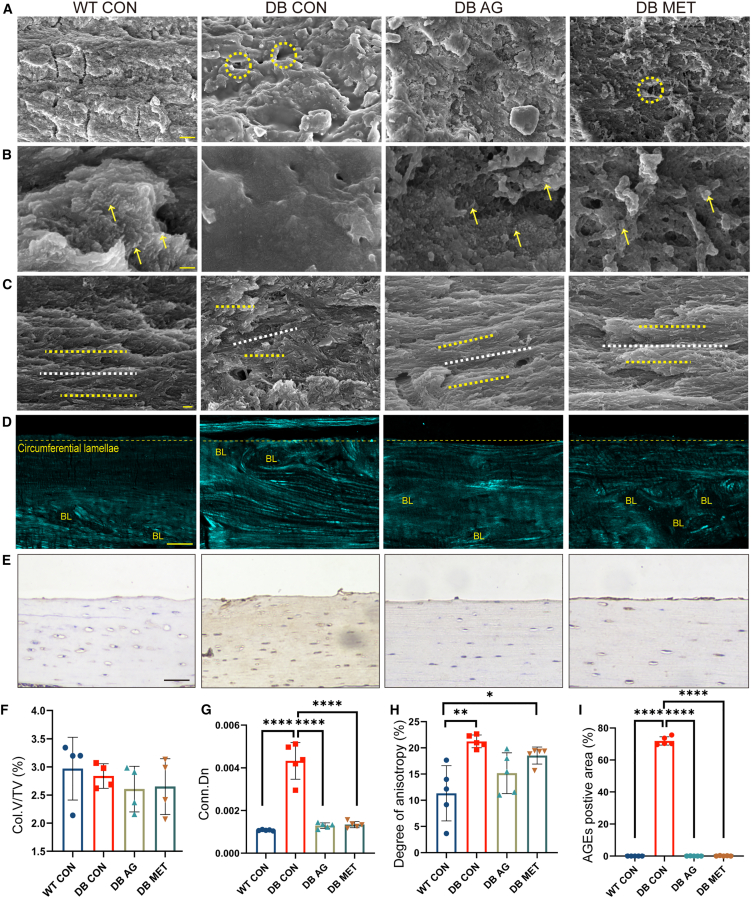
Patients with diabetes often experience fragile fractures despite normal or higher bone mineral density (BMD), a phenomenon termed the diabetic bone paradox (DBP). The pathogenesis and therapeutics opinions for diabetic bone disease (DBD) are not fully explored. In this study, we utilize two preclinical diabetic models, the leptin receptor-deficient db/db mice (DB) mouse model and the streptozotocin-induced diabetes (STZ) mouse model. These models demonstrate higher BMD and lower mechanical strength, mirroring clinical observations in diabetic patients. Advanced glycation end products (AGEs) accumulate in diabetic bones, causing higher non-enzymatic crosslinking within collagen fibrils. This inhibits intrafibrillar mineralization and leads to disordered mineral deposition on collagen fibrils, ultimately reducing bone strength. Guanidines, inhibiting AGE formation, significantly improve the microstructure and biomechanical strength of diabetic bone and enhance bone fracture healing. Therefore, targeting AGEs may offer a strategy to regulate bone mineralization and microstructure, potentially preventing the onset of DBD.
糖尿病患者尽管骨密度(BMD)正常或更高,仍常发生脆弱性骨折,这一现象被称为糖尿病性骨悖论(DBP)。糖尿病性骨病(DBD)的发病机制和治疗观点尚未完全阐明。在本研究中,我们利用两种临床前糖尿病模型,瘦素受体缺陷 db/db 小鼠(DB)模型和链脲佐菌素诱导的糖尿病(STZ)小鼠模型。这些模型表现出更高的 BMD 和更低的机械强度,与糖尿病患者的临床观察一致。糖基化终产物(AGEs)在糖尿病骨骼中积累,导致胶原原纤维内非酶交联增加。这抑制了纤维内矿化,导致胶原原纤维上的矿物质沉积紊乱,最终降低了骨强度。胍类化合物,抑制 AGE 的形成,可显著改善糖尿病骨骼的微观结构和生物力学强度,并促进骨骨折愈合。因此,靶向 AGEs 可能是一种调节骨矿化和微观结构的策略,可能预防 DBD 的发生。