Dirección de Desarrollo Tecnológico Agrario, Instituto Nacional de Innovación Agraria (INIA), Lima, 15024, Peru.
Dirección de Supervisión y Monitoreo en las Estaciones Experimentales Agrarias, Instituto Nacional de Innovación Agraria (INIA), Lima, 15024, Peru.
Sci Rep. 2024 Aug 22;14(1):19508. doi: 10.1038/s41598-024-69945-9.
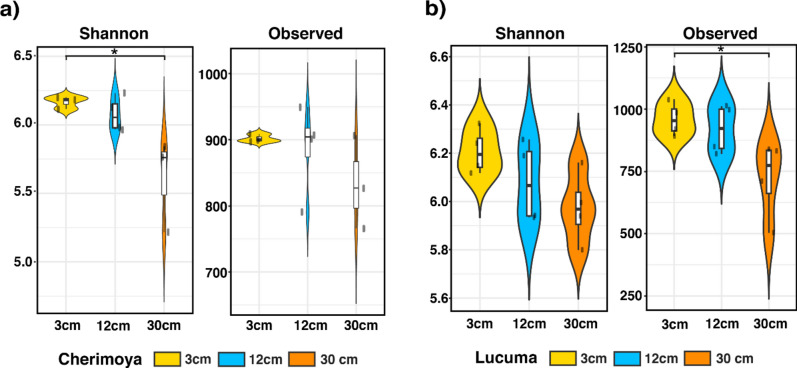
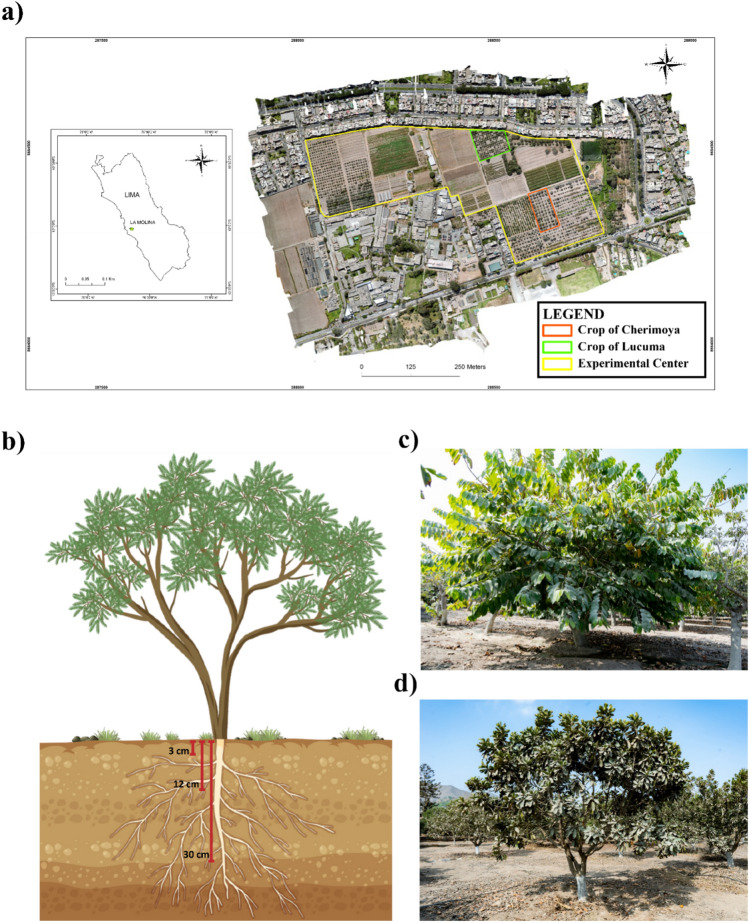
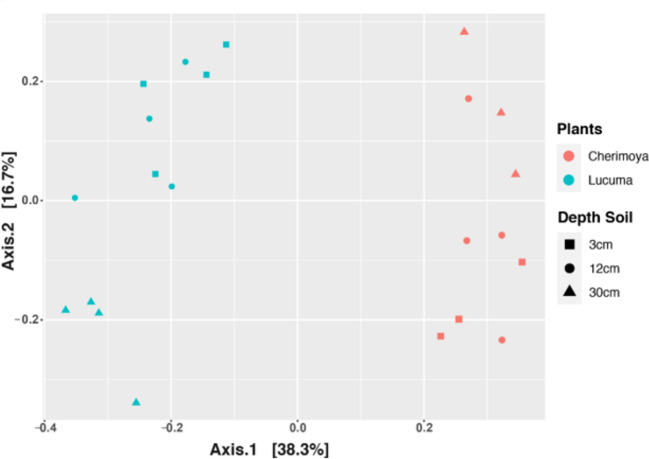
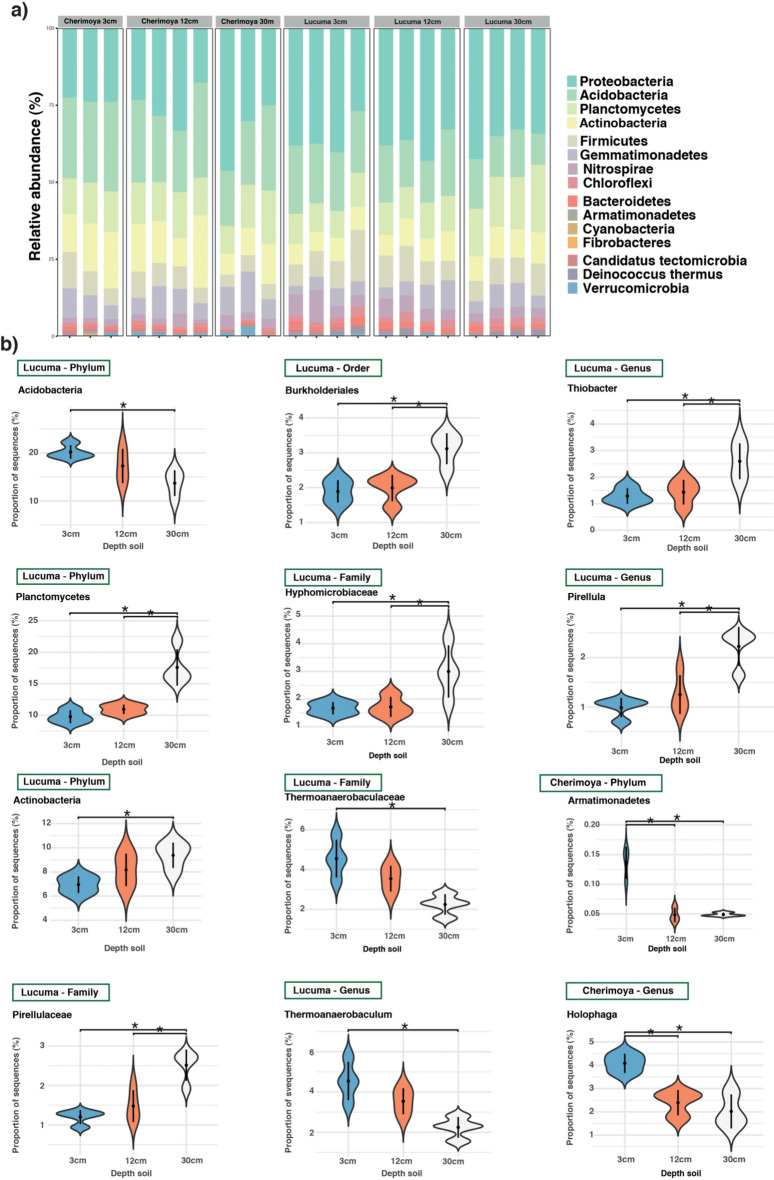
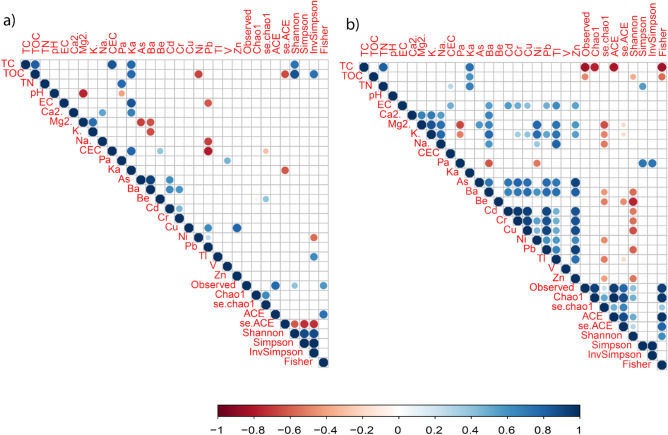
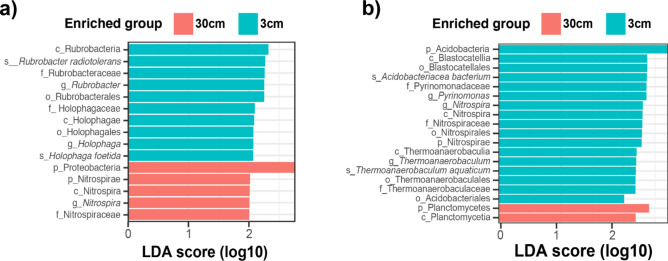
The characterization of soil microbial communities at different depths is essential to understand their impact on nutrient availability, soil fertility, plant growth and stress tolerance. We analyzed the microbial community at three depths (3 cm, 12 cm, and 30 cm) in the native fruit trees Annona cherimola (cherimoya) and Pouteria lucuma (lucuma), which provide fruits in vitamins, minerals, and antioxidants. We used PacBio-HiFi, a long-read high-throughput sequencing to explore the composition, diversity and putative functionality of rhizosphere bacterial communities at different soil depths. Bacterial diversity, encompassing various phyla, families, and genera, changed with depth. Notable differences were observed in the alpha diversity indices, especially the Shannon index. Beta diversity also varied based on plant type and depth. In cherimoya soils, positive correlations with Total Organic Carbon (TOC) and Cation Exchange Capacity (CEC) were observed, but negative ones with certain cations. In lucuma soils, indices like the Shannon index exhibited negative correlations with several metals and specific soil properties. We proposed that differences between the plant rhizosphere environments may explain the variance in their microbial diversity. This study provides insights into the microbial communities present at different soil depths, highlighting the prevalence of decomposer bacteria. Further research is necessary to elucidate their specific metabolic features and overall impact on crop growth and quality.
不同深度土壤微生物群落的特征对于理解其对养分有效性、土壤肥力、植物生长和胁迫耐受的影响至关重要。我们分析了本地水果树安诺娜·切里莫拉(百香果)和波提利亚·卢库玛(卢库玛)在三个深度(3 厘米、12 厘米和 30 厘米)的微生物群落,这些水果提供了维生素、矿物质和抗氧化剂。我们使用 PacBio-HiFi,一种长读高通量测序技术,来探索不同土壤深度根际细菌群落的组成、多样性和潜在功能。细菌多样性包括各种门、科和属,随深度而变化。在 alpha 多样性指数中,特别是香农指数,观察到显著差异。基于植物类型和深度,beta 多样性也有所不同。在百香果土壤中,与总有机碳(TOC)和阳离子交换容量(CEC)呈正相关,但与某些阳离子呈负相关。在卢库玛土壤中,香农指数等指数与几种金属和特定土壤特性呈负相关。我们提出,植物根际环境的差异可能解释了其微生物多样性的差异。本研究深入了解了不同土壤深度存在的微生物群落,强调了分解菌的普遍性。需要进一步研究以阐明它们的具体代谢特征以及对作物生长和质量的总体影响。