
脂质代谢相关的串扰:肿瘤微环境中癌细胞与免疫/基质细胞之间的双向相互作用以洞察预后。
Lipid metabolism associated crosstalk: the bidirectional interaction between cancer cells and immune/stromal cells within the tumor microenvironment for prognostic insight.
作者信息
Lin Zhongshu, Hua Guanxiang, Hu Xiaojuan
机构信息
Queen Mary College, Nanchang University, Nanchang, China.
School of Biological and Behavioural Science, Queen Mary University of London, London, UK.
出版信息
Cancer Cell Int. 2024 Aug 22;24(1):295. doi: 10.1186/s12935-024-03481-4.
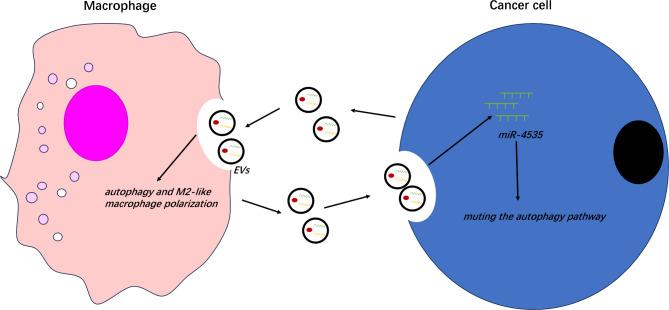
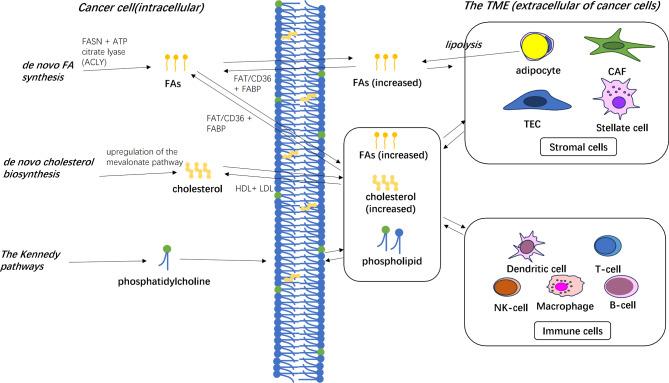
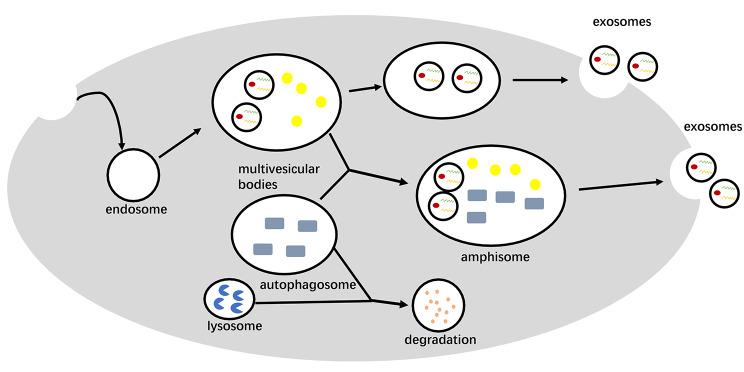
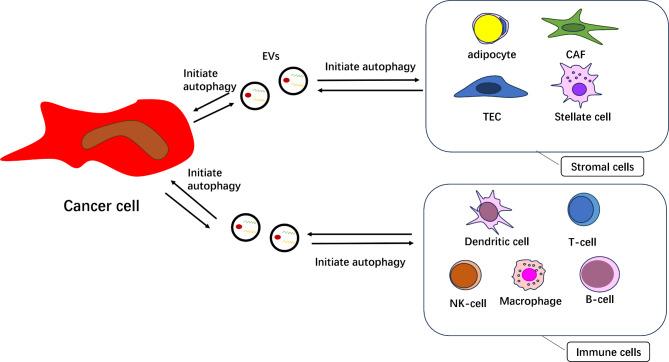
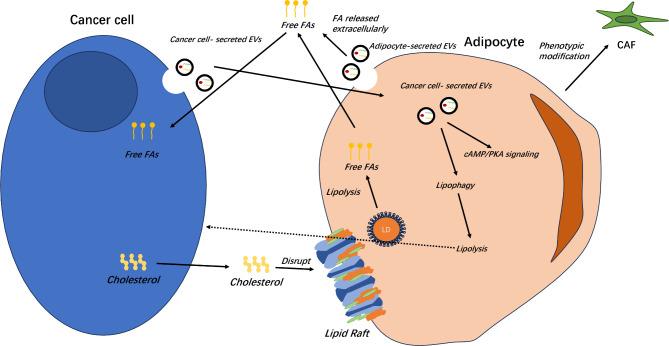
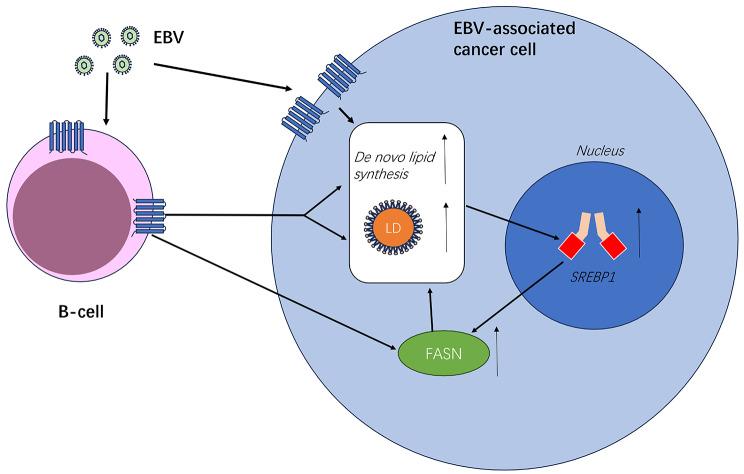
Cancer is closely related to lipid metabolism, with the tumor microenvironment (TME) containing numerous lipid metabolic interactions. Cancer cells can bidirectionally interact with immune and stromal cells, the major components of the TME. This interaction is primarily mediated by fatty acids (FAs), cholesterol, and phospholipids. These interactions can lead to various physiological changes, including immune suppression, cancer cell proliferation, dissemination, and anti-apoptotic effects on cancer cells. The physiological modulation resulting from this lipid metabolism-associated crosstalk between cancer cells and immune/stromal cells provides valuable insights into cancer prognosis. A comprehensive literature review was conducted to examine the function of the bidirectional lipid metabolism interactions between cancer cells and immune/stromal cells within the TME, particularly how these interactions influence cancer prognosis. A novel autophagy-extracellular vesicle (EV) pathway has been proposed as a mediator of lipid metabolism interactions between cancer cells and immune cells/stromal cells, impacting cancer prognosis. As a result, different forms of lipid metabolism interactions have been described as being linked to cancer prognosis, including those mediated by the autophagy-EV pathway. In conclusion, understanding the bidirectional lipid metabolism interactions between cancer cells and stromal/immune cells in the TME can help develop more advanced prognostic approaches for cancer patients.
癌症与脂质代谢密切相关,肿瘤微环境(TME)中存在众多脂质代谢相互作用。癌细胞可与TME的主要组成部分免疫细胞和基质细胞进行双向相互作用。这种相互作用主要由脂肪酸(FAs)、胆固醇和磷脂介导。这些相互作用可导致各种生理变化,包括免疫抑制、癌细胞增殖、扩散以及对癌细胞的抗凋亡作用。癌细胞与免疫/基质细胞之间这种与脂质代谢相关的串扰所导致的生理调节为癌症预后提供了有价值的见解。我们进行了一项全面的文献综述,以研究TME内癌细胞与免疫/基质细胞之间双向脂质代谢相互作用的功能,特别是这些相互作用如何影响癌症预后。一种新的自噬-细胞外囊泡(EV)途径已被提出作为癌细胞与免疫细胞/基质细胞之间脂质代谢相互作用的介质,影响癌症预后。因此,不同形式的脂质代谢相互作用已被描述为与癌症预后相关,包括那些由自噬-EV途径介导的相互作用。总之,了解TME中癌细胞与基质/免疫细胞之间的双向脂质代谢相互作用有助于为癌症患者开发更先进的预后方法。

 Zotero 插件