Olcese Martina, Madera Francesco, Cardinali Paola, Serafini Gianluca, Migliorini Laura
Department of Education Sciences, University of Genoa, Genoa, Italy.
Department of Economics, Mercatorum University, Rome, Italy.
Front Psychiatry. 2024 Aug 8;15:1430688. doi: 10.3389/fpsyt.2024.1430688. eCollection 2024.
Over the past decade migration to Italy has increased significantly for various reasons including armed conflicts. Generally, the migration process is exposed to different risk factors during different periods of migration, which can compromise well-being and promote the onset or exacerbation of mental disorders. A community with resources and the perception of one's community as resilient can be important protective factor in the context of migration.
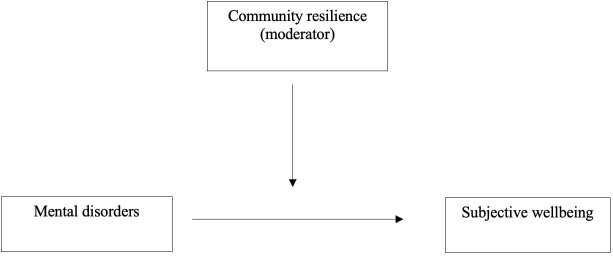
This study aims to understand which variables in migration predict an increase in perceived community resilience and to understand the role of community resilience in the relationship between mental disorders and subjective well-being in a sample of 100 adult migrants at the first consultation interview in the ambulatories of Psychiatry Unit.
After defining the inclusion and exclusion criteria, migrants were asked to fill out self-report questionnaires to collect socio-demographic data and to assess perception of mental disorders, perceived community resilience and perception of subjective well-being. Descriptive analysis, simple regression, and moderation analyses were conducted to test the hypotheses.
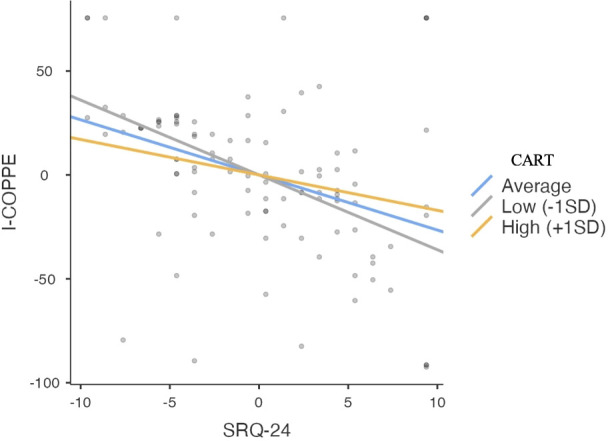
The results show that the variable meaning attributed to the community with reference to the host community, migration with someone, and longer duration of stay in Italy contribute to increased perceptions of community resilience. In addition, a direct negative effect of mental disorders on subjective well-being and the moderating role of community resilience in relationship between mental disorders and subjective well-being have been demonstrated.
This result underscores the importance of perceived community resilience in mitigating the negative effects of mental disorders on subjective well-being. Perceiving one's community as more resilient seems to protect against the impact of mental disorders on subjective well-being. Our results support an ecological model of migrants' mental health that values the community and its resources in coping with mental disorders in the context of migration.
在过去十年中,由于包括武装冲突在内的各种原因,移民到意大利的人数显著增加。一般来说,移民过程在不同阶段会面临不同的风险因素,这些因素可能损害健康,并促使精神障碍的发生或加剧。一个拥有资源且个人认为其具有复原力的社区,在移民背景下可能是重要的保护因素。
本研究旨在了解移民过程中的哪些变量能够预测感知到的社区复原力的增强,并了解在精神科门诊首次咨询访谈的100名成年移民样本中,社区复原力在精神障碍与主观幸福感关系中的作用。
在确定纳入和排除标准后,要求移民填写自我报告问卷,以收集社会人口学数据,并评估对精神障碍的感知、感知到的社区复原力和主观幸福感。进行描述性分析、简单回归分析和调节分析以检验假设。
结果表明,对东道社区的社区意义的变量、与他人一起移民以及在意大利的停留时间较长,有助于增强对社区复原力的感知。此外,还证明了精神障碍对主观幸福感有直接负面影响,以及社区复原力在精神障碍与主观幸福感关系中的调节作用。
这一结果强调了感知到的社区复原力在减轻精神障碍对主观幸福感负面影响方面的重要性。将自己的社区视为更具复原力似乎可以防止精神障碍对主观幸福感的影响。我们的结果支持一种移民心理健康的生态模型,该模型重视社区及其在移民背景下应对精神障碍的资源。