Brauer Travis, Paika Sulaiman, Kotwani Roshni, Khanna Deepesh
Medicine, Nova Southeastern University Dr. Kiran C. Patel College of Osteopathic Medicine, Clearwater, USA.
Foundational Sciences, Nova Southeastern University Dr. Kiran C. Patel College of Osteopathic Medicine, Clearwater, USA.
Cureus. 2024 Jul 23;16(7):e65192. doi: 10.7759/cureus.65192. eCollection 2024 Jul.
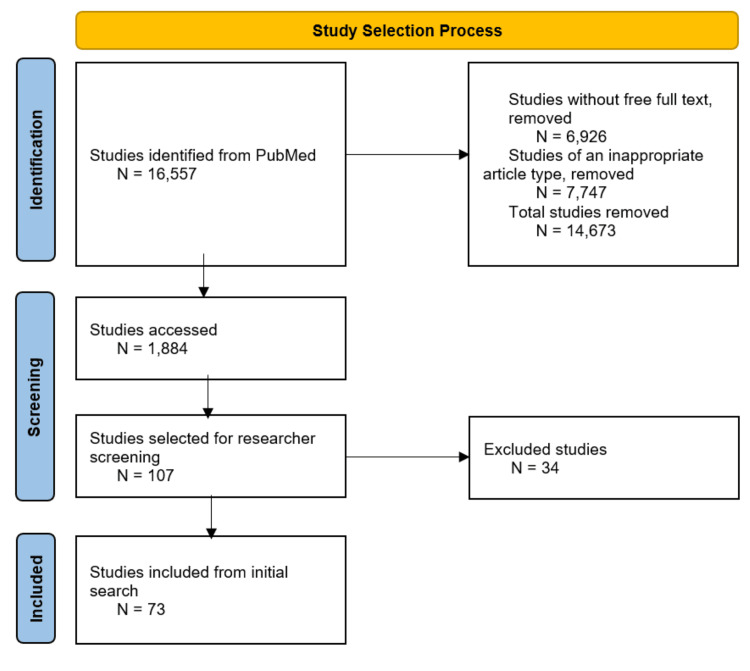
The COVID-19 pandemic is well on its way to reaching endemic status across the globe. While the medical community's understanding of the respiratory complications induced by COVID-19 is improving, there is still much to be learned about the neurological manifestations associated with COVID-19 infection. This review aimed to compile relevant, available evidence of COVID-19-induced neurological complications and to provide information for each complication regarding symptomology, progression patterns, demographic risk factors, treatment, and causative mechanism of action when available. Data for this review was collected using a confined search on PubMed using the keywords ["COVID-19" OR "SARS-CoV-2"] AND ["neurological complications" OR "olfactory symptoms" OR "gustatory symptoms" OR "myalgia" OR "headache" OR "dizziness" OR "stroke" OR "seizures" OR "meningoencephalitis" OR "cerebellar ataxia" OR "acute myelitis" OR "Guillain Barré Syndrome" OR "Miller Fisher Syndrome" OR "Posterior Reversible Encephalopathy Syndrome"] between 2019 and 2023. A wide range of neurological manifestations impact a significant percentage of COVID-19 patients, and a deeper understanding of these manifestations is necessary to ensure adequate management. The most common neurological complications identified consist of olfactory and gustatory dysfunctions, myalgia, headache, and dizziness, while the most severe complications include stroke, seizures, meningoencephalitis, Guillain-Barré syndrome, Miller Fisher syndrome, acute myelitis, and posterior reversible encephalopathy syndrome. While this review effectively provides a roadmap of the neurological risks posed to COVID-19 patients, further research is needed to clarify the precise incidence of these complications and to elucidate the mechanisms responsible for their manifestation.
新冠疫情正迅速在全球范围内演变为地方性流行疾病。虽然医学界对新冠病毒引发的呼吸道并发症的认识在不断提高,但对于与新冠病毒感染相关的神经学表现仍有许多有待了解之处。本综述旨在汇总有关新冠病毒所致神经并发症的相关现有证据,并针对每种并发症,在有可用信息时提供症状学、进展模式、人口统计学风险因素、治疗方法及作用机制等方面的信息。本综述的数据收集是通过在PubMed上使用关键词 ["COVID-19" 或 "SARS-CoV-2"] 以及 ["神经并发症" 或 "嗅觉症状" 或 "味觉症状" 或 "肌痛" 或 "头痛" 或 "头晕" 或 "中风" 或 "癫痫发作" 或 "脑膜脑炎" 或 "小脑共济失调" 或 "急性脊髓炎" 或 "吉兰-巴雷综合征" 或 "米勒-费希尔综合征" 或 "后部可逆性脑病综合征"] 进行限定搜索获得的,时间跨度为2019年至2023年。多种神经学表现影响着相当比例的新冠患者,深入了解这些表现对于确保充分治疗至关重要。已确定的最常见神经并发症包括嗅觉和味觉功能障碍、肌痛、头痛和头晕,而最严重的并发症包括中风、癫痫发作、脑膜脑炎、吉兰-巴雷综合征、米勒-费希尔综合征、急性脊髓炎和后部可逆性脑病综合征。虽然本综述有效地提供了新冠患者面临的神经学风险路线图,但仍需进一步研究以明确这些并发症的确切发病率,并阐明其表现背后的机制。