Department of Dermatology, Xiangya Hospital, Central South University, Changsha, China.
Hunan key laboratory of aging biology, Xiangya Hospital, Central South University, Changsha, China.
Nat Commun. 2024 Aug 23;15(1):7265. doi: 10.1038/s41467-024-50970-1.
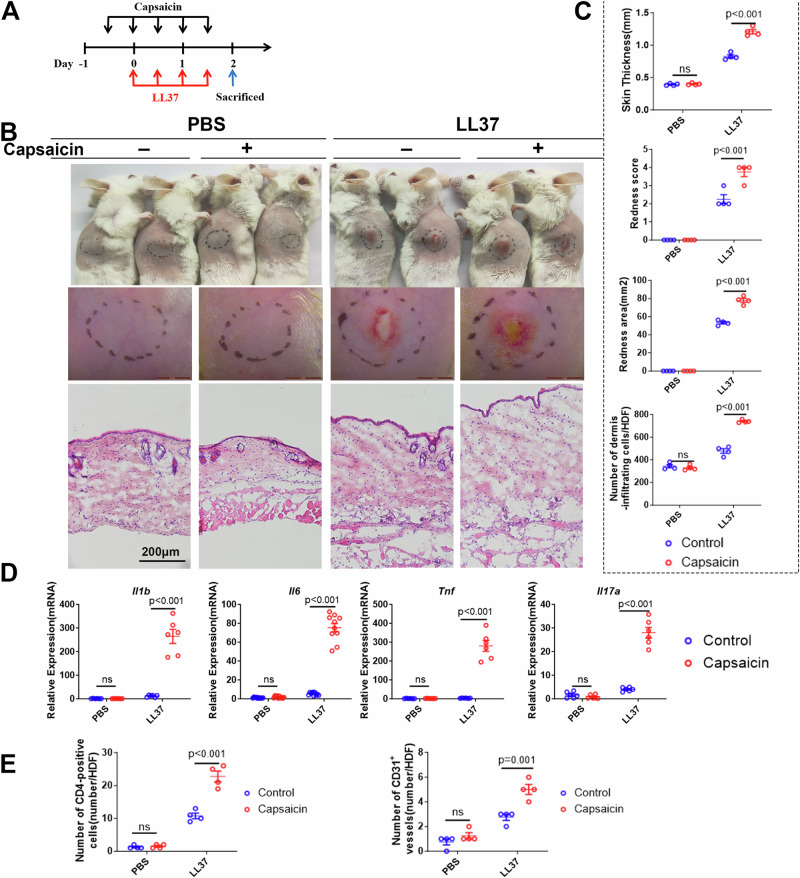
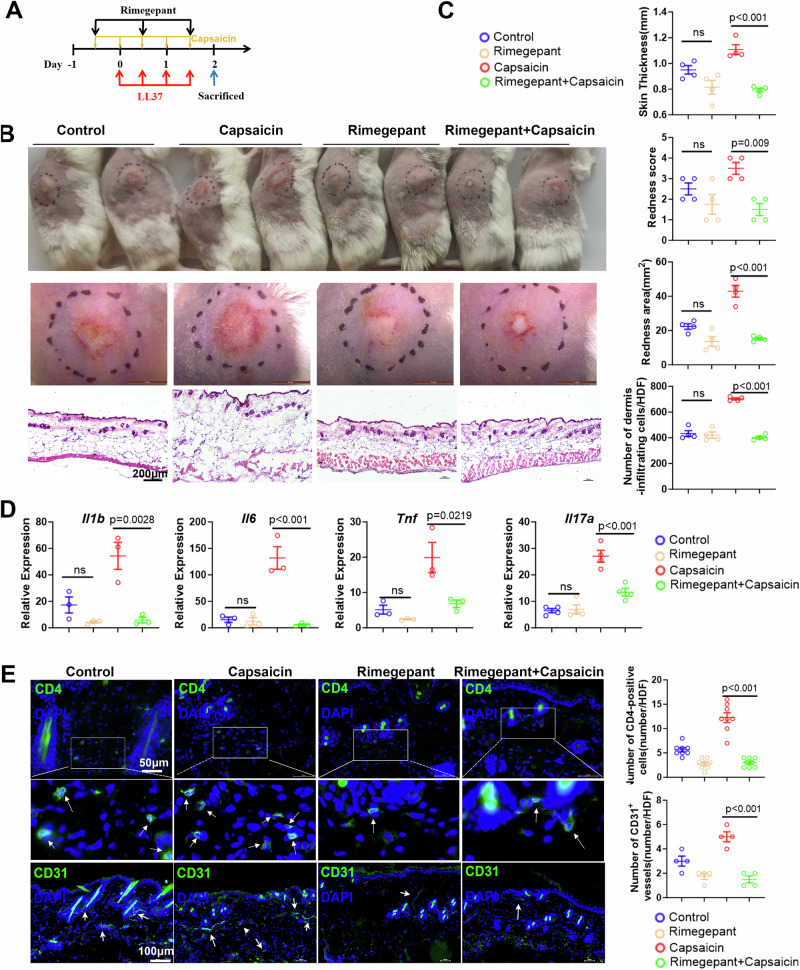
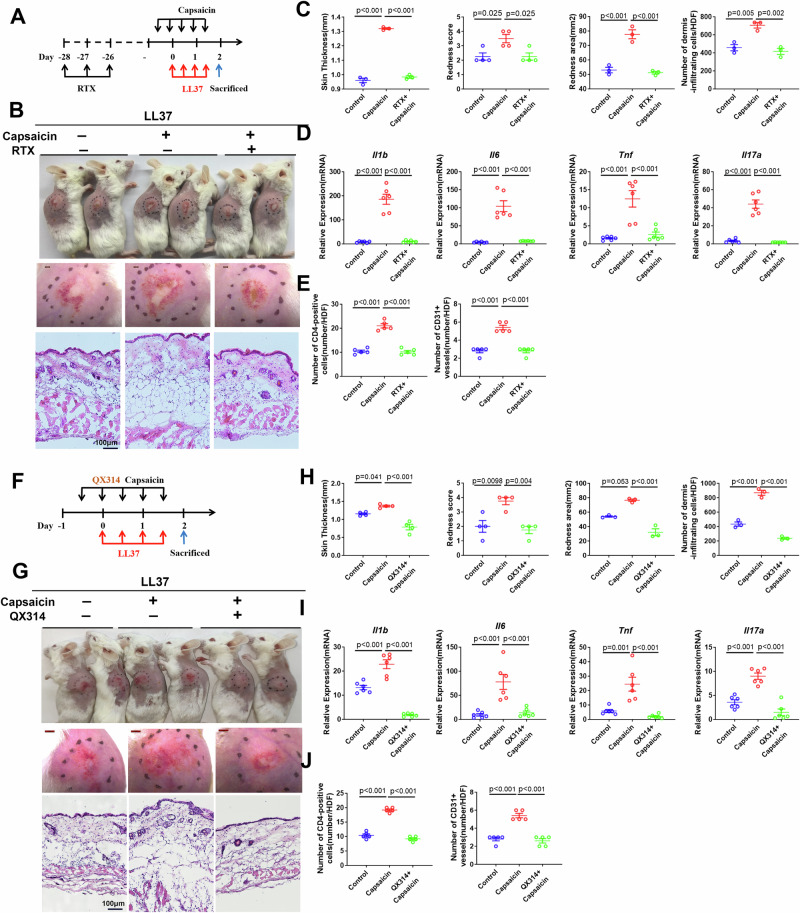
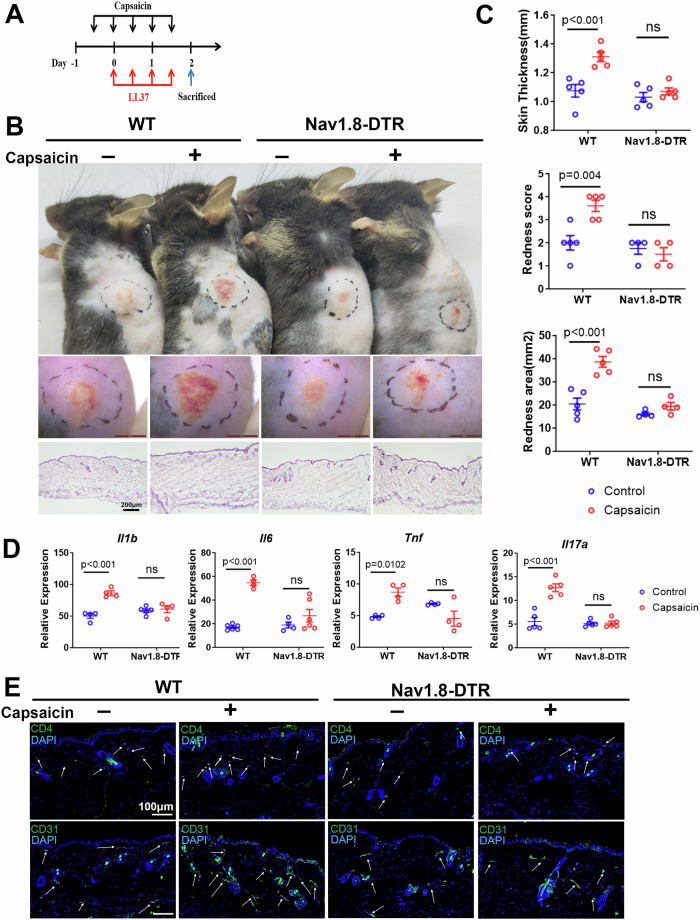
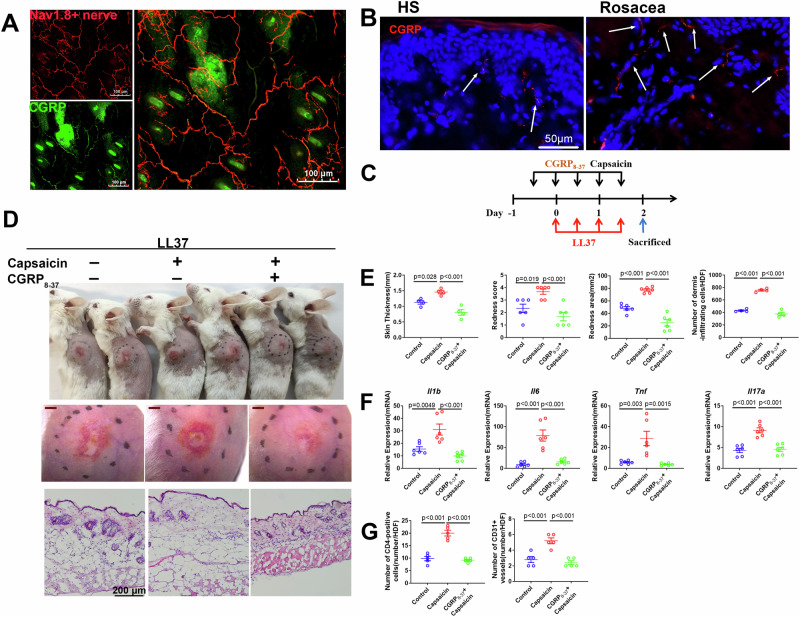
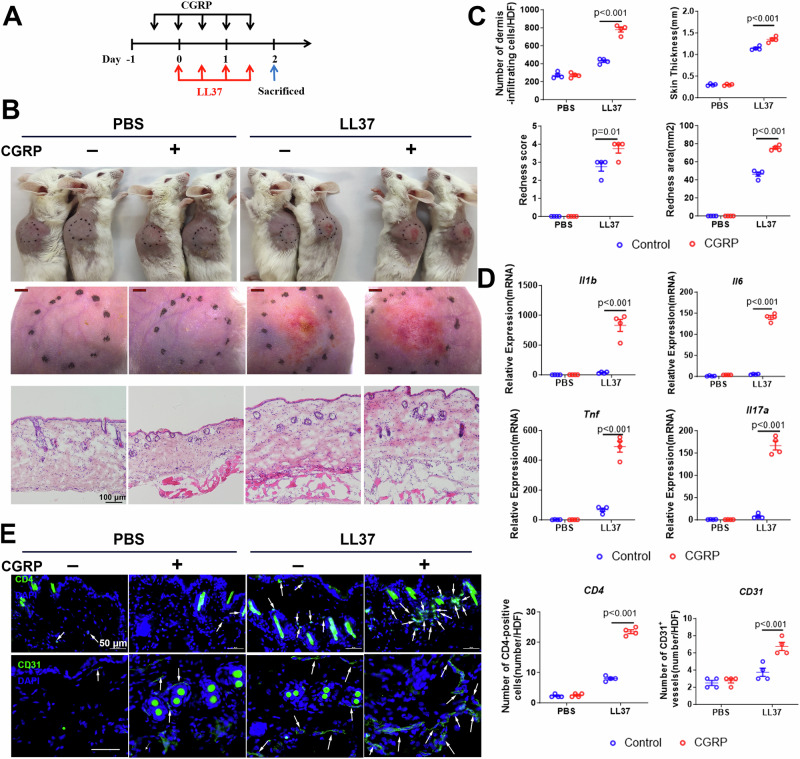
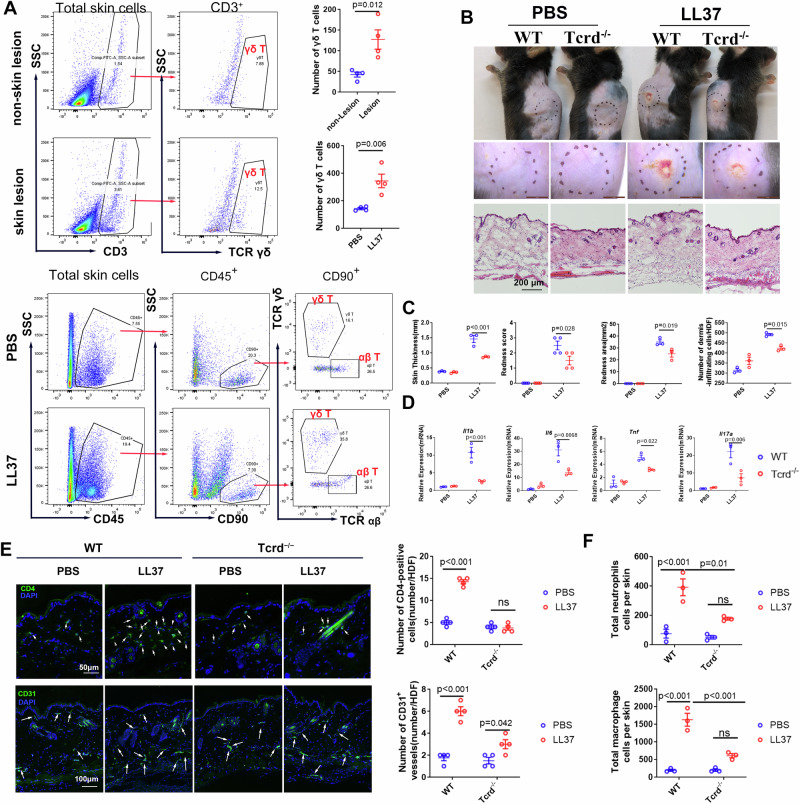
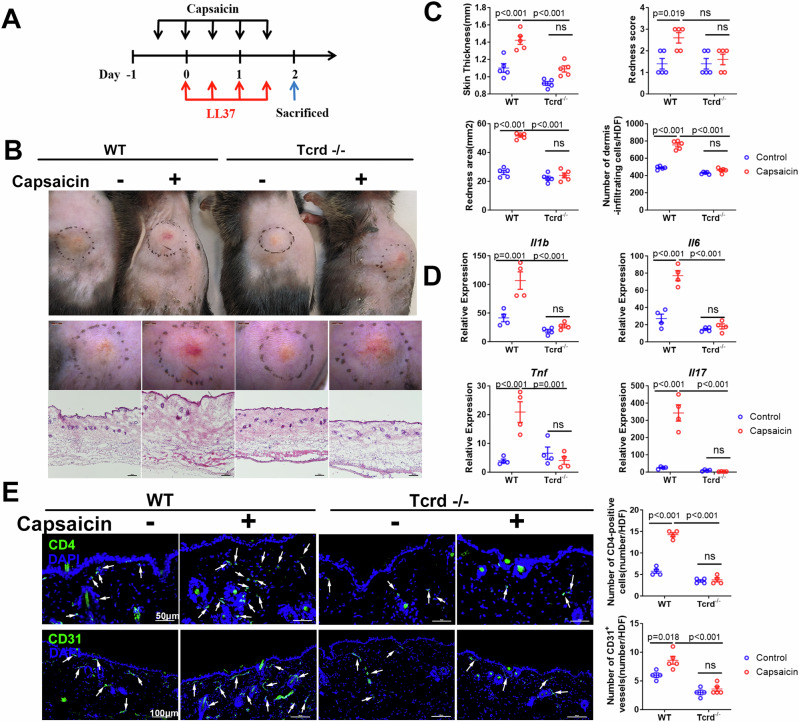
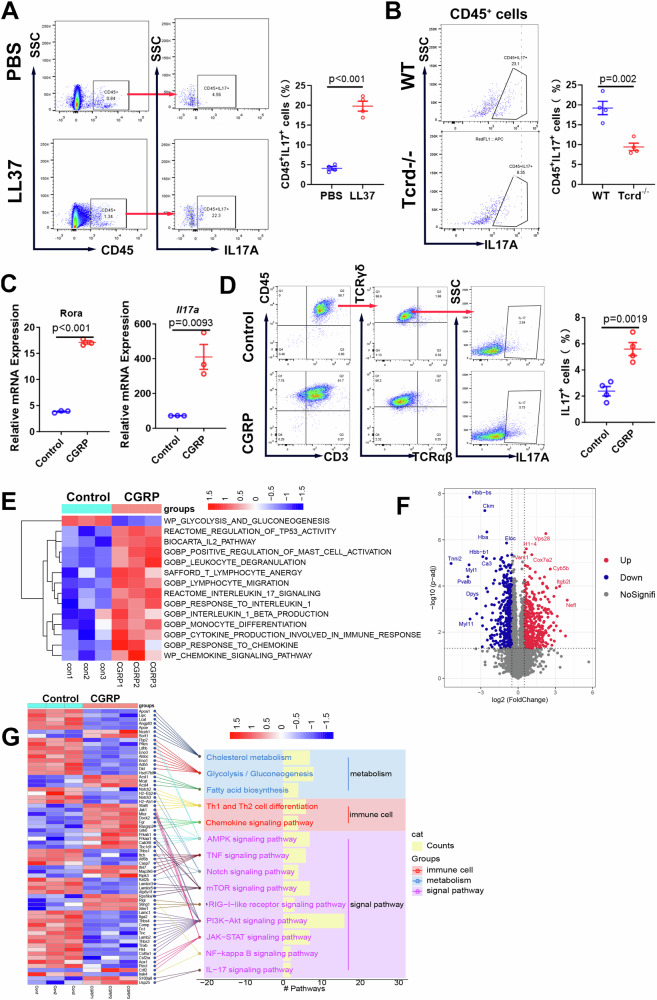
Rosacea patients show facial hypersensitivity to stimulus factors (such as heat and capsaicin); however, the underlying mechanism of this hyperresponsiveness remains poorly defined. Here, we show capsaicin stimulation in mice induces exacerbated rosacea-like dermatitis but has no apparent effect on normal skin. Nociceptor ablation substantially reduces the hyperresponsiveness of rosacea-like dermatitis. Subsequently, we find that γδ T cells express Ramp1, the receptor of the neuropeptide CGRP, and are in close contact with these nociceptors in the skin. γδ T cells are significantly increased in rosacea skin lesions and can be further recruited and activated by neuron-secreted CGRP. Rosacea-like dermatitis is reduced in T cell receptor δ-deficient (Tcrd) mice, and the nociceptor-mediated aggravation of rosacea-like dermatitis is also reduced in these mice. In vitro experiments show that CGRP induces IL17A secretion from γδ T cells by regulating inflammation-related and metabolism-related pathways. Finally, rimegepant, a CGRP receptor antagonist, shows efficacy in the treatment of rosacea-like dermatitis. In conclusion, our findings demonstrate a neuron-CGRP-γδT cell axis that contributes to the hyperresponsiveness of rosacea, thereby showing that targeting CGRP is a potentially effective therapeutic strategy for rosacea.
酒渣鼻患者的面部对外界刺激因素(如热和辣椒素)表现出高度敏感;然而,这种超敏反应的潜在机制仍未得到明确界定。在这里,我们展示了辣椒素刺激小鼠会引起加剧的酒渣鼻样皮炎,但对正常皮肤没有明显影响。伤害感受器消融可显著减轻酒渣鼻样皮炎的高反应性。随后,我们发现 γδ T 细胞表达了速激肽受体 1(Ramp1),这是神经肽 CGRP 的受体,并且与皮肤中的这些伤害感受器密切接触。γδ T 细胞在酒渣鼻皮损中显著增加,并且可以被神经元分泌的 CGRP 进一步募集和激活。在 T 细胞受体 δ 缺陷(Tcrd)小鼠中,酒渣鼻样皮炎减少,并且这些小鼠中神经元介导的酒渣鼻样皮炎加重也减少。体外实验表明,CGRP 通过调节炎症相关和代谢相关途径诱导 γδ T 细胞分泌 IL17A。最后,CGRP 受体拮抗剂rimegepant 显示出治疗酒渣鼻样皮炎的疗效。总之,我们的研究结果表明存在一个神经元-CGRP-γδT 细胞轴,有助于酒渣鼻的高反应性,从而表明靶向 CGRP 可能是治疗酒渣鼻的一种有效治疗策略。