Department of Critical Care Medicine and Hematology, The 3Rd Xiangya Hospital, Central South University, Changsha, 410000, People's Republic of China.
Xiangya School of Pharmaceutical Sciences, Central South University, Changsha, 410000, People's Republic of China.
Mol Med. 2024 Aug 23;30(1):127. doi: 10.1186/s10020-024-00891-y.
Cognitive dysfunction caused by infection frequently emerges as a complication in sepsis survivor patients. However, a comprehensive understanding of its pathogenesis remains elusive.
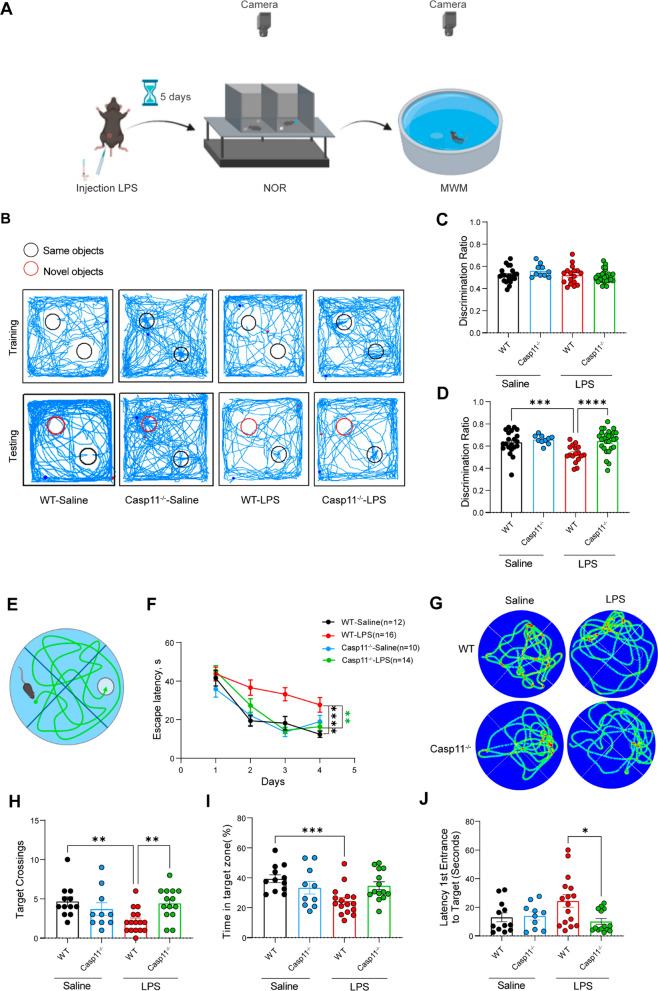
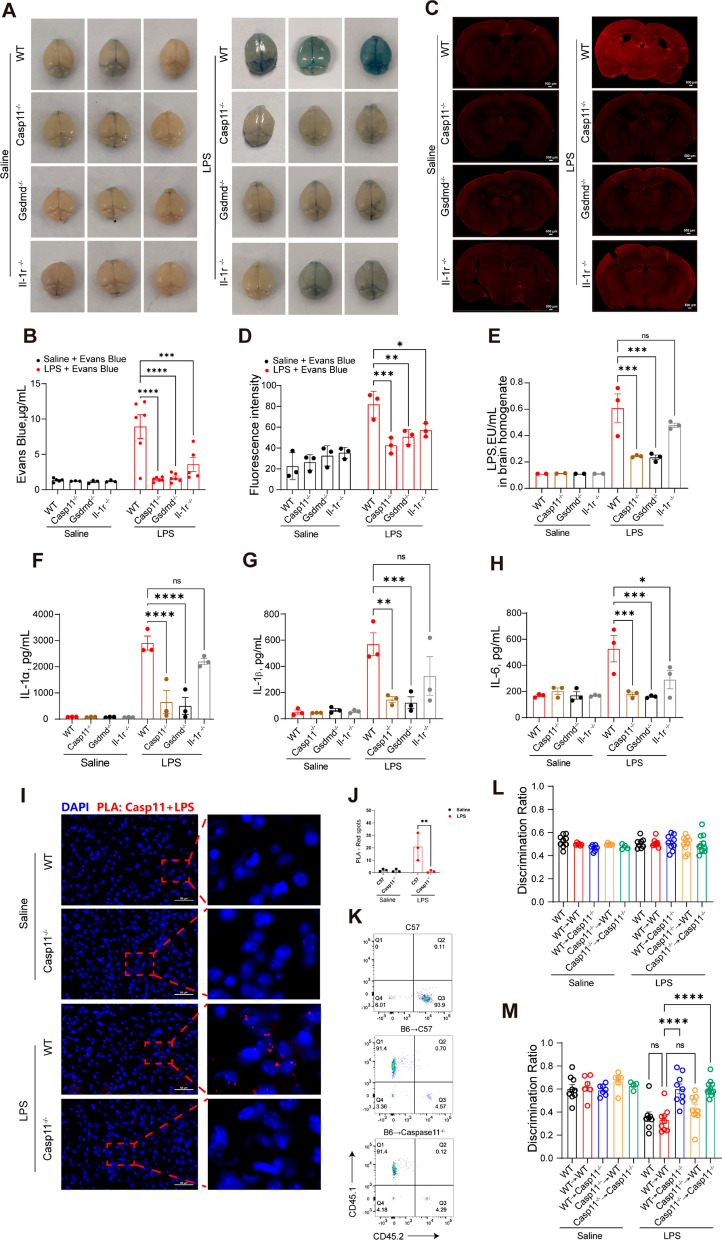
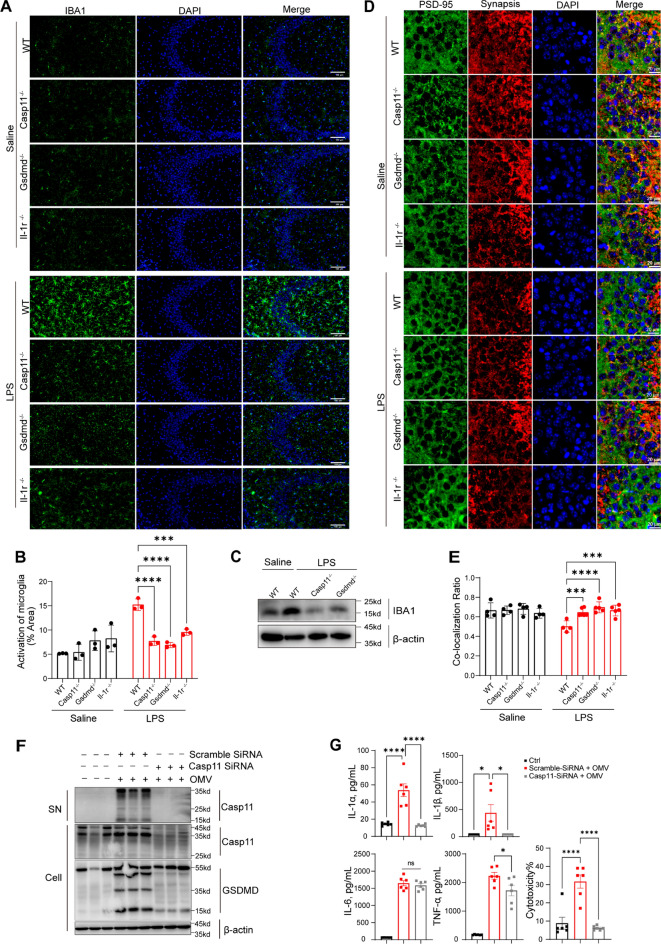
In our in vivo experiments, an animal model of endotoxemia was employed, utilizing the Novel Object Recognition Test and Morris Water Maze Test to assess cognitive function. Various techniques, including immunofluorescent staining, Western blotting, blood‒brain barrier permeability assessment, Limulus Amebocyte Lysate (LAL) assay, and Proximity-ligation assay, were employed to identify brain pathological injury and neuroinflammation. To discern the role of Caspase-11 (Casp11) in hematopoietic or non-hematopoietic cells in endotoxemia-induced cognitive decline, bone marrow chimeras were generated through bone marrow transplantation (BMT) using wild-type (WT) and Casp11-deficient mice. In vitro studies involved treating BV2 cells with E. coli-derived outer membrane vesicles to mimic in vivo conditions.
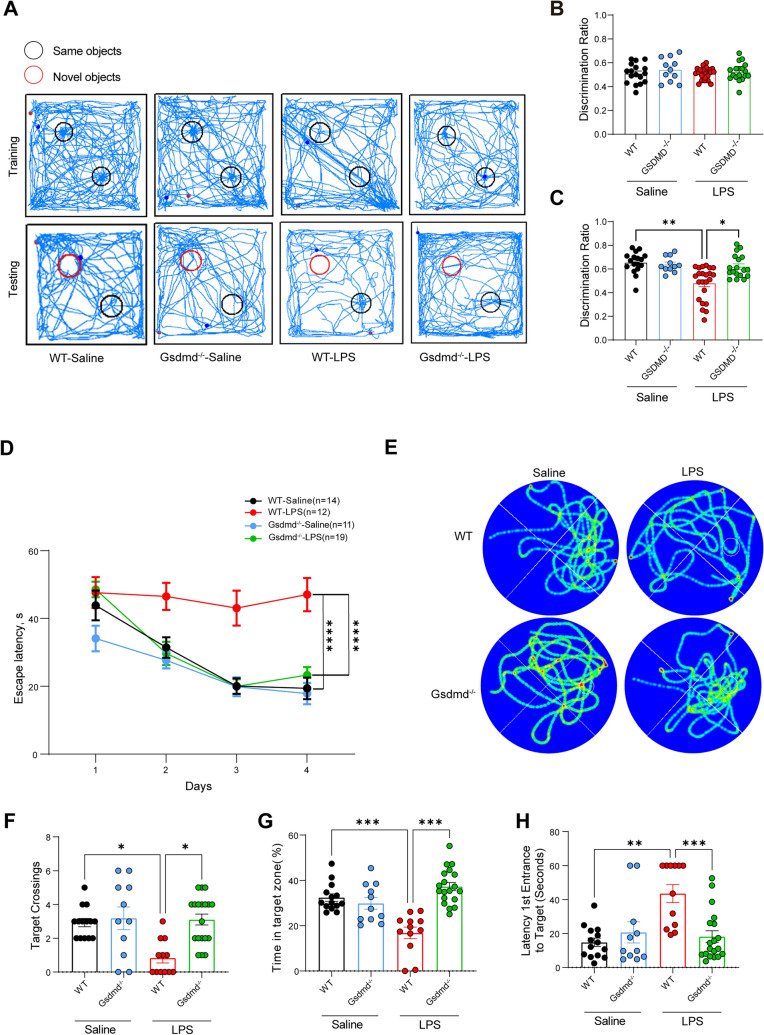
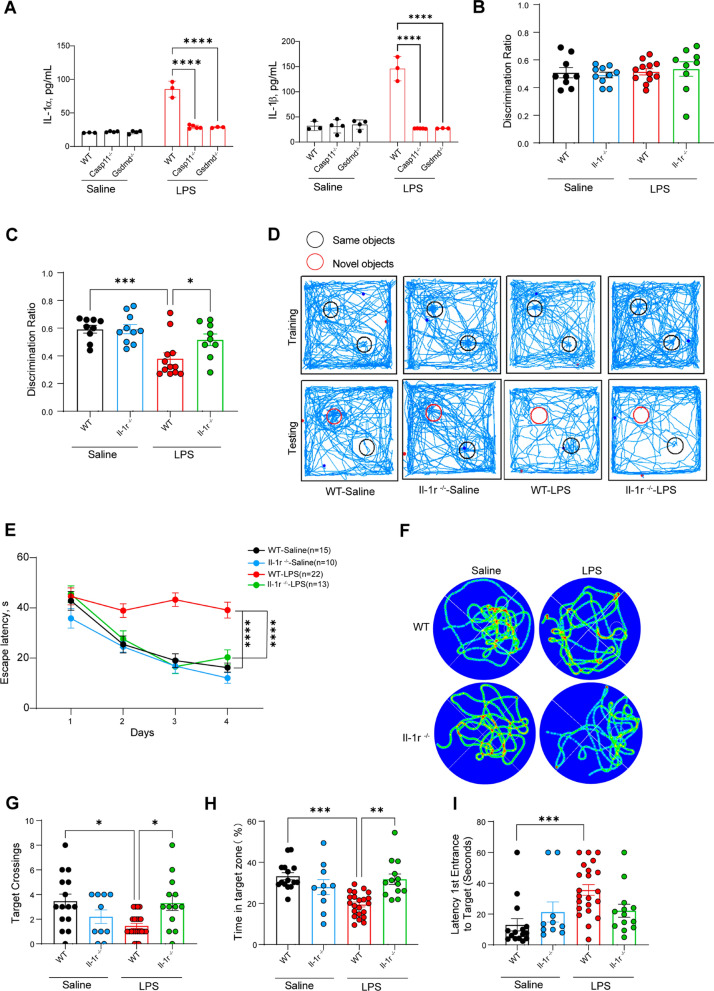
Our findings indicate that the deficiency of Casp11-GSDMD signaling pathways reverses infection-induced cognitive dysfunction. Moreover, cognitive dysfunction can be ameliorated by blocking the IL-1 effect. Mechanistically, the absence of Casp11 signaling significantly mitigated blood‒brain barrier leakage, microglial activation, and synaptic damage in the hippocampal CA3 region, ultimately leading to improved cognitive function.
This study unveils the crucial contribution of Casp11 and GSDMD to cognitive impairments and spatial memory loss in a murine sepsis model. Targeting Casp11 signaling emerges as a promising strategy for preventing or treating cognitive dysfunction in patients with severe infections.
感染引起的认知功能障碍经常出现在脓毒症幸存者患者的并发症中。然而,其发病机制仍难以全面理解。
在我们的体内实验中,使用内毒素血症动物模型,利用新物体识别测试和 Morris 水迷宫测试来评估认知功能。采用免疫荧光染色、Western blot、血脑屏障通透性评估、鲎试剂(LAL)测定和邻近连接测定等多种技术,确定脑病理损伤和神经炎症。为了辨别 Caspase-11(Casp11)在脓毒症引起的认知下降中在造血细胞或非造血细胞中的作用,通过用野生型(WT)和 Casp11 缺陷型小鼠进行骨髓移植(BMT)生成骨髓嵌合体。体外研究涉及用大肠杆菌衍生的外膜囊泡处理 BV2 细胞,以模拟体内条件。
我们的研究结果表明,Casp11-GSDMD 信号通路的缺乏可逆转感染引起的认知功能障碍。此外,通过阻断 IL-1 的作用可以改善认知功能障碍。机制上,Casp11 信号的缺失显著减轻了血脑屏障渗漏、小胶质细胞激活和海马 CA3 区的突触损伤,最终导致认知功能改善。
本研究揭示了 Casp11 和 GSDMD 在小鼠脓毒症模型中对认知障碍和空间记忆丧失的重要贡献。靶向 Casp11 信号可能是预防或治疗严重感染患者认知功能障碍的一种有前途的策略。