Center for Brain Research, Medical University of Vienna, Vienna, Austria.
Clinical Institute of Neurology, Medical University of Vienna, Vienna, Austria.
Neuropathol Appl Neurobiol. 2019 Apr;45(3):278-290. doi: 10.1111/nan.12502. Epub 2018 Jun 19.
Experimental data suggest that systemic immune activation may create a pro-inflammatory environment with microglia activation in the central nervous system in the absence of overt inflammation, which in turn may be deleterious in conditions of neurodegenerative disease. The extent to which this is relevant for the human brain is unknown. The central aim of this study is to provide an in-depth characterization of the microglia and macrophage response to systemic inflammation.
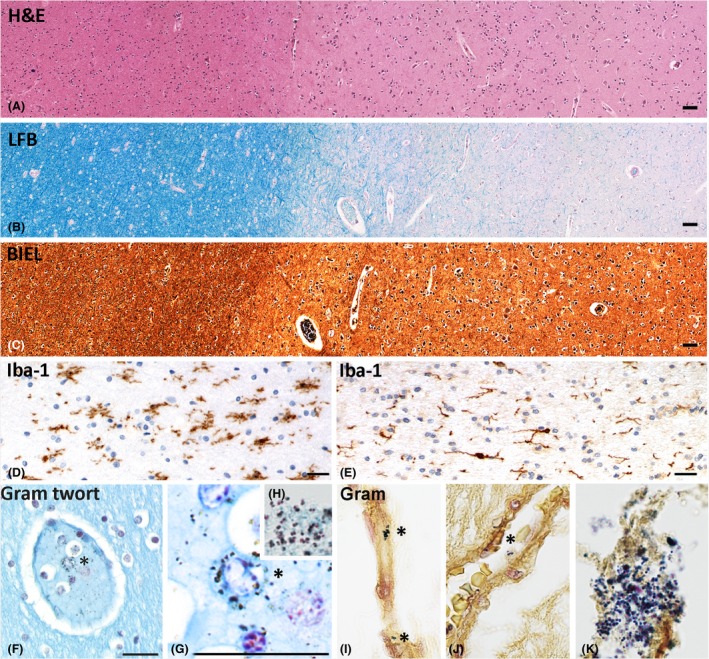
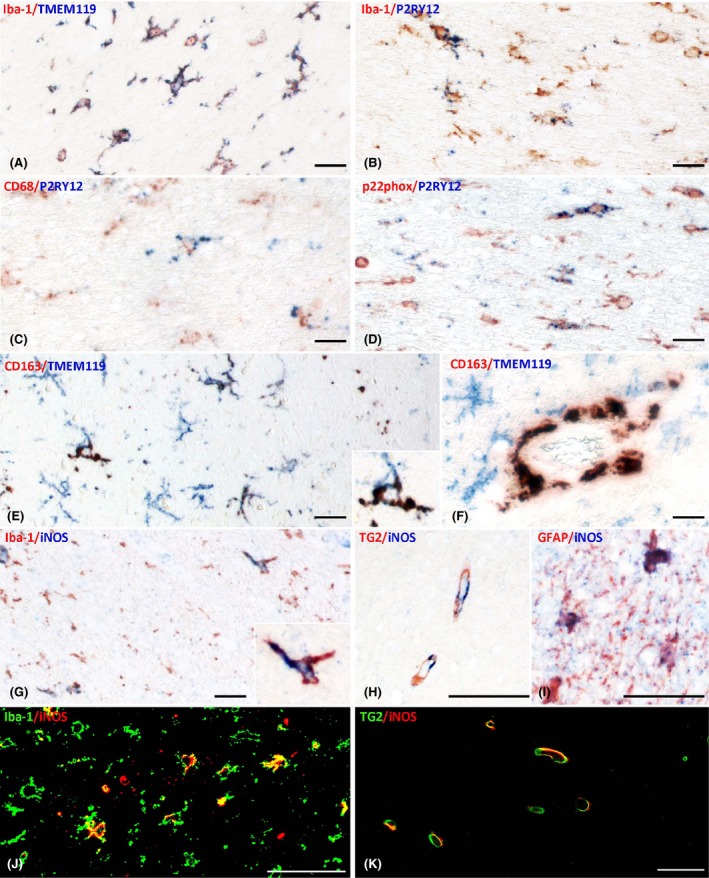
We used recently described markers to characterize the origin and functional states of microglia/macrophages in white and grey matter in patients who died under septic conditions and compared it to those patients without systemic inflammation.
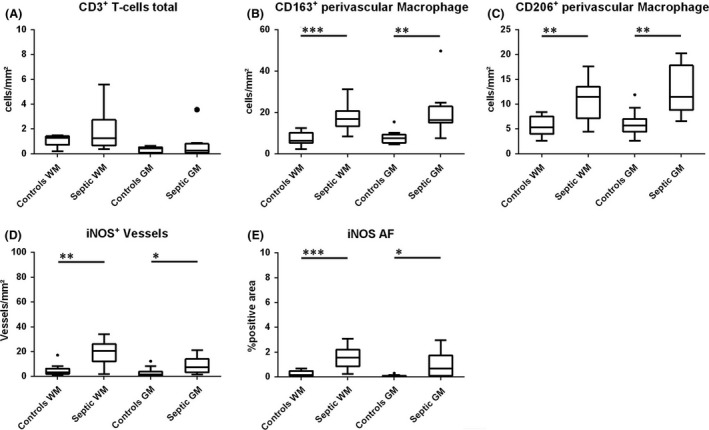
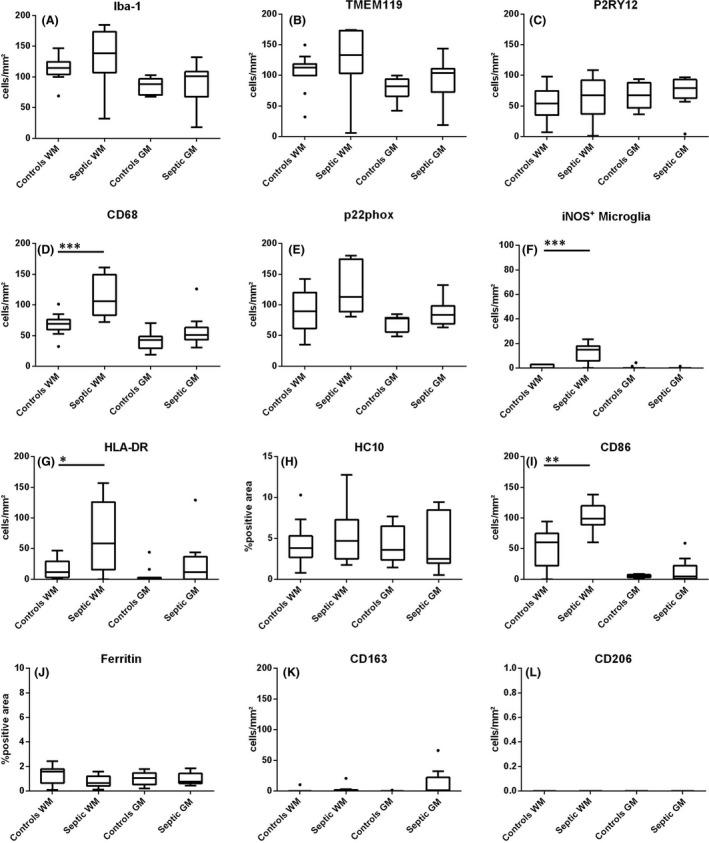
We found pro-inflammatory microglia activation in septic patients in the white matter, with very little activation in the grey matter. Using a specific marker for resident microglia (TMEM119), we found that parenchyma microglia were activated and that there was additional recruitment of perivascular macrophages. Pro-inflammatory microglia activation occurred in the presence of homeostatic microglia cells. In contrast to inflammatory or ischaemic diseases of the brain, the anti-inflammatory microglia markers CD163 or CD206 were not expressed in acute sepsis. Furthermore, we found pronounced upregulation of inducible nitric oxide synthase not only in microglia, but also in astrocytes and endothelial cells.
Our results demonstrate the pronounced effects of systemic inflammation on the human brain and have important implications for the selection of control populations for studies on microglia activation in human brain disease.
实验数据表明,全身免疫激活可能会在中枢神经系统中产生促炎环境,伴小胶质细胞激活,但无明显炎症,而在神经退行性疾病的情况下,这可能是有害的。目前尚不清楚这在人类大脑中究竟有多大程度的相关性。本研究的主要目的是深入描述小胶质细胞和巨噬细胞对全身炎症的反应。
我们使用最近描述的标志物来描述在感染性条件下死亡的患者的白质和灰质中小胶质细胞/巨噬细胞的起源和功能状态,并将其与没有全身炎症的患者进行比较。
我们发现感染患者的白质中有促炎小胶质细胞激活,而灰质中几乎没有激活。使用驻留小胶质细胞(TMEM119)的特异性标志物,我们发现实质小胶质细胞被激活,并且有更多的血管周巨噬细胞募集。促炎小胶质细胞激活发生在稳态小胶质细胞存在的情况下。与大脑的炎症或缺血性疾病不同,抗炎症小胶质细胞标志物 CD163 或 CD206 在急性感染性休克中不表达。此外,我们发现诱导型一氧化氮合酶不仅在小胶质细胞中,而且在星形胶质细胞和内皮细胞中都有明显的上调。
我们的研究结果表明全身炎症对人类大脑有明显的影响,对于选择人类大脑疾病中小胶质细胞激活研究的对照人群具有重要意义。