Transversal Translational Medicine, Luxembourg Institute of Health, Strassen, Luxembourg.
Translational Neurosciences, Luxembourg Centre for Systems Biomedicine, University of Luxembourg, Esch-Sur-Alzette, Luxembourg.
BMC Med Res Methodol. 2024 Aug 24;24(1):183. doi: 10.1186/s12874-024-02301-7.
While there is an interest in defining longitudinal change in people with chronic illness like Parkinson's disease (PD), statistical analysis of longitudinal data is not straightforward for clinical researchers. Here, we aim to demonstrate how the choice of statistical method may influence research outcomes, (e.g., progression in apathy), specifically the size of longitudinal effect estimates, in a cohort.
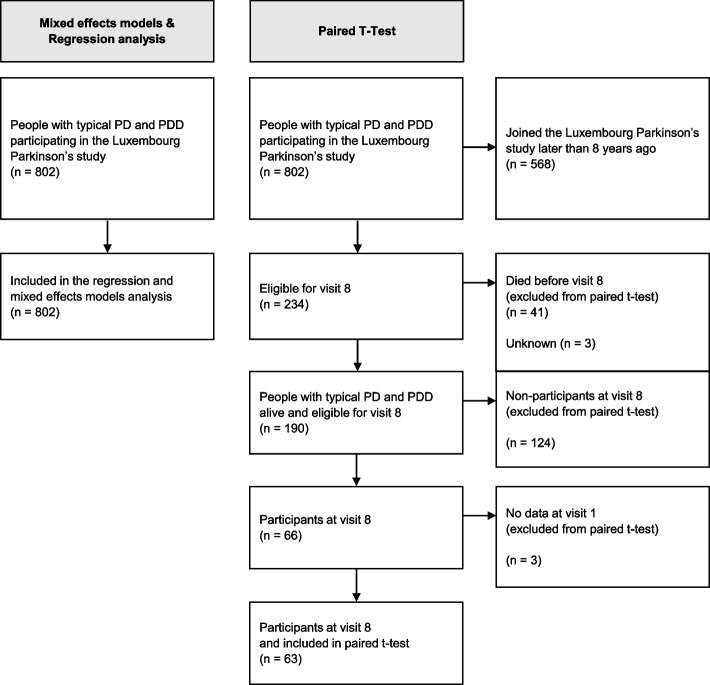
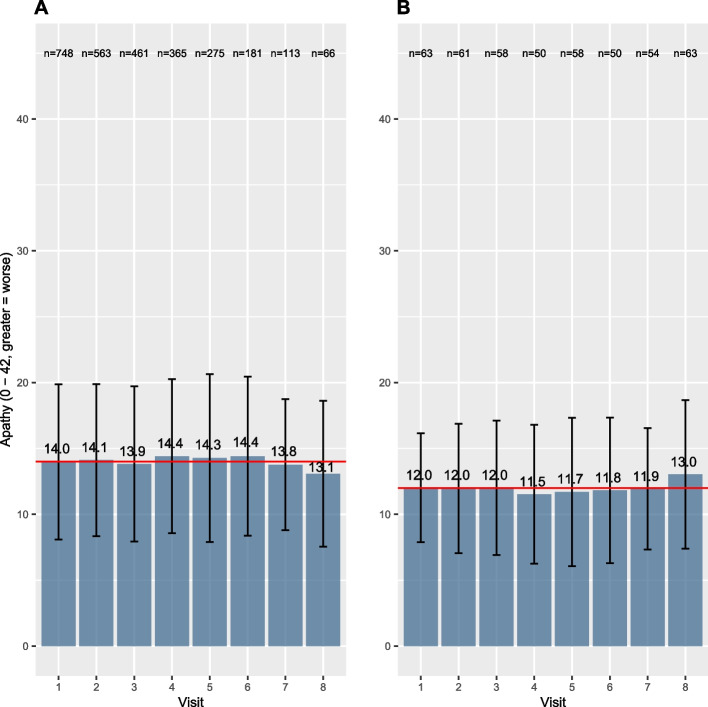
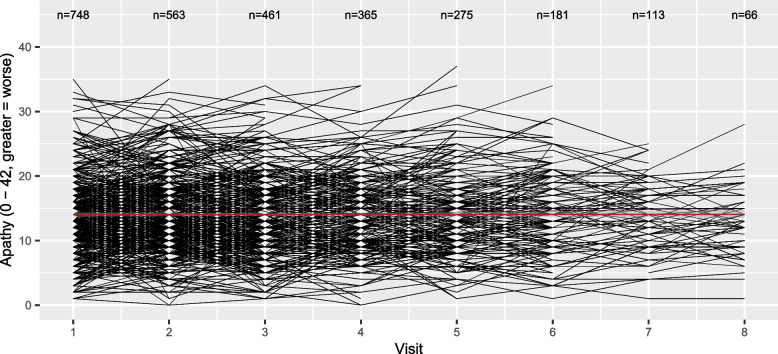
In this retrospective longitudinal analysis of 802 people with typical Parkinson's disease in the Luxembourg Parkinson's study, we compared the mean apathy scores at visit 1 and visit 8 by means of the paired two-sided t-test. Additionally, we analysed the relationship between the visit numbers and the apathy score using linear regression and longitudinal two-level mixed effects models.
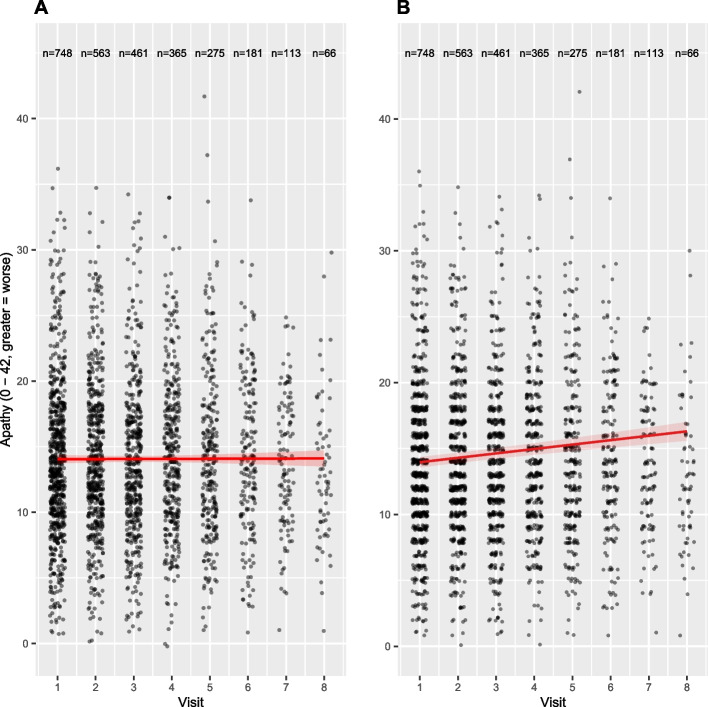
Mixed effects models were the only method able to detect progression of apathy over time. While the effects estimated for the group comparison and the linear regression were smaller with high p-values (+ 1.016/ 7 years, p = 0.107, -0.056/ 7 years, p = 0.897, respectively), effect estimates for the mixed effects models were positive with a very small p-value, indicating a significant increase in apathy symptoms by + 2.345/ 7 years (p < 0.001).
The inappropriate use of paired t-tests and linear regression to analyse longitudinal data can lead to underpowered analyses and an underestimation of longitudinal change. While mixed effects models are not without limitations and need to be altered to model the time sequence between the exposure and the outcome, they are worth considering for longitudinal data analyses. In case this is not possible, limitations of the analytical approach need to be discussed and taken into account in the interpretation.
虽然人们对定义像帕金森病(PD)这样的慢性病患者的纵向变化很感兴趣,但临床研究人员对纵向数据的统计分析并不简单。在这里,我们旨在展示统计方法的选择如何影响研究结果(例如,冷漠的进展),特别是在队列中,影响纵向效应估计的大小。
在卢森堡帕金森研究中对 802 名典型帕金森病患者的回顾性纵向分析中,我们通过配对双侧 t 检验比较了第 1 次就诊和第 8 次就诊时的平均冷漠评分。此外,我们使用线性回归和纵向两级混合效应模型分析了就诊次数与冷漠评分之间的关系。
混合效应模型是唯一能够检测到随着时间的推移冷漠进展的方法。虽然群组比较和线性回归的估计效果较小且 p 值较高(分别为+1.016/7 年,p=0.107,-0.056/7 年,p=0.897),但混合效应模型的估计效果为阳性,且 p 值非常小,表明冷漠症状增加了+2.345/7 年(p<0.001)。
不恰当地使用配对 t 检验和线性回归分析纵向数据会导致分析能力不足和低估纵向变化。虽然混合效应模型并非没有局限性,并且需要进行修改以模拟暴露和结果之间的时间序列,但它们值得考虑用于纵向数据分析。在不可能的情况下,需要讨论分析方法的局限性,并在解释中加以考虑。