School of Psychological Science, University of Western Australia (M304), Perth, 6009, Australia.
Public Policy Institute, University of Western Australia, Perth, Australia.
Cogn Res Princ Implic. 2024 Aug 26;9(1):52. doi: 10.1186/s41235-024-00581-7.
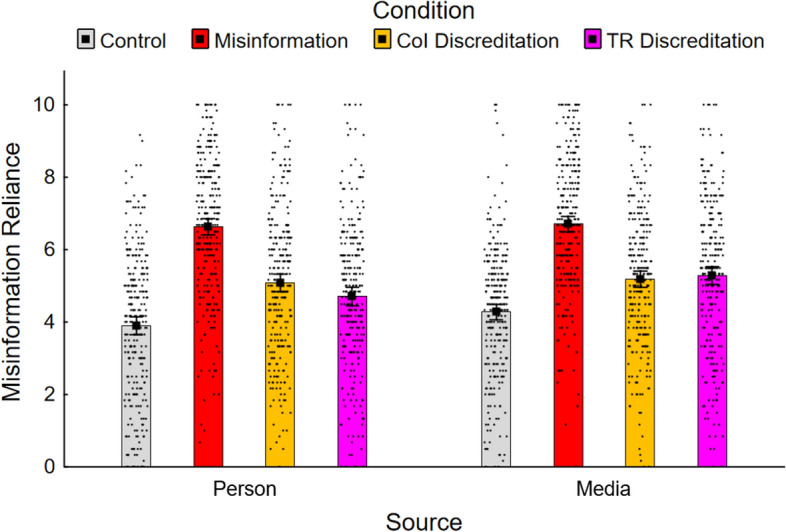
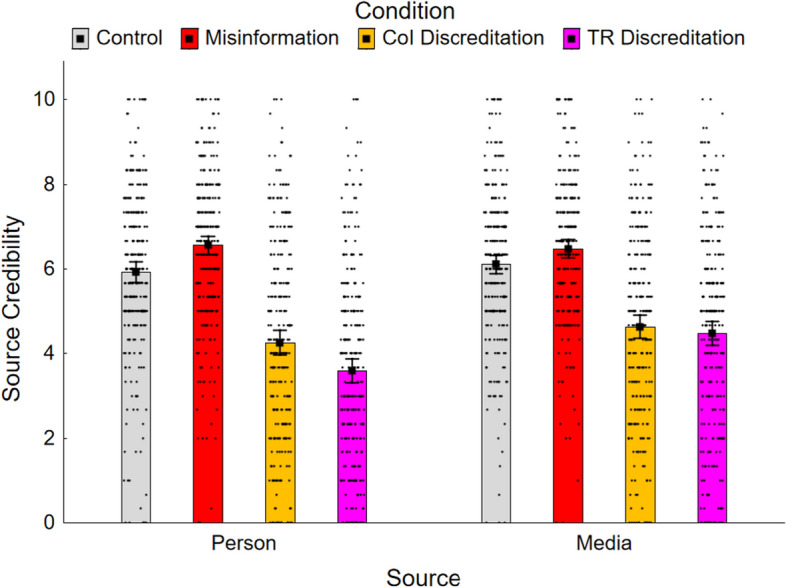
Misinformation often continues to influence people's reasoning even after it has been corrected. Therefore, an important aim of applied cognition research is to identify effective measures to counter misinformation. One frequently recommended but hitherto insufficiently tested strategy is source discreditation, that is, attacking the credibility of a misinformation source. In two experiments, we tested whether immediate source discreditation could reduce people's subsequent reliance on fictional event-related misinformation. In Experiment 1, the discreditation targeted a person source of misinformation, pointing to a conflict of interest. This intervention was compared with a commonly employed message-focused correction and a combination of correction and discreditation. The discreditation alone was effective, but less effective than a correction, with the combination of both most effective. Experiment 2 compared discreditations that targeted a person versus a media source of misinformation, pointing either to a conflict of interest or a poor track record of communication. Discreditations were effective for both types of sources, although track-record discreditations were less effective when the misinformation source was a media outlet compared to a person. Results demonstrate that continued influence of misinformation is shaped by social as well as cognitive factors and that source discreditation is a broadly applicable misinformation countermeasure.
错误信息即使在被纠正后仍会继续影响人们的推理。因此,应用认知研究的一个重要目标是确定有效措施来对抗错误信息。一种经常被推荐但迄今为止测试不足的策略是来源诋毁,即攻击错误信息来源的可信度。在两项实验中,我们测试了即时的来源诋毁是否可以减少人们随后对虚构事件相关错误信息的依赖。在实验 1 中,诋毁的对象是错误信息的个人来源,指出存在利益冲突。将这种干预与常见的以信息为中心的纠正以及纠正和诋毁的组合进行了比较。单独的诋毁是有效的,但不如纠正有效,两者的结合效果最佳。实验 2 比较了针对错误信息个人来源和媒体来源的诋毁,分别指向利益冲突或沟通记录不佳。对于这两种类型的来源,诋毁都是有效的,尽管与个人来源相比,当错误信息来源是媒体机构时,记录不佳的诋毁效果较差。结果表明,错误信息的持续影响是由社会和认知因素共同塑造的,而来源诋毁是一种广泛适用的错误信息对策。