Vieira Luiz H, Rossi Marco A, Rasteiro Letícia F, Assaf José M, Assaf Elisabete M
São Carlos Institute of Chemistry, University of São Paulo, São Carlos, São Paulo 13560-970, Brazil.
School of Chemical & Biomolecular Engineering, Georgia Institute of Technology, Atlanta, Georgia 30332, United States.
ACS Nanosci Au. 2024 Jul 18;4(4):235-242. doi: 10.1021/acsnanoscienceau.4c00016. eCollection 2024 Aug 21.
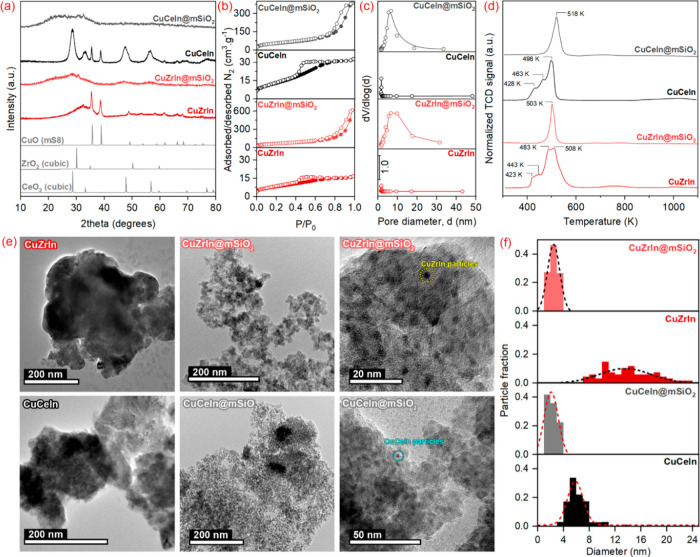
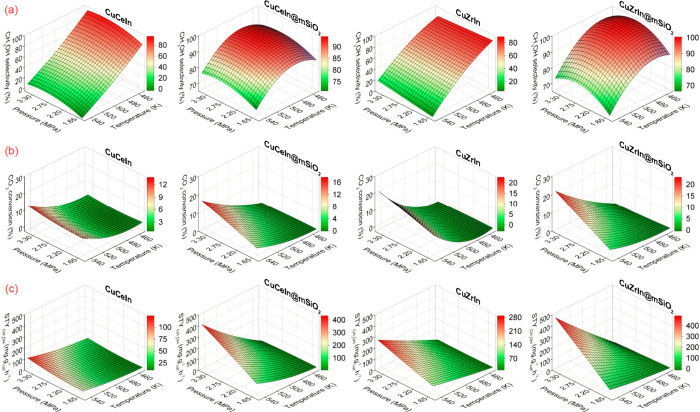
Although chemical promotion led to essential improvements in Cu-based catalysts for CO hydrogenation to methanol, surpassing structural limitations such as active phase aggregation under reaction conditions remains challenging. In this report, we improved the textural properties of Cu/InO/CeO and Cu/InO/ZrO catalysts by coating the nanoparticles with a mesoporous SiO shell. This strategy limited particle size up to 3.5 nm, increasing metal dispersion and widening the metal-metal oxide interface region. Chemometric analysis revealed that these structures could maintain high activity and selectivity in a wide range of reaction conditions, with methanol space-time yields up to 4 times higher than those of the uncoated catalysts.
尽管化学促进法使用于将一氧化碳加氢制甲醇的铜基催化剂有了实质性改进,但要克服诸如反应条件下活性相聚集等结构限制仍具有挑战性。在本报告中,我们通过用介孔二氧化硅壳包覆纳米颗粒来改善Cu/InO/CeO和Cu/InO/ZrO催化剂的织构性质。这种策略将粒径限制在3.5纳米以下,提高了金属分散度并拓宽了金属-金属氧化物界面区域。化学计量分析表明,这些结构在广泛的反应条件下能够保持高活性和选择性,甲醇时空产率比未包覆催化剂高出4倍。