WHO Regional Reference lab for Diagnosis of Poliovirus and Enteroviruses, VACSERA Dokki, Giza, Cairo, Egypt.
Department of Microbiology and Immunology, Faculty of Pharmacy, Organization of African Union, Ain Shams University, St. Abbassia, Cairo, 11566, Egypt.
BMC Infect Dis. 2024 Aug 26;24(1):866. doi: 10.1186/s12879-024-09731-0.
Poliovirus is a highly infectious enterovirus (EV) that primarily affects children and can lead to lifelong paralysis or even death. Vaccine-derived polioviruses (VDPVs) are a great threat since they are derived from the attenuated virus in the Oral Poliovirus Vaccine (OPV) and can mutate to a more virulent form. The purpose of this study was to identify VDPV serotype 2 through the year 2020-2021 via surveillance of sewage samples collected from different localities and governorates in Egypt and stool specimens from Acute Flaccid Paralysis (AFP) cases. Both were collected through the national poliovirus surveillance system and according to the guidelines recommended by the WHO.
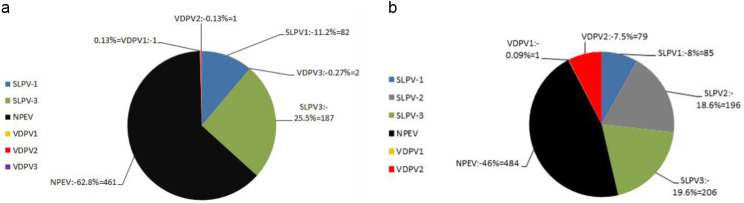
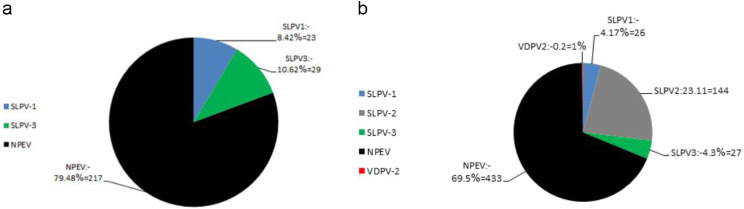
A total of 1266 sewage samples and 3241 stool samples from January 2020 to December 2021 were investigated in the lab according to World Health Organization (WHO) protocol for the presence of Polioviruses by cell culture, molecular identification of positive isolates on L20B cell line was carried out using real-time polymerase chain reactions (RT-PCR). Any positive isolates for Poliovirus type 2 and isolates suspected of Vaccine Derived Poliovirus Type 1 and type 3 screened by (VDPV1) or Vaccine Poliovirus Type 3 (VDPV3) assay in RT-PCR were referred for VP1 genetic sequencing.
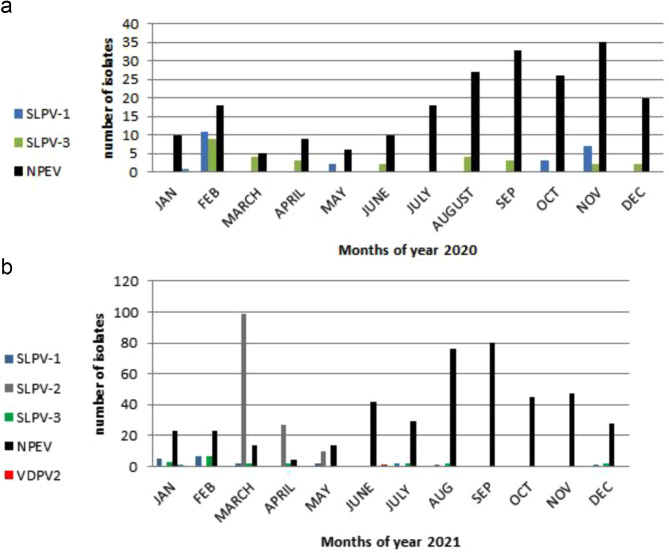
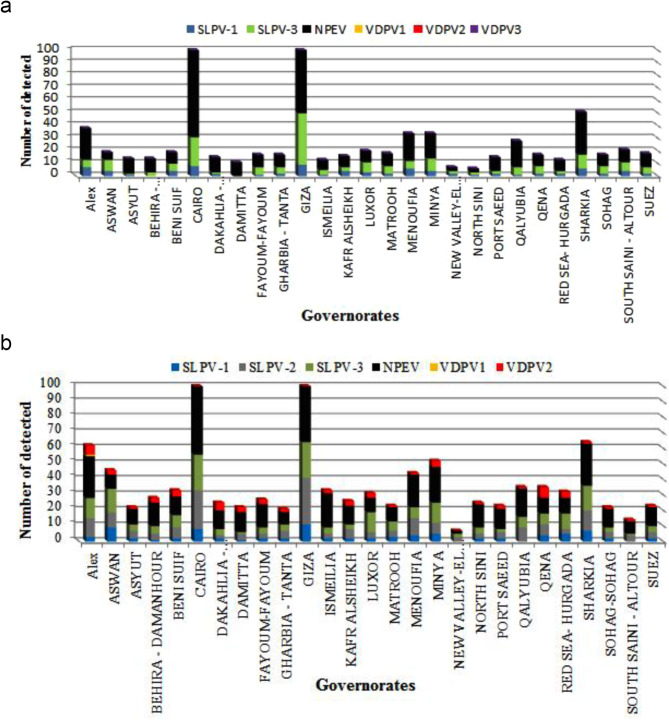
The outbreak was caused by circulating VDPV2 (cVDPV2) strains started in January 2021. By the end of February 2021, a total of 11 cVDPV2s were detected in sewage samples from six governorates confirming the outbreak situation. One additional cVDPV2 was detected later in the sewage sample from Qena (June 2021). The first and only re-emergence of VDPV2 in stool samples during the outbreak was in contact with Luxor in June 2021. By November 2021, a total of 80 VDPVs were detected. The Egyptian Ministry of Health and Population (MOHP), in collaboration with the WHO, responded quickly by launching two massive vaccination campaigns targeting children under the age of five. Additionally, surveillance systems were strengthened to detect new cases and prevent further spread of the virus.
The continued threat of poliovirus and VDPVs requires ongoing efforts to prevent their emergence and spread. Strategies such as improving immunization coverage, using genetically stable vaccines, and establishing surveillance systems are critical to achieving global eradication of poliovirus and efficient monitoring of VDPVs outbreaks.
脊髓灰质炎病毒是一种高度传染性的肠道病毒(EV),主要影响儿童,可导致终身瘫痪甚至死亡。疫苗衍生脊髓灰质炎病毒(VDPV)是一个巨大的威胁,因为它们源自口服脊髓灰质炎疫苗(OPV)中的减毒病毒,并且可以突变为更具毒性的形式。本研究的目的是通过监测 2020-2021 年从埃及不同地区采集的污水样本和急性弛缓性麻痹(AFP)病例的粪便样本,鉴定出 2 型疫苗衍生脊髓灰质炎病毒(VDPV2)。这些样本都是通过国家脊髓灰质炎病毒监测系统,按照世界卫生组织(WHO)的建议收集的。
根据世界卫生组织(WHO)的方案,我们在实验室中对 2020 年 1 月至 2021 年 12 月期间采集的 1266 份污水样本和 3241 份粪便样本进行了调查。采用细胞培养法检测肠道病毒的存在,对 L20B 细胞系上的阳性分离物进行实时聚合酶链反应(RT-PCR)进行分子鉴定。对疑似 1 型和 3 型疫苗衍生脊髓灰质炎病毒(VDPV1 和 VDPV3)的任何 2 型脊灰病毒阳性分离物进行 VP1 基因测序。
此次疫情是由循环疫苗衍生脊髓灰质炎病毒 2 型(cVDPV2)株引起的,始于 2021 年 1 月。到 2021 年 2 月底,在来自六个省的污水样本中总共检测到 11 株 cVDPV2,证实了疫情情况。2021 年 6 月,在来自盖纳的污水样本中检测到了另一个额外的 cVDPV2。在疫情期间,在粪便样本中首次也是唯一一次重新出现 2 型疫苗衍生脊髓灰质炎病毒是在 2021 年 6 月与卢克索接触后。到 2021 年 11 月,总共检测到 80 株疫苗衍生脊髓灰质炎病毒。埃及卫生部(MOHP)与世界卫生组织(WHO)合作,迅速采取行动,针对五岁以下儿童开展了两次大规模疫苗接种活动。此外,还加强了监测系统,以发现新病例并防止病毒进一步传播。
脊髓灰质炎病毒和疫苗衍生脊髓灰质炎病毒的持续威胁需要持续努力来预防其出现和传播。改善免疫覆盖率、使用遗传稳定的疫苗以及建立监测系统等策略对于实现全球脊髓灰质炎病毒根除和有效监测疫苗衍生脊髓灰质炎病毒疫情至关重要。