Balakrishnan Purnima P, Ferenc Segedin Dan, Chow Lin Er, Quarterman P, Muramoto Shin, Surendran Mythili, Patel Ranjan K, LaBollita Harrison, Pan Grace A, Song Qi, Zhang Yang, El Baggari Ismail, Jagadish Koushik, Shao Yu-Tsun, Goodge Berit H, Kourkoutis Lena F, Middey Srimanta, Botana Antia S, Ravichandran Jayakanth, Ariando A, Mundy Julia A, Grutter Alexander J
NIST Center for Neutron Research, National Institute of Standards and Technology, Gaithersburg, MD, 20899, USA.
Department of Physics, Harvard University, Cambridge, MA, 02138, USA.
Nat Commun. 2024 Aug 27;15(1):7387. doi: 10.1038/s41467-024-51479-3.
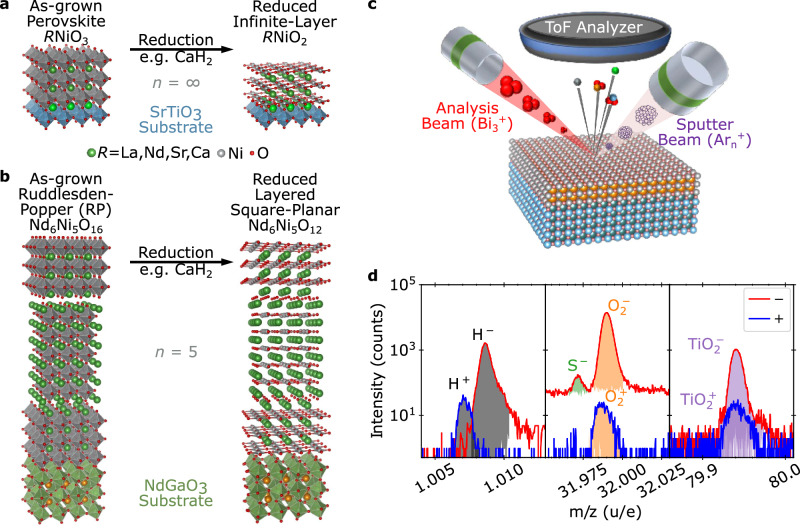
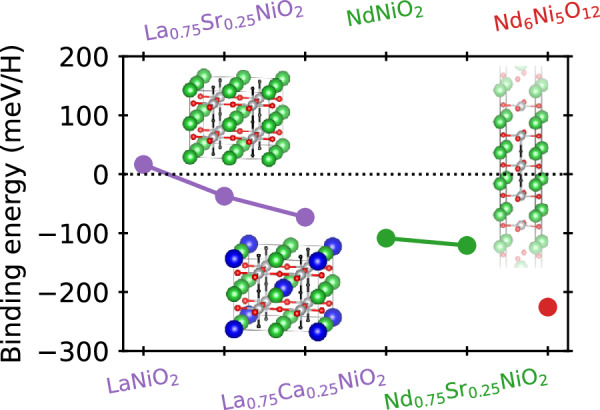
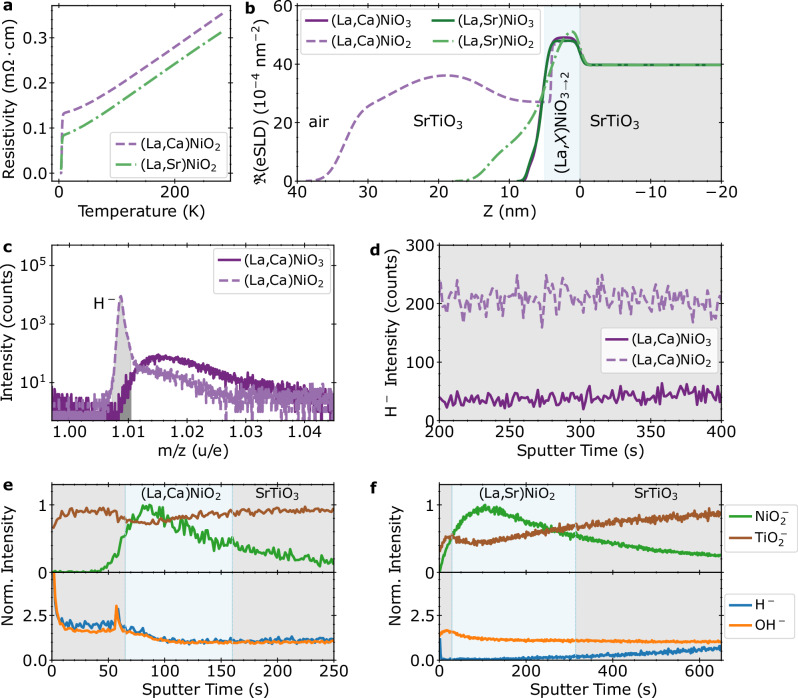
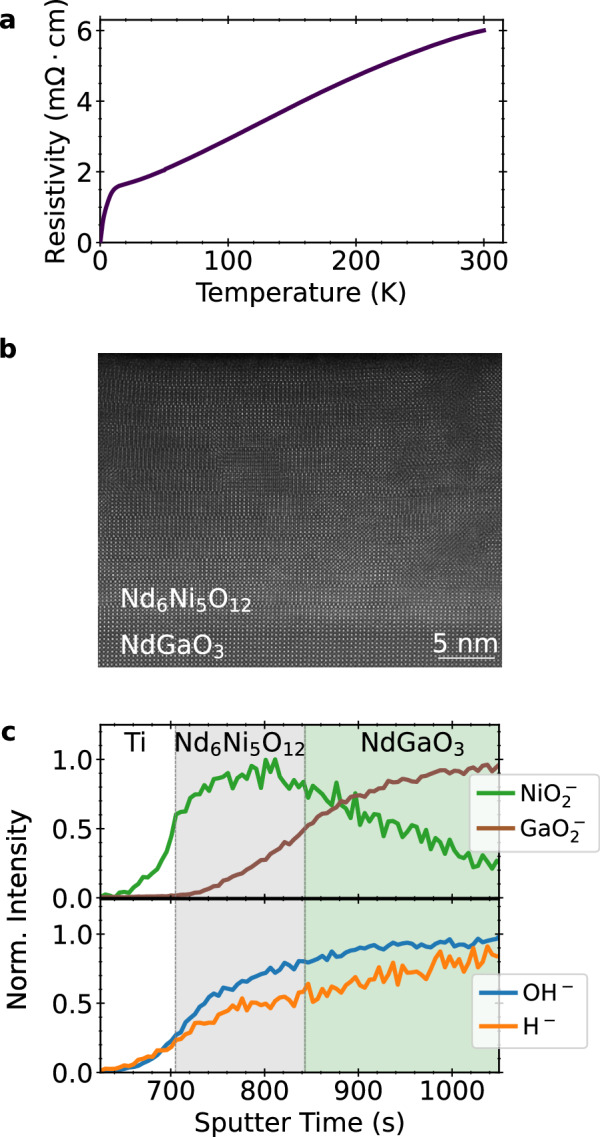
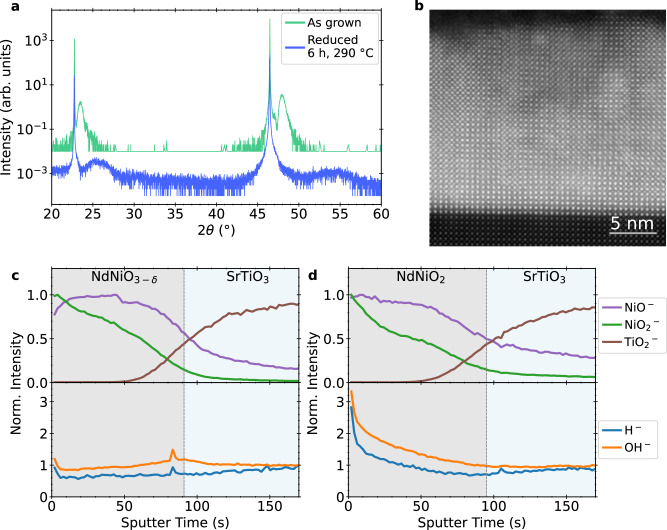
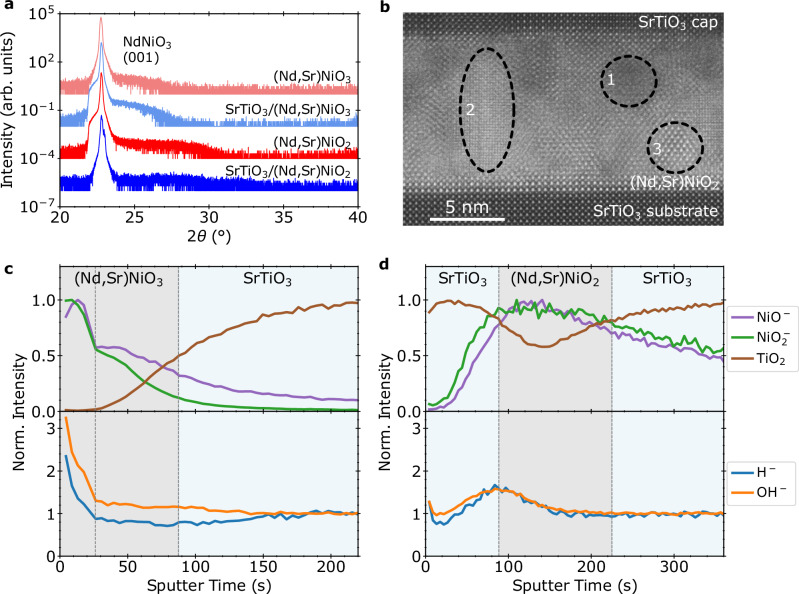
A key open question in the study of layered superconducting nickelate films is the role that hydrogen incorporation into the lattice plays in the appearance of the superconducting state. Due to the challenges of stabilizing highly crystalline square planar nickelate films, films are prepared by the deposition of a more stable parent compound which is then transformed into the target phase via a topotactic reaction with a strongly reducing agent such as CaH. Recent studies, both experimental and theoretical, have introduced the possibility that the incorporation of hydrogen from the reducing agent into the nickelate lattice may be critical for the superconductivity. In this work, we use secondary ion mass spectrometry to examine superconducting LaXNiO / SrTiO (X = Ca and Sr) and NdNiO / NdGaO films, along with non-superconducting NdNiO / SrTiO and (Nd,Sr)NiO / SrTiO. We find no evidence for extensive hydrogen incorporation across a broad range of samples, including both superconducting and non-superconducting films. Theoretical calculations indicate that hydrogen incorporation is broadly energetically unfavorable in these systems, supporting our conclusion that extensive hydrogen incorporation is not generally required to achieve a superconducting state in layered square-planar nickelates.
在层状超导镍酸盐薄膜的研究中,一个关键的开放性问题是氢原子掺入晶格在超导态出现过程中所起的作用。由于稳定高度结晶的四方平面镍酸盐薄膜存在挑战,薄膜是通过沉积更稳定的母体化合物来制备的,然后通过与强还原剂(如CaH)进行拓扑化学反应将其转化为目标相。最近的实验和理论研究都提出了一种可能性,即还原剂中的氢掺入镍酸盐晶格对于超导性可能至关重要。在这项工作中,我们使用二次离子质谱法来研究超导的LaXNiO / SrTiO(X = Ca和Sr)和NdNiO / NdGaO薄膜,以及非超导的NdNiO / SrTiO和(Nd,Sr)NiO / SrTiO薄膜。我们发现,在包括超导和非超导薄膜在内的广泛样品中,没有证据表明存在大量氢掺入。理论计算表明,在这些体系中氢掺入在能量上总体不利,这支持了我们的结论,即在层状四方平面镍酸盐中,通常不需要大量氢掺入就能实现超导态。