Dermitzakis Iasonas, Kampitsi Despoina Dimitria, Manthou Maria Eleni, Evangelidis Paschalis, Vakirlis Efstratios, Meditskou Soultana, Theotokis Paschalis
Department of Histology-Embryology, School of Medicine, Aristotle University of Thessaloniki, 54124 Thessaloniki, Greece.
Hematology Unit-Hemophilia Centre, 2nd Propedeutic Department of Internal Medicine, Hippocration Hospital, Aristotle University of Thessaloniki, 54642 Thessaloniki, Greece.
Curr Issues Mol Biol. 2024 Jul 28;46(8):8118-8147. doi: 10.3390/cimb46080481.
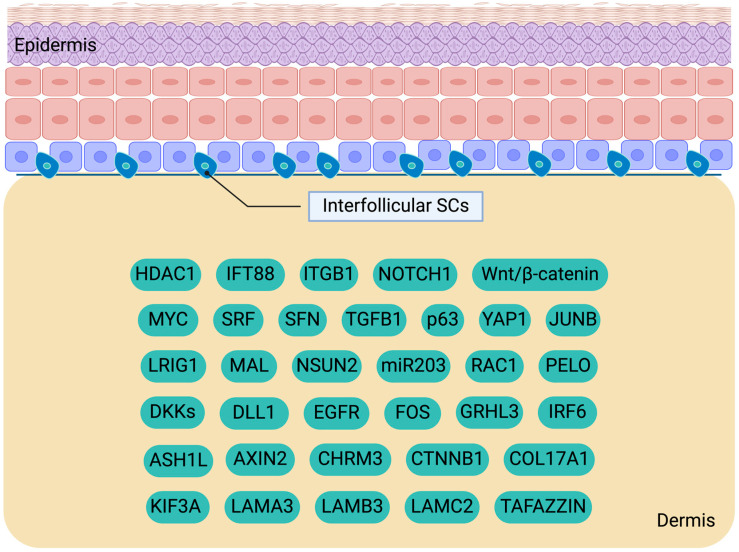
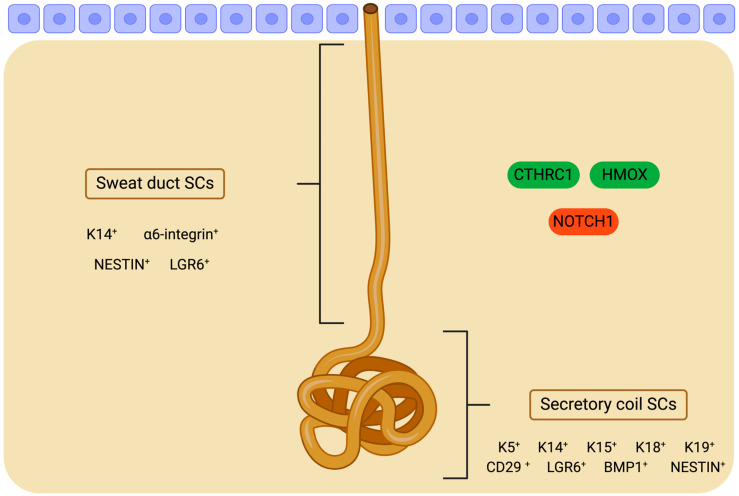
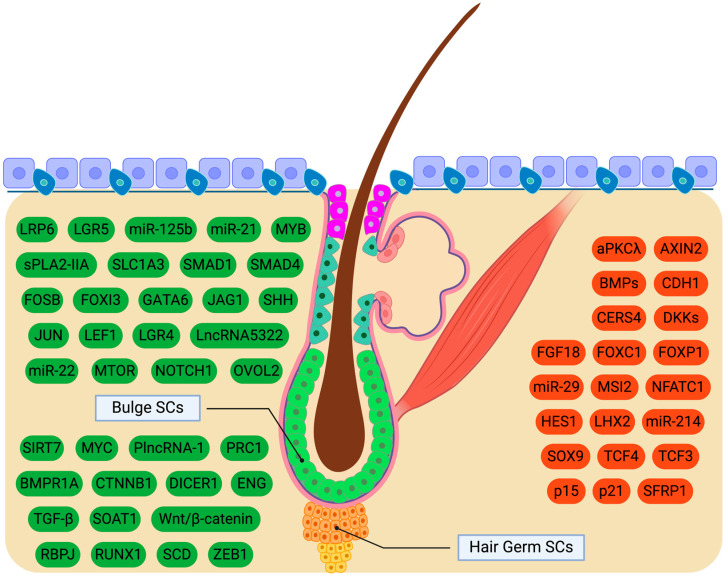
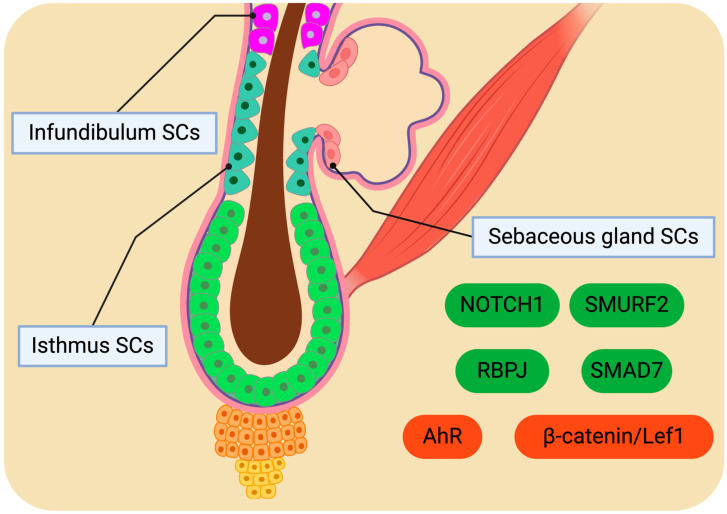
Skin stem cells (SCs) play a pivotal role in supporting tissue homeostasis. Several types of SCs are responsible for maintaining and regenerating skin tissue. These include bulge SCs and others residing in the interfollicular epidermis, infundibulum, isthmus, sebaceous glands, and sweat glands. The emergence of skin SCs commences during embryogenesis, where multipotent SCs arise from various precursor populations. These early events set the foundation for the diverse pool of SCs that will reside in the adult skin, ready to respond to tissue repair and regeneration demands. A network of molecular cues regulates skin SC behavior, balancing quiescence, self-renewal, and differentiation. The disruption of this delicate equilibrium can lead to SC exhaustion, impaired wound healing, and pathological conditions such as skin cancer. The present review explores the intricate mechanisms governing the development, activation, and differentiation of skin SCs, shedding light on the molecular signaling pathways that drive their fate decisions and skin homeostasis. Unraveling the complexities of these molecular drivers not only enhances our fundamental knowledge of skin biology but also holds promise for developing novel strategies to modulate skin SC fate for regenerative medicine applications, ultimately benefiting patients with skin disorders and injuries.
皮肤干细胞在维持组织稳态中起着关键作用。几种类型的干细胞负责维持和再生皮肤组织。这些包括毛囊隆突部干细胞以及存在于毛囊间表皮、漏斗部、峡部、皮脂腺和汗腺中的其他干细胞。皮肤干细胞的出现始于胚胎发育过程,此时多能干细胞从各种前体细胞群体中产生。这些早期事件为成年皮肤中存在的各种干细胞库奠定了基础,这些干细胞随时准备响应组织修复和再生需求。一个分子信号网络调节皮肤干细胞的行为,平衡静止、自我更新和分化。这种微妙平衡的破坏会导致干细胞耗竭、伤口愈合受损以及诸如皮肤癌等病理状况。本综述探讨了控制皮肤干细胞发育、激活和分化的复杂机制,揭示了驱动其命运决定和皮肤稳态的分子信号通路。阐明这些分子驱动因素的复杂性不仅能增强我们对皮肤生物学的基础知识,还为开发调节皮肤干细胞命运的新策略以用于再生医学应用带来了希望,最终使患有皮肤疾病和损伤的患者受益。