Department of Nursing, University of Northern British Columbia, University way, Prince George, British Columbia, Canada.
Alzheimer Society of Canada, Toronto, Ontario, Canada.
Can J Nurs Res. 2024 Dec;56(4):468-482. doi: 10.1177/08445621241276613. Epub 2024 Aug 28.
In long-term care facilities (LTCF), apathy is a prevalent issue, leading to cognitive decline, functional impairment, and increased mortality risk. Despite its significance, apathy often remains underrecognized and undermanaged in these settings. Recognizing and addressing the predictors of apathy is critical for early intervention and improved care outcomes.
This study aims to assess the prevalence of apathy and identify its associated risk factors among newly admitted residents in the Canadian LTCF, using the InterRAI Minimum Data Set (MDS 2.0).
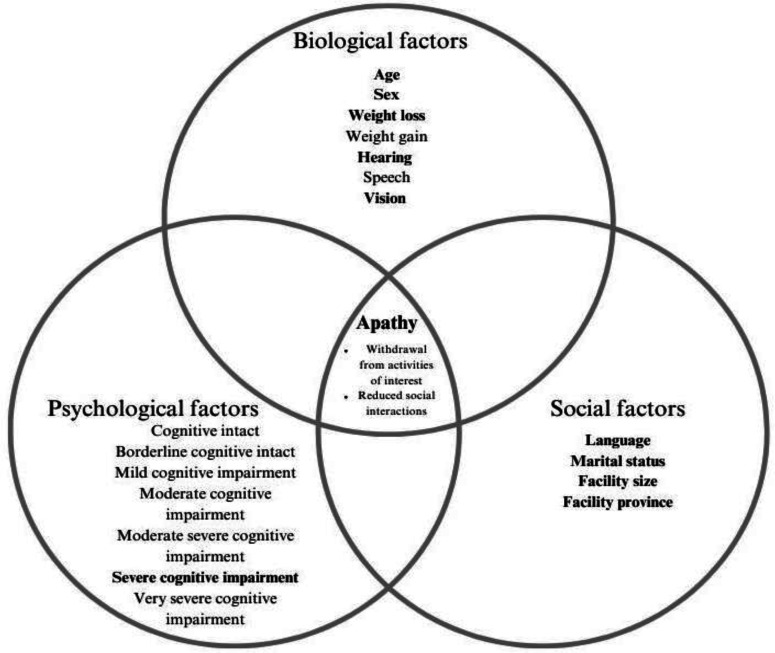
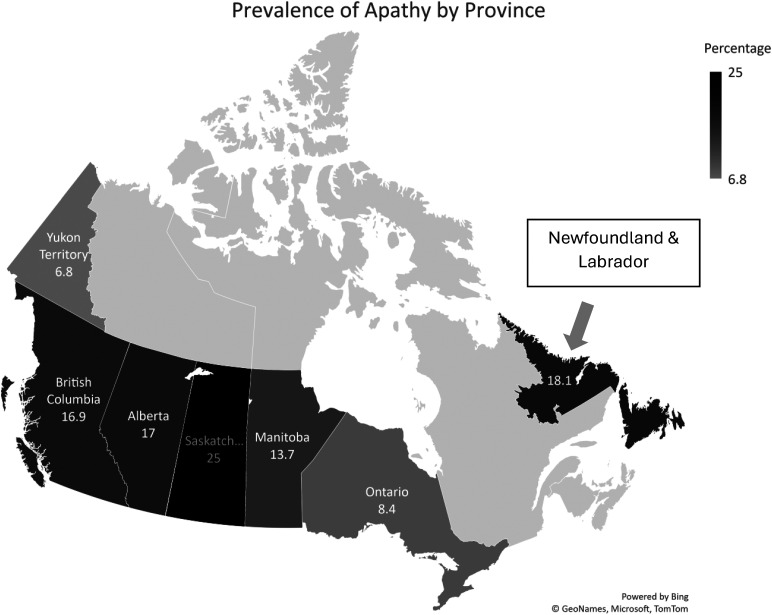
We conducted a cross-sectional analysis of MDS 2.0 admission assessment data between 2015 and 2019, covering 157,596 residents across six Canadian provinces and one territory. Apathy was measured using the Apathy Index of the MDS 2.0, with the biopsychosocial model guiding the analysis.
The prevalence of apathy was 12.5% (19,758 individuals). The most significant predictors include cognitive impairments, specific age groups, hearing impairments, vision impairments, facility size and location.
The findings of this study underscore the need for tailored strategies in LTCF to address apathy, considering individual, institutional, and regional variations. Emphasis on environmental and personal factors is crucial in the management and prevention of apathy in these settings.
在长期护理机构(LTCF)中,冷漠是一个普遍存在的问题,会导致认知能力下降、功能障碍和死亡风险增加。尽管冷漠问题很严重,但在这些环境中,它往往仍未得到充分识别和管理。识别和处理冷漠的预测因素对于早期干预和改善护理结果至关重要。
本研究旨在使用 InterRAI 最低数据集(MDS 2.0)评估加拿大 LTCF 新入住居民中冷漠的患病率,并确定其相关危险因素。
我们对 2015 年至 2019 年间的 MDS 2.0 入院评估数据进行了横断面分析,涵盖了加拿大六个省和一个地区的 157596 名居民。使用 MDS 2.0 的冷漠指数来衡量冷漠,分析以生物心理社会模型为指导。
冷漠的患病率为 12.5%(19758 人)。最显著的预测因素包括认知障碍、特定年龄组、听力障碍、视力障碍、机构规模和位置。
这项研究的结果强调了在 LTCF 中需要制定针对个体、机构和地区差异的策略来解决冷漠问题。在这些环境中,强调环境和个人因素对于管理和预防冷漠至关重要。