Ba Qinwen, Wang Xiong, Lu Yanjun
Department of Laboratory Medicine, Tongji Hospital, Tongji Medical College, Huazhong University of Science and Technology, Wuhan, China.
Discov Oncol. 2024 Aug 28;15(1):376. doi: 10.1007/s12672-024-01255-y.
Pancreatic ductal adenocarcinoma (PAAD) is recognized as an exceptionally aggressive cancer that both highly lethal and unfavorable prognosis. The mitochondrial metabolism pathway is intimately involved in oncogenesis and tumor progression, however, much remains unknown in this area. In this study, the bioinformatic tools have been used to construct a prognostic model with mitochondrial metabolism-related genes (MMRGs) to evaluate the survival, immune status, mutation profile, and drug sensitivity of PAAD patients.
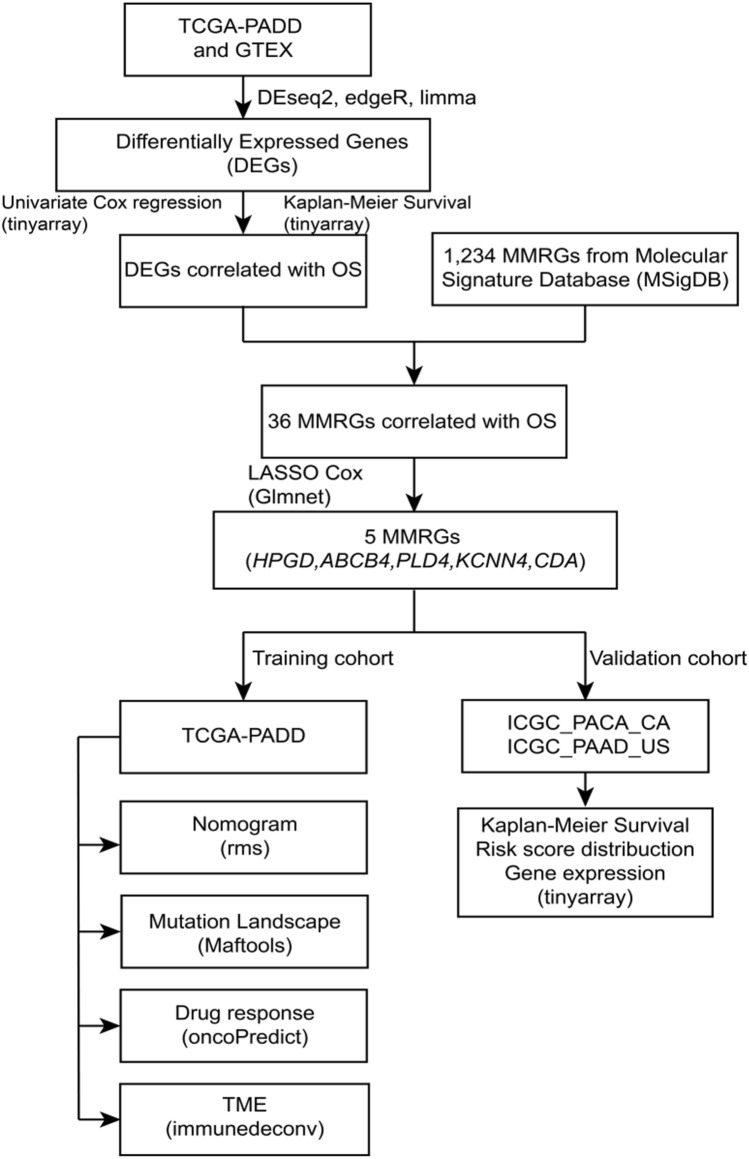
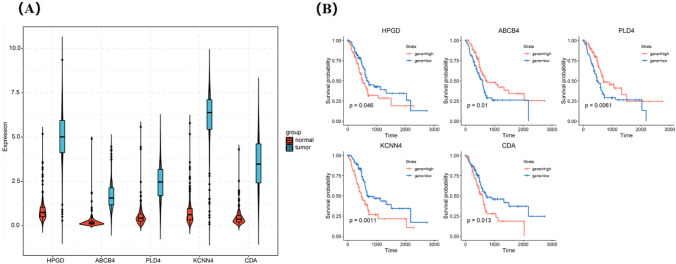
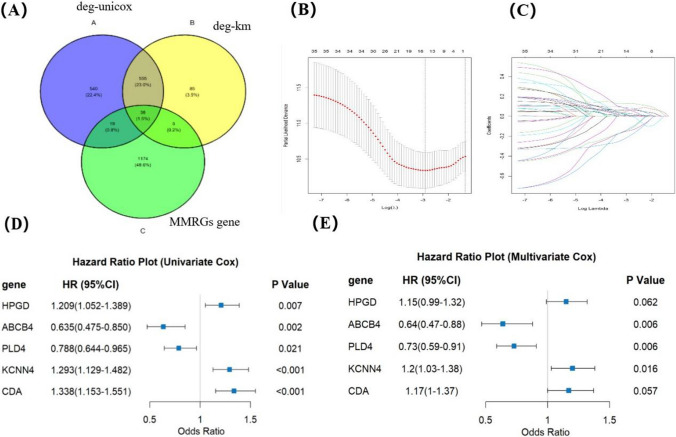
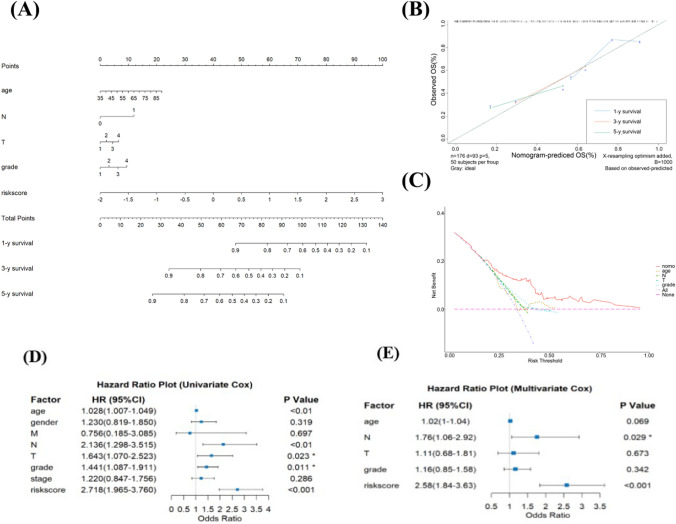
Univariate Cox regression and LASSO regression were used to screen the differentially expressed genes (DEGs), and multivariate Cox regression was used to develop the risk model. Kaplan-Meier estimator was employed to identify MMRGs signatures associated with overall survival (OS). ROC curves were utilized to evaluate the model's performance. Maftools, immunedeconv and CIBERSORT R packages were applied to analyze the gene mutation profiles and immune status. The corresponding sensitivity to pharmaceutical agents was assessed using oncoPredict R packages.
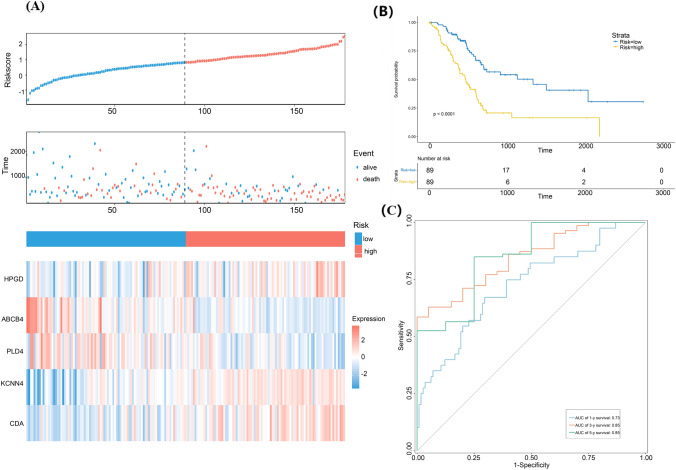
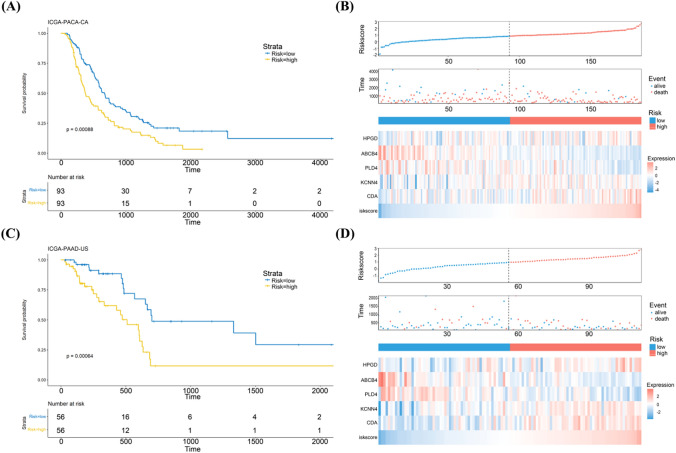
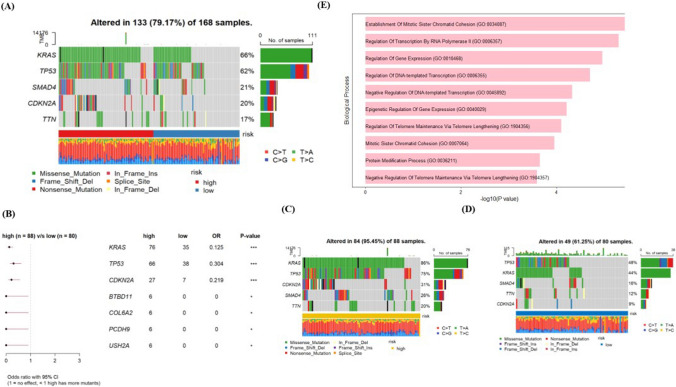
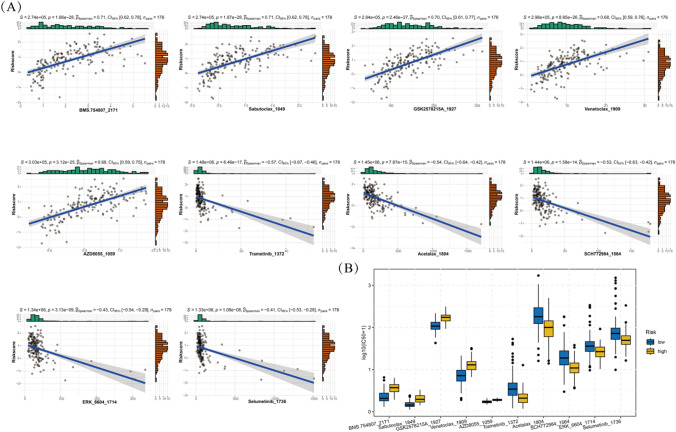
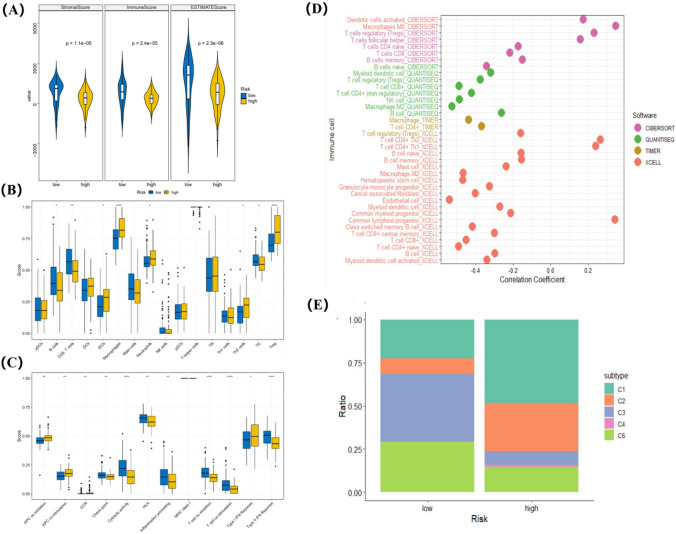
A prognostic model with five MMRGs was developed, which defined the patients as high-risk showed lower survival rates. There was good consistency among individuals categorized as high-risk, showing elevated rates of genetic alterations, particularly in the TP53 and KRAS genes. Furthermore, these patients exhibited increased levels of immunosuppression, characterized by an increased presence of macrophages, neutrophils, Th2 cells, and regulatory T cells. Additionally, high-risk patients showed increased sensitivity to Sabutoclax and Venetoclax.
By utilizing a gene signature associated with mitochondrial metabolism, a prognostic model has been established which could be a highly efficient method for predicting the outcomes of PAAD patients.
胰腺导管腺癌(PAAD)是一种极具侵袭性的癌症,具有高致死率和不良预后。线粒体代谢途径与肿瘤发生和进展密切相关,然而,该领域仍有许多未知之处。在本研究中,利用生物信息学工具构建了一个与线粒体代谢相关基因(MMRGs)的预后模型,以评估PAAD患者的生存、免疫状态、突变谱和药物敏感性。
采用单因素Cox回归和LASSO回归筛选差异表达基因(DEGs),并使用多因素Cox回归建立风险模型。采用Kaplan-Meier估计法确定与总生存(OS)相关的MMRGs特征。利用ROC曲线评估模型性能。应用Maftools、immunedeconv和CIBERSORT R软件包分析基因突变谱和免疫状态。使用oncoPredict R软件包评估对药物的相应敏感性。
建立了一个包含5个MMRGs的预后模型,该模型将患者定义为高危组,其生存率较低。高危组个体之间具有良好的一致性,显示出较高的基因改变率,尤其是在TP53和KRAS基因中。此外,这些患者表现出免疫抑制水平升高,其特征是巨噬细胞、中性粒细胞、Th2细胞和调节性T细胞的存在增加。此外,高危患者对Sabutoclax和Venetoclax的敏感性增加。
通过利用与线粒体代谢相关的基因特征,建立了一个预后模型,这可能是预测PAAD患者预后的一种高效方法。