Neuroimaging Department, Institute of Psychiatry, Psychology and Neuroscience, Kings College London, 16 De Crespigny Park, London, SE5 8AB, UK.
Sci Rep. 2024 Aug 29;14(1):20040. doi: 10.1038/s41598-024-70293-x.
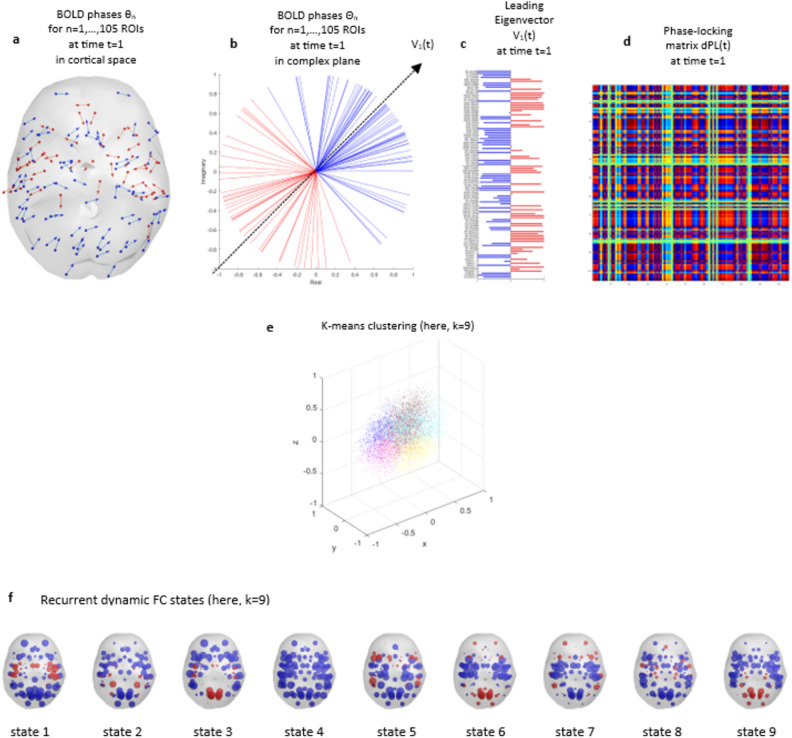
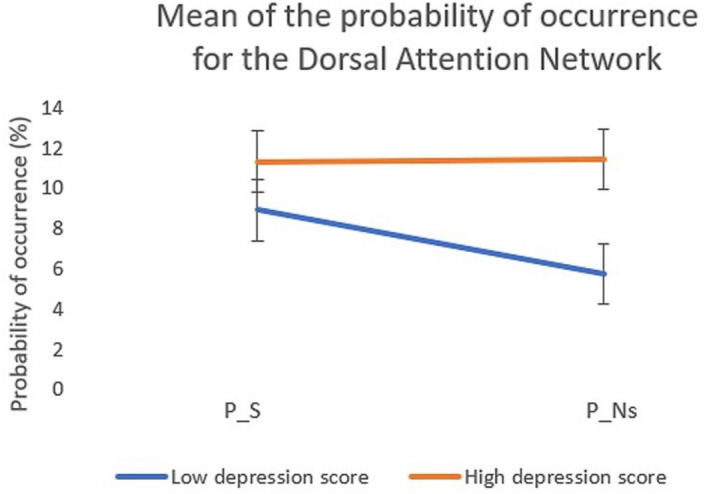
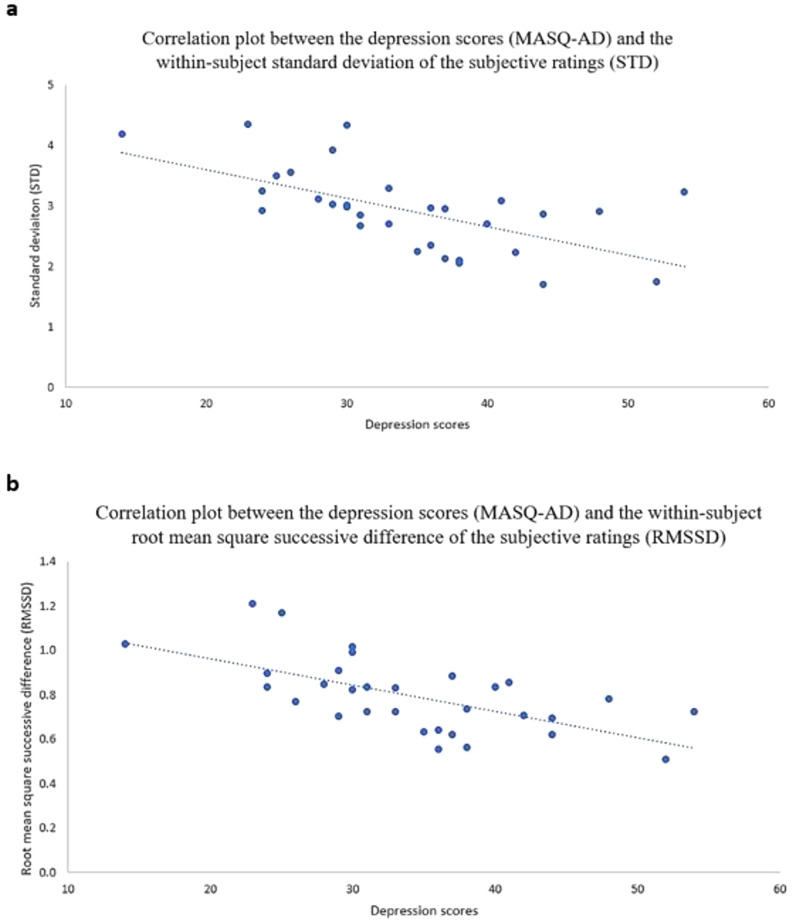
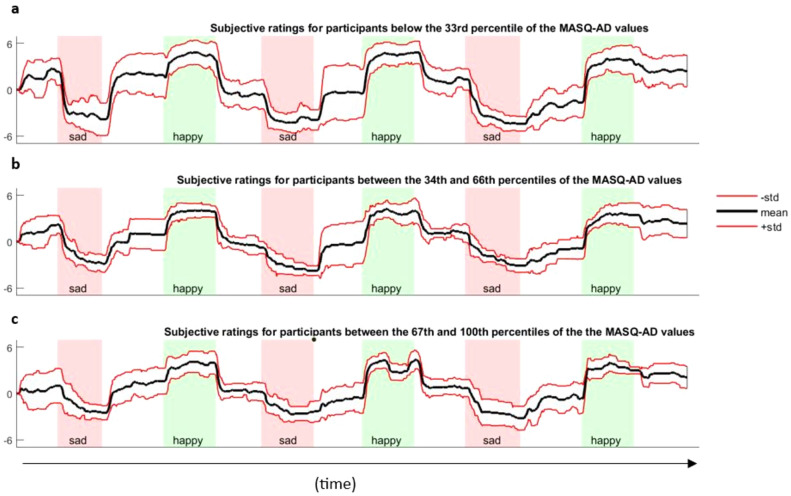
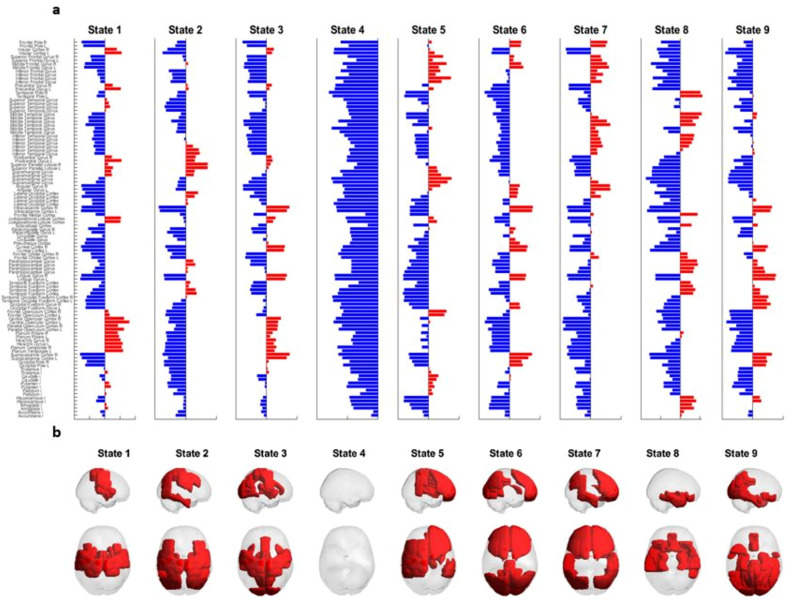
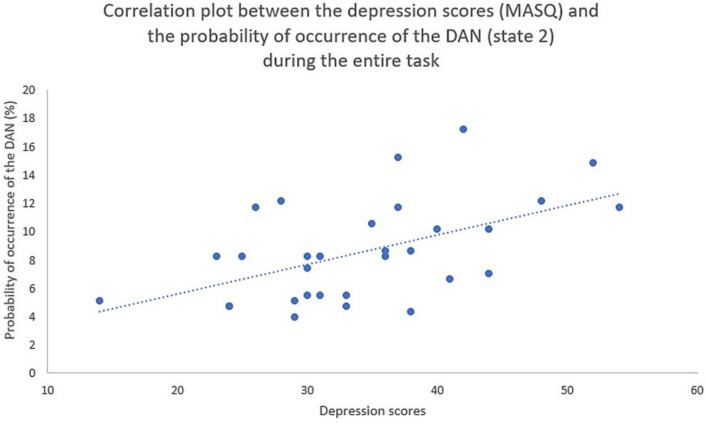
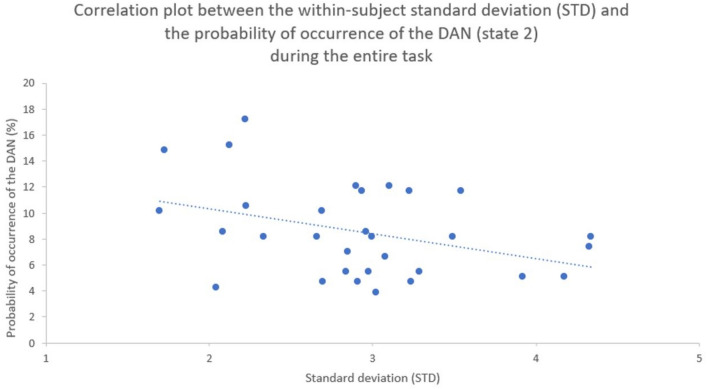
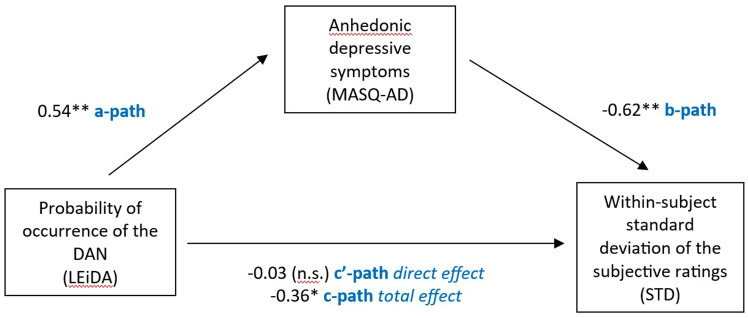
Emotion studies have commonly reported impaired emotional processing in individuals with heightened anhedonic depressive symptoms, as typically measured by collecting single subjective ratings for a given emotional cue. However, the interindividual variation in moment-to-moment emotional reactivity, and associated time-varying brain networks recruitment as emotions are unfolding, remains unclear. In this study, we filled this gap by using the unique temporal characteristics of music to investigate behavioural and brain network dynamics as a function of anhedonic depressive symptoms severity. Thirty-one neurotypical participants aged 18-30 years completed anhedonic depression questionnaires and then continuously rated happy, neutral and sad pieces of music whilst undergoing MRI scanning. Using a unique combination of dynamic approaches to behavioural (i.e., emotion dynamics) and fMRI (i.e., leading eigenvector dynamics analysis; LEiDA) data analysis, we found that participants higher in anhedonic depressive symptoms exhibited increased recruitment of attentional networks and blunted emotional response to both happy and sad musical excerpts. Anhedonic depression mediated the relationship between attentional networks recruitment and emotional blunting, and the elevated recruitment of attentional networks during emotional pieces of music carried over into subsequent neutral music. Future studies are needed to investigate whether these findings could be generalised to a clinical population (i.e., major depressive disorder).
情绪研究通常报告称,在那些表现出更高程度快感缺失抑郁症状的个体中,情绪处理能力受损,这种症状通常通过收集给定情绪线索的单一主观评分来衡量。然而,个体在情绪展开过程中瞬间情绪反应的个体间差异,以及相关的时变大脑网络招募情况仍不清楚。在这项研究中,我们利用音乐的独特时间特性,通过调查快感缺失抑郁症状严重程度的功能,填补了这一空白。31 名年龄在 18 至 30 岁之间的神经典型参与者完成了快感缺失抑郁问卷,然后在进行 MRI 扫描的同时连续对快乐、中性和悲伤的音乐片段进行评分。我们使用行为(即情绪动态)和 fMRI(即主导特征向量动态分析;LEiDA)数据分析的独特组合方法,发现快感缺失抑郁症状较高的参与者表现出注意力网络的更大招募,以及对快乐和悲伤音乐片段的情绪反应减弱。快感缺失抑郁症介导了注意力网络招募和情绪迟钝之间的关系,并且在情绪音乐片段中注意力网络的募集增加会延续到随后的中性音乐中。需要进一步的研究来调查这些发现是否可以推广到临床人群(即重度抑郁症)。