Department of Neurology, The Agnes Ginges Center for Human Neurogenetics, Hadassah-Hebrew University Medical Center, Jerusalem 9112001, Israel.
Obesity and Metabolism Laboratory, Institute for Drug Research, School of Pharmacy, Faculty of Medicine, The Hebrew University of Jerusalem, Jerusalem 9112001, Israel.
Biomolecules. 2024 Jul 24;14(8):893. doi: 10.3390/biom14080893.
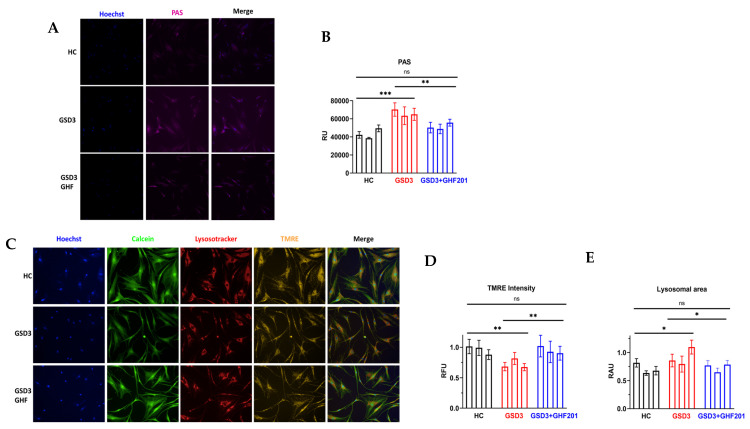
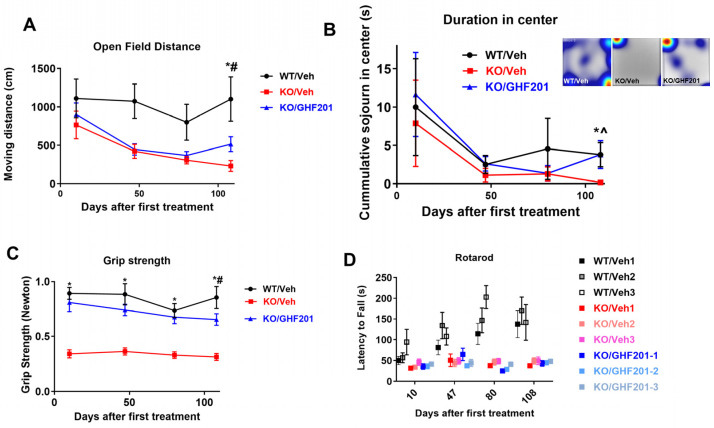
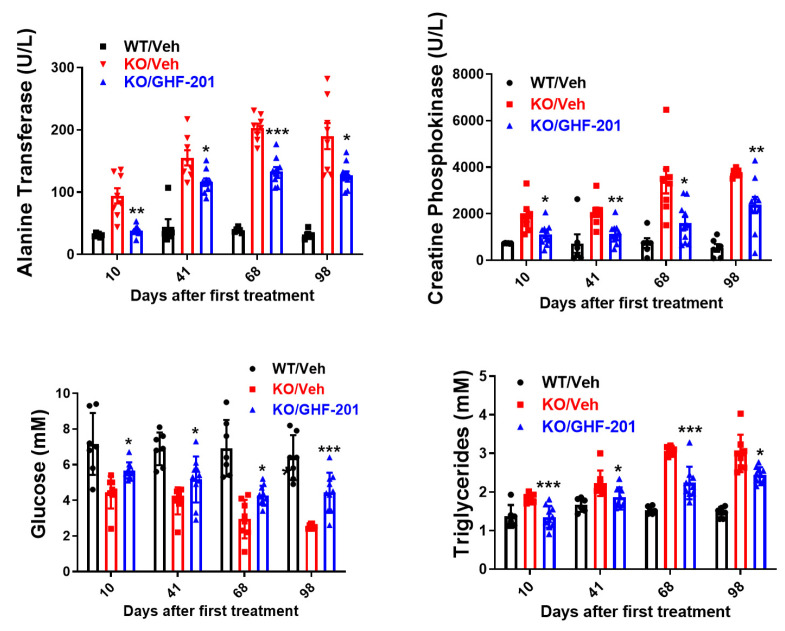
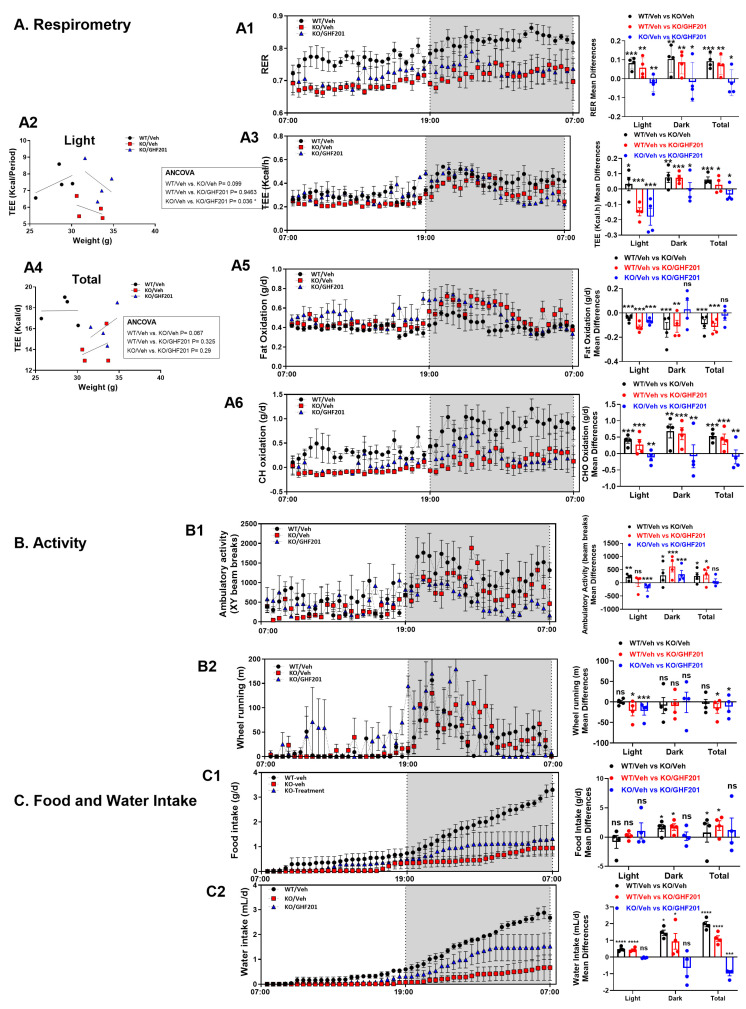
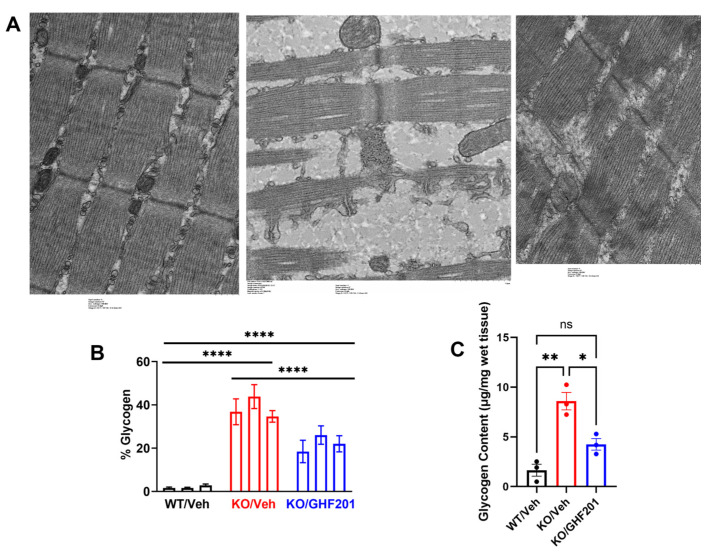
Glycogen storage disease type III (GSDIII) is a hereditary glycogenosis caused by deficiency of the glycogen debranching enzyme (GDE), an enzyme, encoded by , enabling glycogen degradation by catalyzing alpha-1,4-oligosaccharide side chain transfer and alpha-1,6-glucose cleavage. GDE deficiency causes accumulation of phosphorylase-limited dextrin, leading to liver disorder followed by fatal myopathy. Here, we tested the capacity of the new autophagosomal activator GHF-201 to alleviate disease burden by clearing pathogenic glycogen surcharge in the GSDIII mouse model . We used open field, grip strength, and rotarod tests for evaluating GHF-201's effects on locomotion, a biochemistry panel to quantify hematological biomarkers, indirect calorimetry to quantify in vivo metabolism, transmission electron microscopy to quantify glycogen in muscle, and fibroblast image analysis to determine cellular features affected by GHF-201. GHF-201 was able to improve all locomotion parameters and partially reversed hypoglycemia, hyperlipidemia and liver and muscle malfunction in mice. Treated mice burnt carbohydrates more efficiently and showed significant improvement of aberrant ultrastructural muscle features. In GSDIII patient fibroblasts, GHF-201 restored mitochondrial membrane polarization and corrected lysosomal swelling. In conclusion, GHF-201 is a viable candidate for treating GSDIII as it recovered a wide range of its pathologies in vivo, in vitro, and ex vivo.
糖原贮积病 III 型(GSDIII)是一种遗传性糖原贮积病,由糖原分支酶(GDE)缺乏引起,该酶由 编码,通过催化α-1,4-寡糖侧链转移和α-1,6-葡萄糖裂解,使糖原降解。GDE 缺乏导致磷酸化酶受限糊精的积累,导致肝脏紊乱,随后发生致命的肌病。在这里,我们测试了新型自噬体激活剂 GHF-201 通过清除 GSDIII 小鼠模型中致病糖原超负荷来减轻疾病负担的能力。我们使用开阔场、握力和转棒试验评估 GHF-201 对运动的影响,使用生物化学小组来量化血液生物标志物,间接测热法来量化体内代谢,透射电子显微镜来量化肌肉中的糖原,以及成纤维细胞图像分析来确定受 GHF-201 影响的细胞特征。GHF-201 能够改善所有运动参数,并部分逆转 小鼠的低血糖、高血脂以及肝和肌肉功能障碍。治疗小鼠更有效地燃烧碳水化合物,并显示出异常超微结构肌肉特征的显著改善。在 GSDIII 患者成纤维细胞中,GHF-201 恢复了线粒体膜的极化,并纠正了溶酶体肿胀。总之,GHF-201 是治疗 GSDIII 的一种可行候选药物,因为它在体内、体外和离体恢复了广泛的病理学。