Driva Stamatina, Korkontzelou Aliki, Tonstad Serena, Tentolouris Nikolaos, Litsiou Eleni, Vasileiou Vasiliki, Vassiliou Alice G, Saltagianni Vassiliki, Katsaounou Paraskevi
Smoking Cessation Outpatient Clinic, Respiratory Department, First Intensive Care Unit, Evangelismos General Hospital, 10676 Athens, Greece.
Diabetes Centre, First Department of Propaedeutic Internal Medicine, Medical School, National and Kapodistrian University of Athens, Laiko General Hospital, 11527 Athens, Greece.
Biomedicines. 2024 Aug 17;12(8):1882. doi: 10.3390/biomedicines12081882.
Smoking cessation is crucial for reducing complications of type 2 diabetes mellitus (T2DM), but associated weight gain can worsen glycemic control, discouraging quitting attempts. Varenicline, a partial agonist of α4β2 nicotinic receptors, aids smoking cessation. This study examines the effects of varenicline on body weight and metabolic parameters in patients with T2DM and prediabetes.
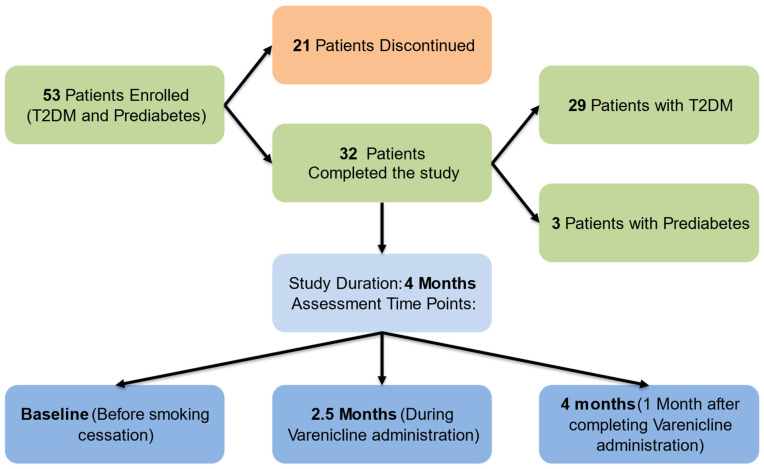
Fifty-three patients were enrolled, of which 32 successfully quit smoking after a three-month course of varenicline and were examined after an additional month with no medication. Measurements taken at baseline, 2.5 months, and 4 months included body weight, blood pressure, resting metabolic rate (RMR), glycated hemoglobin (HbA1c), fasting glucose, blood lipids, C-reactive protein (CRP), appetite-related hormones, and physical activity.
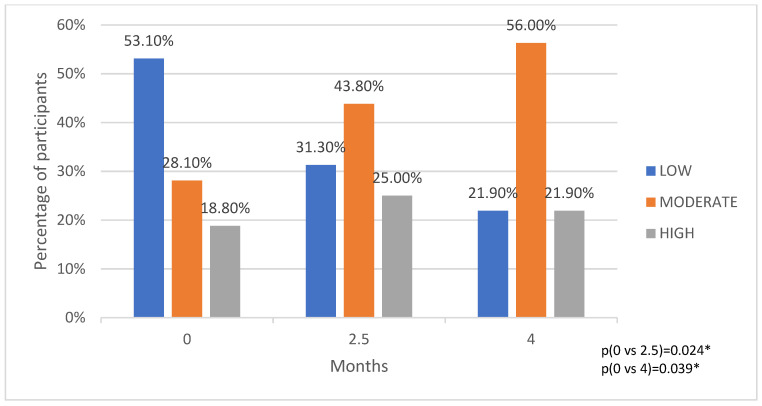
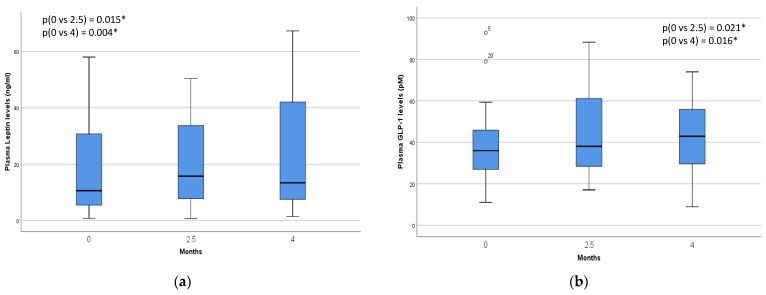
Post-treatment, there were no significant changes in body weight, blood pressure, RMR, or glycemic control. Total (CHOL) and low-density lipoprotein (LDL-C) cholesterol decreased significantly at 4 months of the study (from 168 to 156 mg/dL, = 0.013, and from 96 to 83 mg/dL, = 0.013, respectively). Leptin levels increased (from 11 to 13.8 ng/dL, = 0.004), as did glucagon-like peptide-1 (GLP-1) levels (from 39.6 to 45.8 pM, = 0.016) at 4 months of follow-up. The percentage of participants who reported moderate-intensity activity increased from 28% to 56%, while those reporting high-intensity activity increased from 19% to 22%, respectively ( = 0.039).
Our study showed that smoking cessation with varenicline in smokers with T2DM and prediabetes led to significant improvements in lipid profile, significant increase in plasma leptin and GLP-1 levels, and increased physical activity, without significant weight gain. Thus, smoking cessation without weight gain or deteriorated glycemic control is feasible for these smokers, with added benefits to lipid profiles, GLP-1 regulation, and physical activity.
戒烟对于降低2型糖尿病(T2DM)的并发症至关重要,但随之而来的体重增加会使血糖控制恶化,从而阻碍戒烟尝试。伐尼克兰是α4β2烟碱受体的部分激动剂,有助于戒烟。本研究探讨伐尼克兰对T2DM和糖尿病前期患者体重及代谢参数的影响。
招募了53名患者,其中32名在接受为期三个月的伐尼克兰治疗后成功戒烟,并在停药一个月后接受检查。在基线、2.5个月和4个月时测量的指标包括体重、血压、静息代谢率(RMR)、糖化血红蛋白(HbA1c)、空腹血糖、血脂、C反应蛋白(CRP)、食欲相关激素和身体活动情况。
治疗后,体重、血压、RMR或血糖控制无显著变化。在研究的4个月时,总胆固醇(CHOL)和低密度脂蛋白胆固醇(LDL-C)显著降低(分别从168降至156mg/dL,P = 0.013;从96降至83mg/dL,P = 0.013)。在随访的4个月时,瘦素水平升高(从11升至13.8ng/dL,P = 0.004),胰高血糖素样肽-1(GLP-1)水平也升高(从39.6升至45.8pM,P = 0.016)。报告进行中等强度活动的参与者比例从28%增加到56%,而报告进行高强度活动的参与者比例分别从19%增加到22%(P = 0.039)。
我们的研究表明,T2DM和糖尿病前期吸烟者使用伐尼克兰戒烟可显著改善血脂状况,显著提高血浆瘦素和GLP-1水平,并增加身体活动,且无显著体重增加。因此,对于这些吸烟者来说,在不增加体重或不恶化血糖控制的情况下戒烟是可行的,对血脂状况、GLP-1调节和身体活动还有额外益处。