Kinshasa School of Public Health, University of Kinshasa, Kinshasa P.O. Box 11850, Democratic Republic of the Congo.
Patrick Kayembe Research Center, Kinshasa School of Public Health, University of Kinshasa, Kinshasa P.O. Box 11850, Democratic Republic of the Congo.
Int J Environ Res Public Health. 2024 Aug 2;21(8):1021. doi: 10.3390/ijerph21081021.
Worldwide, around 73 million induced abortions take place every year. Of these, 45% are unsafe and can lead to complications. The evolution of the legal and practical landscape of abortion in the Democratic Republic of the Congo (DRC) over the last few years necessitates a re-examination of the experience of induced abortion, leading this study to measure the incidence of abortion among young women (15 to 29 years of age), as well as the heterogeneity of this problem according to the residence of these young women (slum vs. non-slum areas).
We used representative survey data on women aged 15-49 in Kinshasa, collected from December 2021 to April 2022. The survey included questions about the respondents' and their closest confidants' experience of induced abortion, including the methods and sources used. We estimated abortion incidence and heterogeneity over one year based on residence in the city of Kinshasa according to sociodemographic characteristics.
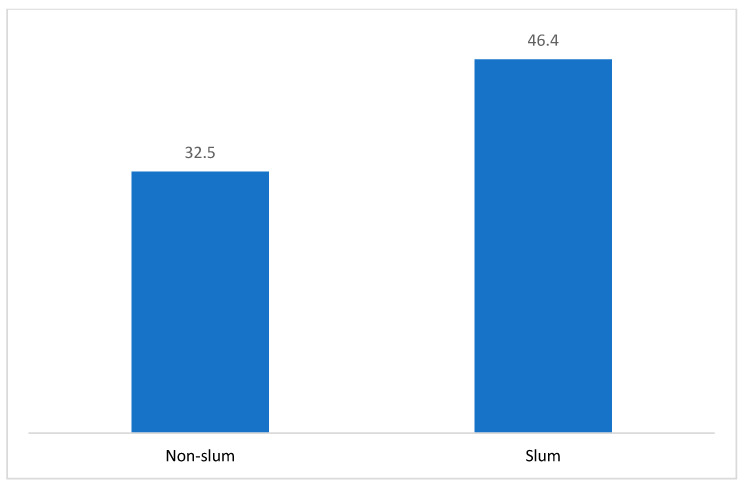
The fully adjusted one-year friend abortion rate in 2021 was 131.5 per 1000 (95% CI: IQR 99.4-163.6). These rates were significantly higher than the corresponding estimates of respondents. The incidence of induced abortion for respondents was 24.4 per 1000 (95% CI: 15.8-32.9) abortions per 1000 women. The incidence rates of induced abortion were much higher among the respondents residing in slums than among those residing in non-slums (29.2 vs. 13.0 per 1000; < 0.001). Slum respondents indicated higher use of non-recommended methods than non-slum respondents.
More precise estimates of the incidence of abortion indicate that the incidence rate of abortion was higher among young women residing in slums who were unmarried and had no children. These incidences were higher among confidants than among respondents. There is still a lot of work to be done to fulfill the obligations outlined in the Maputo Protocol. The aim is to decrease the occurrence of unsafe abortions and their associated effects.
全球每年约有 7300 万例人工流产,其中 45%为不安全流产,可能导致并发症。过去几年,刚果民主共和国(DRC)堕胎的法律和实践环境发生了变化,这需要重新审视人工流产的经验,因此本研究旨在衡量年轻女性(15 至 29 岁)的人工流产发生率,以及根据这些年轻女性的居住地(贫民窟与非贫民窟地区)这一问题的异质性。
我们使用了 2021 年 12 月至 2022 年 4 月期间在金沙萨收集的针对 15-49 岁女性的代表性调查数据。调查包括受访者及其最亲密的知己人工流产经历的问题,包括使用的方法和来源。我们根据居住在金沙萨的社会人口特征,估算了一年中基于居住地的人工流产发生率和异质性。
根据调整后的模型,2021 年一年中朋友人工流产率为 131.5 例/1000(95%CI:IQR 99.4-163.6)。这些比率明显高于受访者的相应估计值。受访者的人工流产发生率为 24.4 例/1000(95%CI:15.8-32.9)例/1000 名妇女。居住在贫民窟的受访者的人工流产发生率明显高于居住在非贫民窟的受访者(29.2 与 13.0 例/1000;<0.001)。贫民窟受访者表示比非贫民窟受访者更倾向于使用非推荐方法。
更准确的人工流产发生率估计表明,居住在贫民窟、未婚且没有孩子的年轻女性的流产发生率更高。这些发生率在知己中比在受访者中更高。要履行《马普托议定书》规定的义务,还有很多工作要做。目标是减少不安全流产及其相关影响的发生。