Department of Pharmacology, School of Medicine, Pusan National University, Yangsan 50612, Republic of Korea.
Department of Neurosurgery, College of Medicine, Kosin University, Busan 49267, Republic of Korea.
Int J Mol Sci. 2024 Aug 21;25(16):9073. doi: 10.3390/ijms25169073.
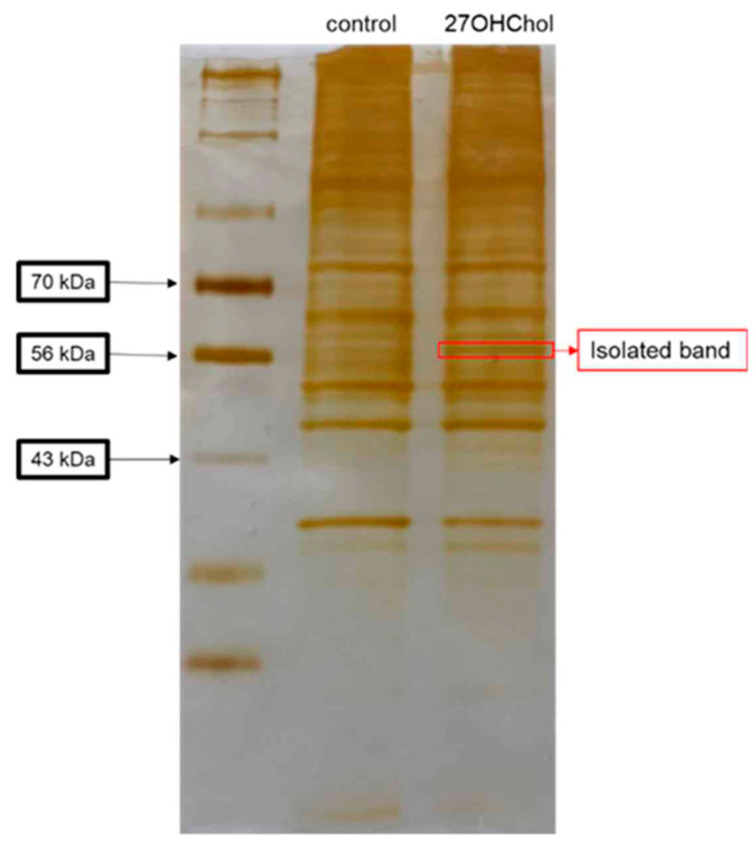
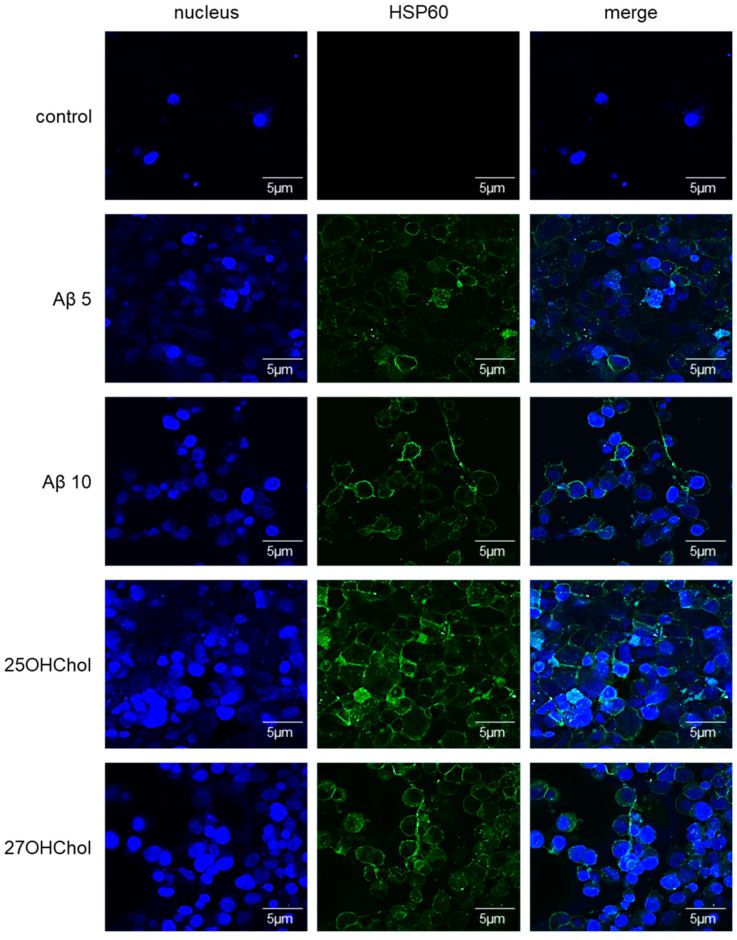
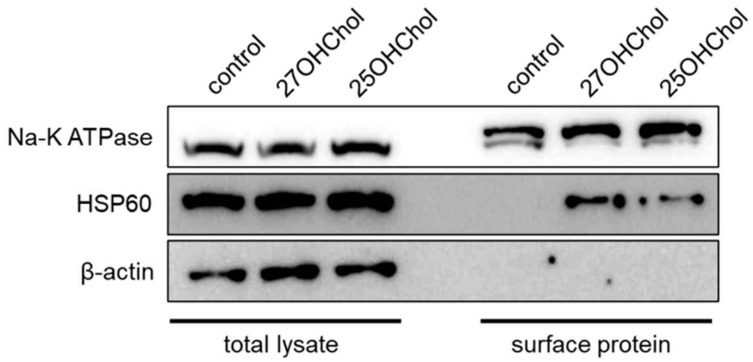
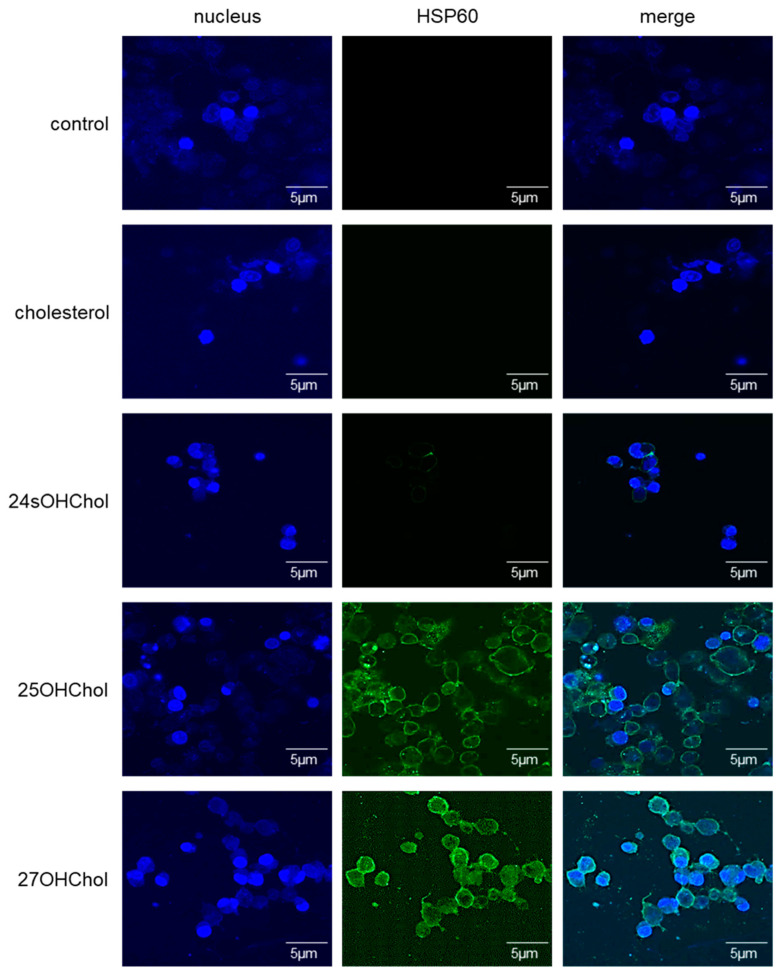
Microglia, essential immune cells in the brain, play crucial roles in neuroinflammation by performing various functions such as neurogenesis, synaptic pruning, and pathogen defense. These cells are activated by inflammatory factors like β-amyloid (Aβ) and oxysterols, leading to morphological and functional changes, including the secretion of inflammatory cytokines and the upregulation of MHC class II molecules. This study focused on identifying specific markers for microglial activation, with a particular emphasis on the roles of oxysterols in this process. We used the HMC3 human microglial cell line to investigate the induction of heat shock protein 60 (HSP60), a chaperonin protein by oxysterols, specifically in the presence of 25-hydroxycholesterol (25OHChol) and 27-hydroxycholesterol (27OHChol). Our findings obtained by the proteomics approach revealed that these oxysterols significantly increased HSP60 expression on microglial cells. This induction was further confirmed using Western blot analysis and immunofluorescence microscopy. Additionally, Aβ also promoted HSP60 expression, indicating its role as a microglial activator. HSP60 involved in protein folding and immune modulation was identified as a potential marker for microglial activation. This study underscores the importance of HSP60 in the inflammatory response of microglia, suggesting its utility as a target for new therapeutic approaches in neuroinflammatory diseases such as Alzheimer's disease (AD).
小胶质细胞是大脑中重要的免疫细胞,通过执行神经发生、突触修剪和病原体防御等多种功能,在神经炎症中发挥关键作用。这些细胞被β-淀粉样蛋白 (Aβ) 和氧化固醇等炎症因子激活,导致形态和功能发生变化,包括炎症细胞因子的分泌和 MHC Ⅱ类分子的上调。本研究旨在确定小胶质细胞激活的特定标志物,特别关注氧化固醇在这一过程中的作用。我们使用 HMC3 人小胶质细胞系来研究热休克蛋白 60 (HSP60) 的诱导,这是一种伴侣蛋白,由氧化固醇诱导,特别是在 25-羟胆固醇 (25OHChol) 和 27-羟胆固醇 (27OHChol) 存在的情况下。我们通过蛋白质组学方法获得的研究结果表明,这些氧化固醇显著增加了小胶质细胞上 HSP60 的表达。Western blot 分析和免疫荧光显微镜进一步证实了这一诱导。此外,Aβ 也促进了 HSP60 的表达,表明其作为小胶质细胞激活剂的作用。涉及蛋白质折叠和免疫调节的 HSP60 被鉴定为小胶质细胞激活的潜在标志物。这项研究强调了 HSP60 在小胶质细胞炎症反应中的重要性,表明其作为神经炎症性疾病(如阿尔茨海默病 (AD))新治疗方法的靶点具有潜在用途。