
钛/氧化铜纳米铝热剂——燃烧过程研究
Ti/CuO Nanothermite-Study of the Combustion Process.
作者信息
Polis Mateusz, Szydło Konrad, Lisiecka Barbara, Procek Marcin, Gołofit Tomasz, Jarosz Tomasz, Hawełek Łukasz, Stolarczyk Agnieszka
机构信息
Łukasiewicz Research Network-Explosive Techniques Research Group, Institute of Industrial Organic Chemistry, 42-693 Krupski Młyn, Poland.
Department of Physical Chemistry and Technology of Polymers, Silesian University of Technology, 44-100 Gliwice, Poland.
出版信息
Molecules. 2024 Aug 20;29(16):3932. doi: 10.3390/molecules29163932.
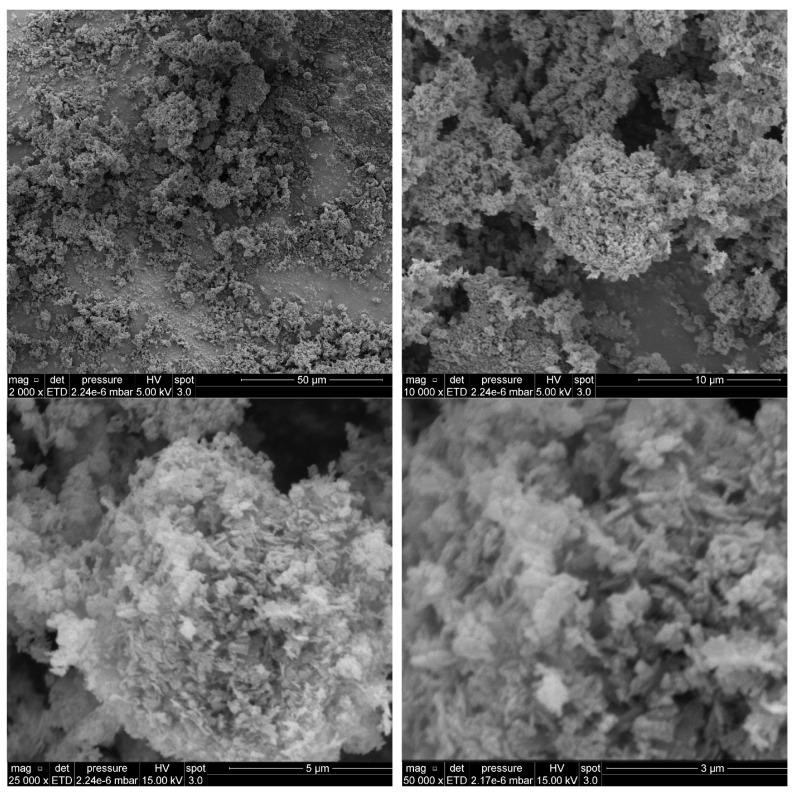
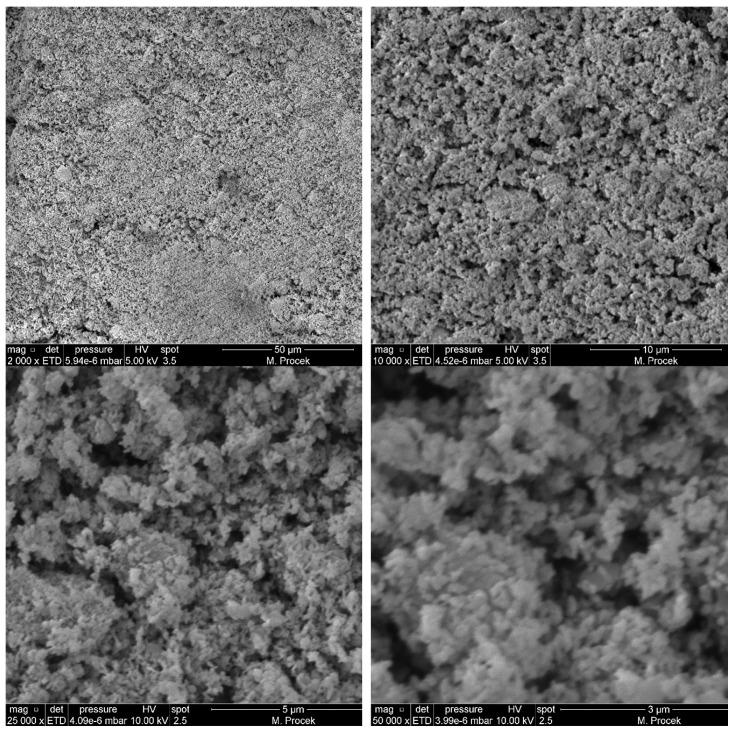
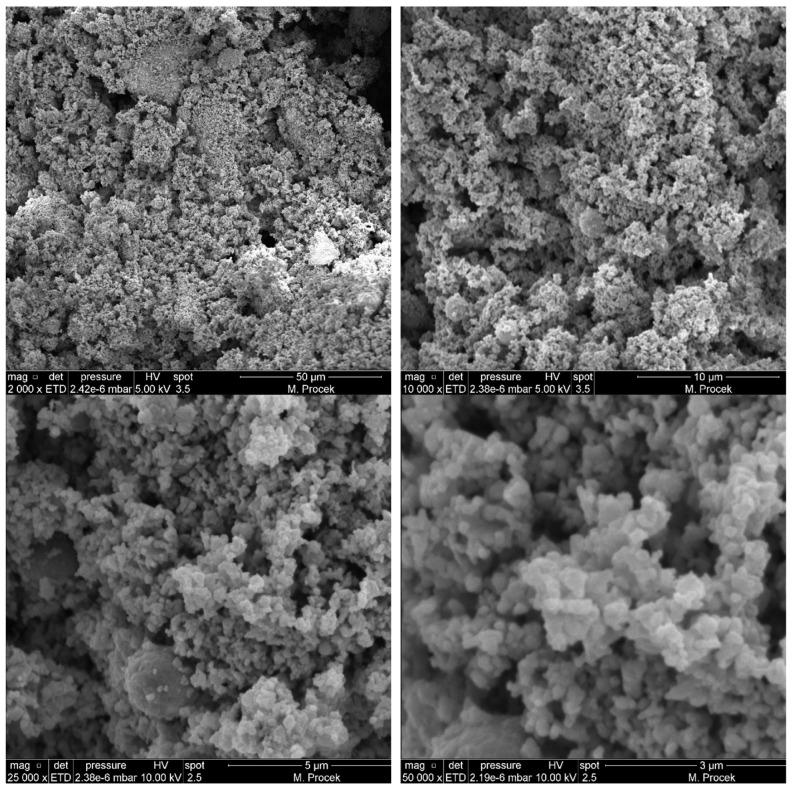
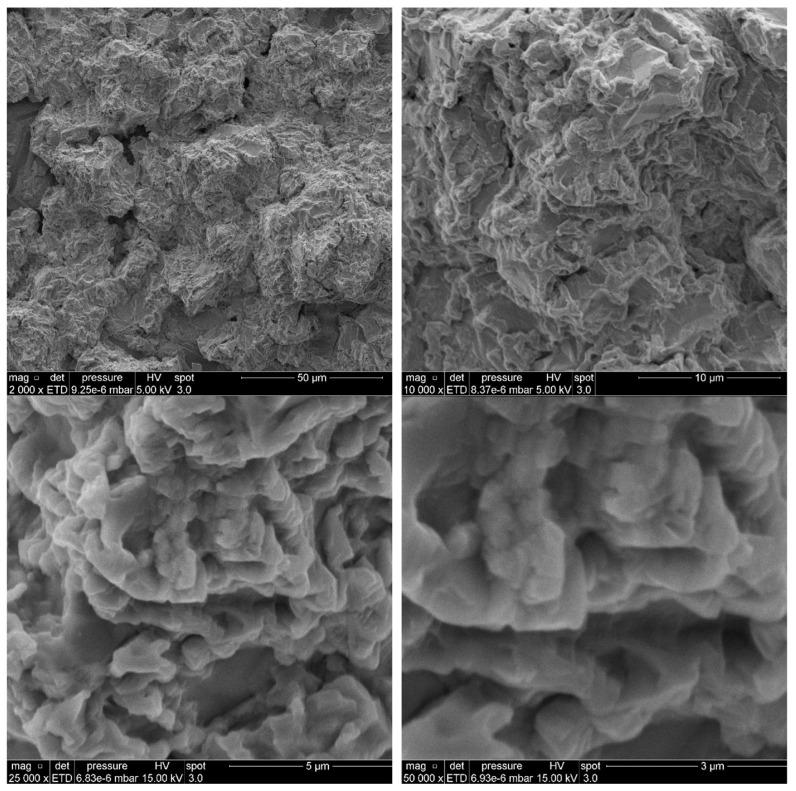
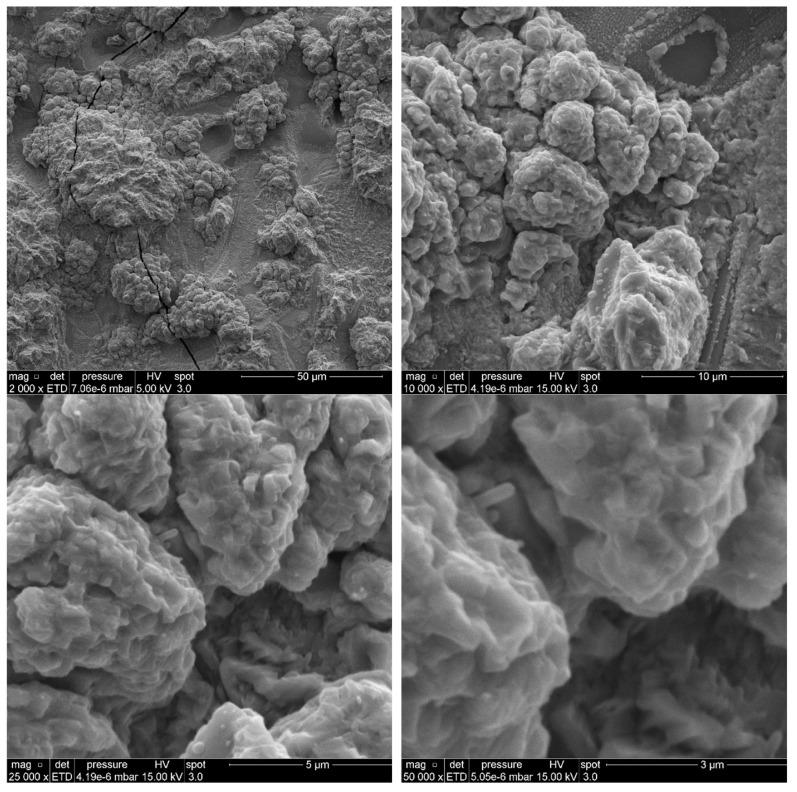
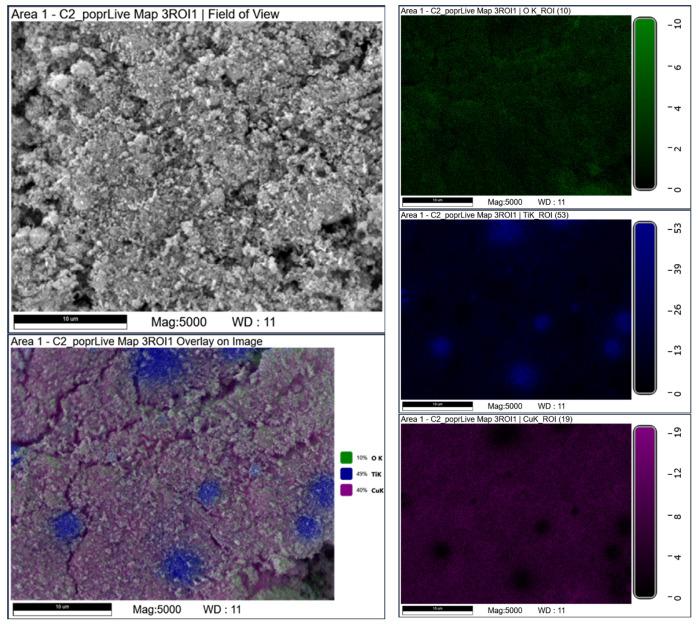
A study of the combustion processes of Ti/CuO and Ti/CuO/NC nanothermites prepared via electrospraying was conducted in this work. For this purpose, the compositions were thermally conditioned at 350, 550 and 750 °C, as selected based on our initial differential scanning calorimetry-thermogravimetry (DSC/TG) investigations. The tested compositions were analysed for chemical composition and morphology using SEM-EDS, Raman spectroscopy and XRD measurements. Additionally, the thermal behaviour and decomposition kinetics of compositions were explored by means of DSC/TG. The Kissinger and Ozawa methods were applied to the DSC curves to calculate the reaction activation energy. SEM-EDS analyses indicated that sintering accelerated with increasing equivalence ratio and there was a strong effect on the sintering process due to cellulose nitrate (NC) addition. The main combustion reaction was found to start at 420-450 °C, as confirmed by XRD and Raman study of samples annealed at 350 °C and 550 °C. Moreover, increasing the fuel content in the composition led to lower E, higher reaction heats and a more violent combustion process. Conversely, the addition of NC had an ambiguous effect on E. Finally, a multi-step combustion mechanism was proposed and is to some extent in line with the more general reactive sintering (RS) mechanism. However, unusual mass transfer was observed, i.e., to the fuel core, rather than the opposite, which is typically observed for Al-based nanothermites.
本工作对通过电喷雾法制备的Ti/CuO和Ti/CuO/NC纳米铝热剂的燃烧过程进行了研究。为此,根据我们最初的差示扫描量热-热重联用(DSC/TG)研究结果,选择在350、550和750℃对这些组合物进行热预处理。使用扫描电子显微镜-能谱仪(SEM-EDS)、拉曼光谱和X射线衍射(XRD)测量对测试组合物的化学成分和形态进行分析。此外,通过DSC/TG探究组合物的热行为和分解动力学。将基辛格法和小泽法应用于DSC曲线以计算反应活化能。SEM-EDS分析表明,烧结随着当量比的增加而加速,并且硝酸纤维素(NC)的添加对烧结过程有强烈影响。通过对在350℃和550℃退火的样品进行XRD和拉曼研究证实,主要燃烧反应在420-450℃开始。此外,组合物中燃料含量的增加导致活化能降低、反应热升高以及燃烧过程更加剧烈。相反,NC的添加对活化能的影响不明确。最后,提出了一种多步燃烧机制,在某种程度上与更普遍的反应烧结(RS)机制一致。然而,观察到了不寻常的质量传递,即向燃料核心传递,而不是像铝基纳米铝热剂通常观察到的那样向相反方向传递。










 Zotero 插件