Perez-Torres William Isaac, Uman-Flores Diego Armando, Quispe-Quispe Andres Benjamin, Palomino-Quispe Facundo, Bezerra Emili, Leher Quefren, Paixão Thuanne, Alvarez Ana Beatriz
LIECAR Laboratory, Universidad Nacional de San Antonio Abad del Cusco (UNSAAC), Cusco 08003, Peru.
PAVIC Laboratory, University of Acre (UFAC), Rio Branco 69915-900, Brazil.
Sensors (Basel). 2024 Aug 10;24(16):5177. doi: 10.3390/s24165177.
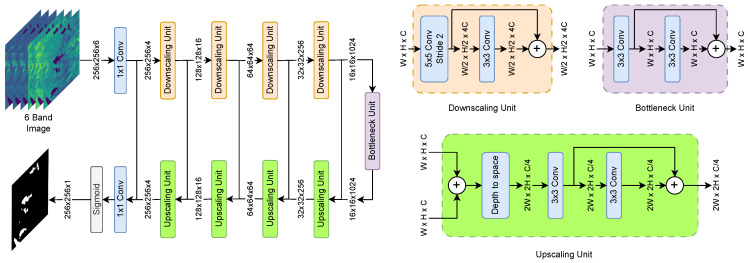
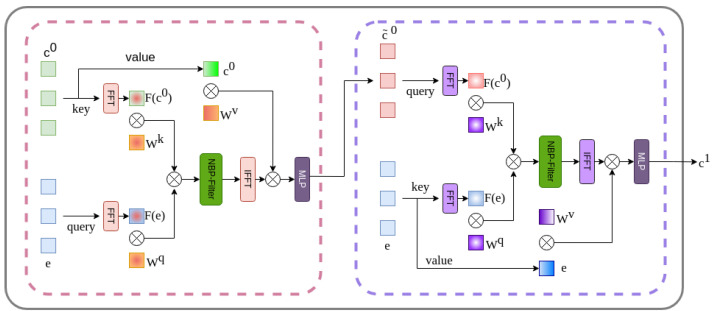
High-mountain water bodies represent critical components of their ecosystems, serving as vital freshwater reservoirs, environmental regulators, and sentinels of climate change. To understand the environmental dynamics of these regions, comprehensive analyses of lakes across spatial and temporal scales are necessary. While remote sensing offers a powerful tool for lake monitoring, applications in high-mountain terrain present unique challenges. The Ancash and Cuzco regions of the Peruvian Andes exemplify these challenges. These regions harbor numerous high-mountain lakes, which are crucial for fresh water supply and environmental regulation. This paper presents an exploratory examination of remote sensing techniques for lake monitoring in the Ancash and Cuzco regions of the Peruvian Andes. The study compares three deep learning models for lake segmentation: the well-established DeepWaterMapV2 and WatNet models and the adapted WaterSegDiff model, which is based on a combination of diffusion and transformation mechanisms specifically conditioned for lake segmentation. In addition, the Normalized Difference Water Index (NDWI) with Otsu thresholding is used for comparison purposes. To capture lakes across these regions, a new dataset was created with Landsat-8 multispectral imagery (bands 2-7) from 2013 to 2023. Quantitative and qualitative analyses were performed using metrics such as Mean Intersection over Union (MIoU), Pixel Accuracy (PA), and F1 Score. The results achieved indicate equivalent performance of DeepWaterMapV2 and WatNet encoder-decoder architectures, achieving adequate lake segmentation despite the challenging geographical and atmospheric conditions inherent in high-mountain environments. In the qualitative analysis, the behavior of the WaterSegDiff model was considered promising for the proposed application. Considering that WatNet is less computationally complex, with 3.4 million parameters, this architecture becomes the most pertinent to implement. Additionally, a detailed temporal analysis of Lake Singrenacocha in the Vilcanota Mountains was conducted, pointing out the more significant behavior of the WatNet model.
高山水体是其生态系统的关键组成部分,作为重要的淡水储备、环境调节器和气候变化的哨兵。为了解这些地区的环境动态,有必要在空间和时间尺度上对湖泊进行全面分析。虽然遥感为湖泊监测提供了强大的工具,但在高山地形中的应用面临独特挑战。秘鲁安第斯山脉的安卡什和库斯科地区就是这些挑战的例证。这些地区有众多高山湖泊,对淡水供应和环境调节至关重要。本文对秘鲁安第斯山脉安卡什和库斯科地区湖泊监测的遥感技术进行了探索性研究。该研究比较了三种用于湖泊分割的深度学习模型:成熟的DeepWaterMapV2和WatNet模型,以及基于扩散和变换机制组合专门为湖泊分割而调整的WaterSegDiff模型。此外,使用带大津阈值的归一化差异水指数(NDWI)进行比较。为了获取这些地区的湖泊信息,利用2013年至2023年的陆地卫星8号多光谱图像(波段2 - 7)创建了一个新数据集。使用平均交并比(MIoU)、像素精度(PA)和F1分数等指标进行了定量和定性分析。结果表明,DeepWaterMapV2和WatNet编码器 - 解码器架构具有同等性能,尽管高山环境存在具有挑战性的地理和大气条件,但仍能实现足够的湖泊分割。在定性分析中,WaterSegDiff模型的表现对于所提出的应用很有前景。考虑到WatNet的计算复杂度较低,有340万个参数,这种架构成为最适合实施的架构。此外,对维尔卡诺塔山脉的辛雷诺卡查湖进行了详细的时间分析,指出了WatNet模型更显著的表现。