• 文献检索
  • 文档翻译
  • 深度研究
  • 学术资讯
  • Suppr Zotero 插件Zotero 插件
  • 邀请有礼
  • 套餐&价格
  • 历史记录
应用&插件
Suppr Zotero 插件Zotero 插件浏览器插件Mac 客户端Windows 客户端微信小程序
定价
高级版会员购买积分包购买API积分包
服务
文献检索文档翻译深度研究API 文档MCP 服务
关于我们
关于 Suppr公司介绍联系我们用户协议隐私条款
关注我们

Suppr 超能文献

核心技术专利:CN118964589B侵权必究
粤ICP备2023148730 号-1Suppr @ 2026

文献检索

告别复杂PubMed语法,用中文像聊天一样搜索,搜遍4000万医学文献。AI智能推荐,让科研检索更轻松。

立即免费搜索

文件翻译

保留排版,准确专业,支持PDF/Word/PPT等文件格式,支持 12+语言互译。

免费翻译文档

深度研究

AI帮你快速写综述,25分钟生成高质量综述,智能提取关键信息,辅助科研写作。

立即免费体验

山猫优化算法:一种用于解决供应链优化问题的有效的受生物启发的元启发式算法。

Bobcat Optimization Algorithm: an effective bio-inspired metaheuristic algorithm for solving supply chain optimization problems.

作者信息

Benmamoun Zoubida, Khlie Khaoula, Bektemyssova Gulnara, Dehghani Mohammad, Gherabi Youness

机构信息

Liwa College, Abu Dhabi, UAE.

Department of Computer Engineering, International Information Technology University, 050000, Almaty, Kazakhstan.

出版信息

Sci Rep. 2024 Aug 29;14(1):20099. doi: 10.1038/s41598-024-70497-1.

DOI:10.1038/s41598-024-70497-1
PMID:39209916
原文链接:https://pmc.ncbi.nlm.nih.gov/articles/PMC11362341/
Abstract

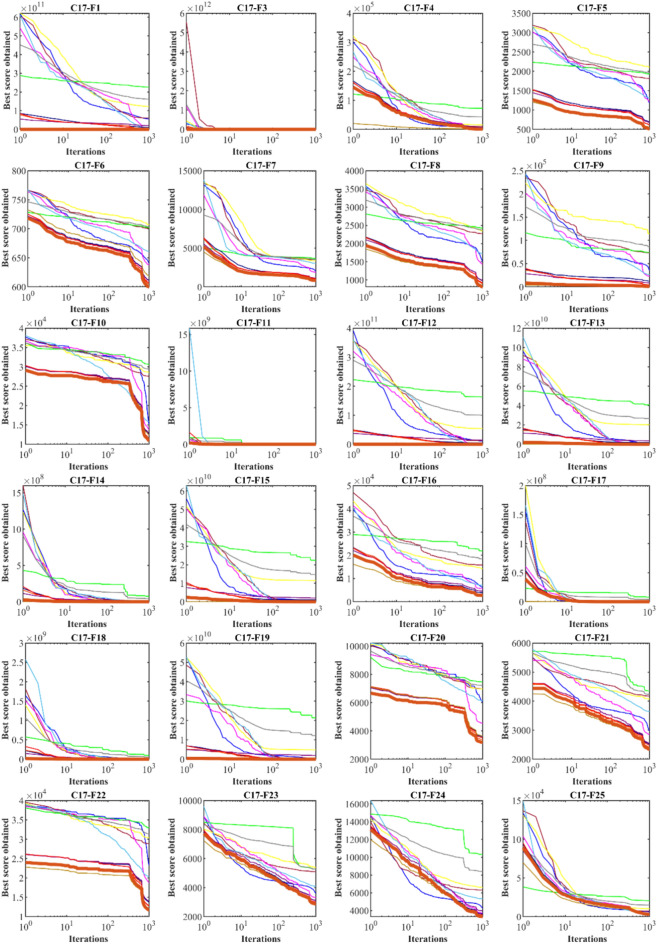
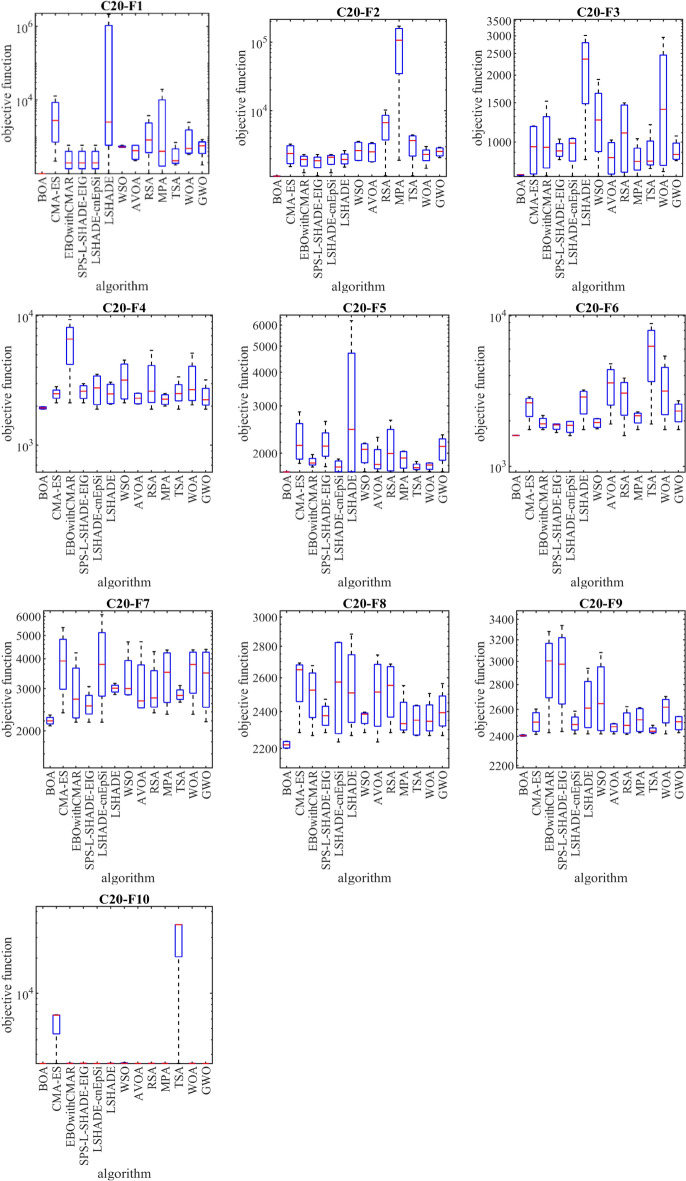
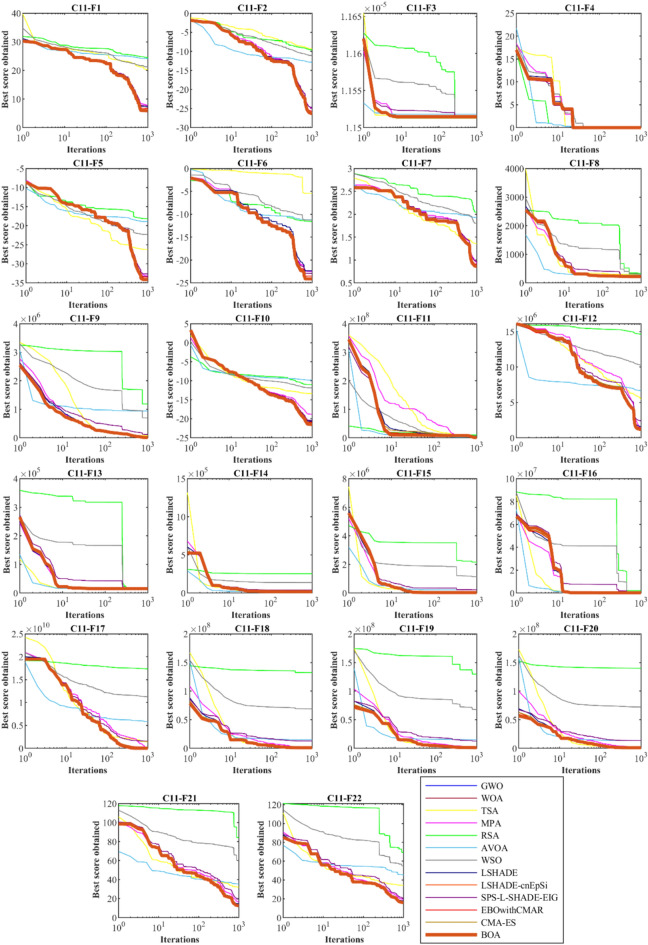
Supply chain efficiency is a major challenge in today's business environment, where efficient resource allocation and coordination of activities are essential for competitive advantage. Traditional efficiency strategies often struggle for resources for the complex and dynamic network. In response, bio-inspired metaheuristic algorithms have emerged as powerful tools to solve these optimization problems. Referring to the random search nature of metaheuristic algorithms and emphasizing that no metaheuristic algorithm is the best optimizer for all optimization applications, the No Free Lunch (NFL) theorem encourages researchers to design newer algorithms to be able to provide more effective solutions to optimization problems. Motivated by the NFL theorem, the innovation and novelty of this paper is in designing a new meta-heuristic algorithm called Bobcat Optimization Algorithm (BOA) that imitates the natural behavior of bobcats in the wild. The basic inspiration of BOA is derived from the hunting strategy of bobcats during the attack towards the prey and the chase process between them. The theory of BOA is stated and then mathematically modeled in two phases (i) exploration based on the simulation of the bobcat's position change while moving towards the prey and (ii) exploitation based on simulating the bobcat's position change during the chase process to catch the prey. The performance of BOA is evaluated in optimization to handle the CEC 2017 test suite for problem dimensions equal to 10, 30, 50, and 100, as well as to address CEC 2020. The optimization results show that BOA has a high ability in exploration, exploitation, and balance them during the search process in order to achieve a suitable solution for optimization problems. The results obtained from BOA are compared with the performance of twelve well-known metaheuristic algorithms. The findings show that BOA has been successful in handling the CEC 2017 test suite in 89.65, 79.31, 93.10, and 89.65% of the functions for the problem dimension equal to 10, 30, 50, and 100, respectively. Also, the findings show that in order to handle the CEC 2020 test suite, BOA has been successful in 100% of the functions of this test suite. The statistical analysis confirms that BOA has a significant statistical superiority in the competition with the compared algorithms. Also, in order to analyze the efficiency of BOA in dealing with real world applications, twenty-two constrained optimization problems from CEC 2011 test suite and four engineering design problems have been selected. The findings show that BOA has been successful in 90.90% of CEC2011 test suite optimization problems and in 100% of engineering design problems. In addition, the efficiency of BOA to handle SCM applications has been challenged to solve ten case studies in the field of sustainable lot size optimization. The findings show that BOA has successfully provided superior performance in 100% of the case studies compared to competitor algorithms.

摘要

供应链效率是当今商业环境中的一项重大挑战,在这种环境下,高效的资源分配和活动协调对于竞争优势至关重要。传统的效率策略往往在复杂多变的网络中争夺资源。作为回应,受生物启发的元启发式算法已成为解决这些优化问题的有力工具。无免费午餐(NFL)定理参考元启发式算法的随机搜索性质,并强调没有一种元启发式算法是适用于所有优化应用的最佳优化器,它鼓励研究人员设计更新的算法,以便能够为优化问题提供更有效的解决方案。受NFL定理的启发,本文的创新之处在于设计了一种新的元启发式算法,称为山猫优化算法(BOA),它模仿了野生山猫的自然行为。BOA的基本灵感来源于山猫在攻击猎物以及它们之间的追逐过程中的狩猎策略。阐述了BOA的理论,然后分两个阶段进行数学建模:(i)基于模拟山猫向猎物移动时的位置变化进行探索,(ii)基于模拟山猫在追逐过程中捕获猎物时的位置变化进行开发。在优化过程中评估了BOA的性能,以处理问题维度等于10、30、50和100的CEC 2017测试套件,以及解决CEC 2020问题。优化结果表明,BOA在探索、开发以及在搜索过程中平衡两者方面具有很高的能力,以便为优化问题找到合适的解决方案。将BOA获得的结果与十二种著名的元启发式算法的性能进行了比较。结果表明,对于问题维度等于10、30、50和100的情况,BOA分别在89.65%、79.31%、93.10%和89.65%的CEC 2017测试套件函数中成功解决了问题。此外,结果表明,为了处理CEC 2020测试套件,BOA在该测试套件的所有函数中都成功解决了问题。统计分析证实,在与比较算法的竞争中,BOA具有显著的统计优势。此外,为了分析BOA在处理实际应用中的效率,从CEC 2011测试套件中选择了二十二个约束优化问题和四个工程设计问题。结果表明,BOA在CEC2011测试套件优化问题的90.90%以及工程设计问题的100%中都成功解决了问题。此外,还对BOA处理供应链管理(SCM)应用的效率提出了挑战,以解决可持续批量优化领域的十个案例研究。结果表明,与竞争算法相比,BOA在100%的案例研究中都成功提供了卓越的性能。
https://cdn.ncbi.nlm.nih.gov/pmc/blobs/b0c3/11362341/14e301537ced/41598_2024_70497_Fig18_HTML.jpg
https://cdn.ncbi.nlm.nih.gov/pmc/blobs/b0c3/11362341/d88febdddccd/41598_2024_70497_Fig1_HTML.jpg
https://cdn.ncbi.nlm.nih.gov/pmc/blobs/b0c3/11362341/867e60d07646/41598_2024_70497_Figa_HTML.jpg
https://cdn.ncbi.nlm.nih.gov/pmc/blobs/b0c3/11362341/79fa5f08f5c4/41598_2024_70497_Fig2_HTML.jpg
https://cdn.ncbi.nlm.nih.gov/pmc/blobs/b0c3/11362341/dfcf2e24e850/41598_2024_70497_Fig3_HTML.jpg
https://cdn.ncbi.nlm.nih.gov/pmc/blobs/b0c3/11362341/f2cfc6983b27/41598_2024_70497_Fig4a_HTML.jpg
https://cdn.ncbi.nlm.nih.gov/pmc/blobs/b0c3/11362341/f4ab381a171a/41598_2024_70497_Fig5a_HTML.jpg
https://cdn.ncbi.nlm.nih.gov/pmc/blobs/b0c3/11362341/e7efbedee322/41598_2024_70497_Fig6a_HTML.jpg
https://cdn.ncbi.nlm.nih.gov/pmc/blobs/b0c3/11362341/1f994ea62f0c/41598_2024_70497_Fig7a_HTML.jpg
https://cdn.ncbi.nlm.nih.gov/pmc/blobs/b0c3/11362341/96695c1e1fbb/41598_2024_70497_Fig8a_HTML.jpg
https://cdn.ncbi.nlm.nih.gov/pmc/blobs/b0c3/11362341/59298b3a2c86/41598_2024_70497_Fig9_HTML.jpg
https://cdn.ncbi.nlm.nih.gov/pmc/blobs/b0c3/11362341/ed791010739a/41598_2024_70497_Fig10_HTML.jpg
https://cdn.ncbi.nlm.nih.gov/pmc/blobs/b0c3/11362341/5aeec69276ef/41598_2024_70497_Fig11_HTML.jpg
https://cdn.ncbi.nlm.nih.gov/pmc/blobs/b0c3/11362341/5e5a15885fa2/41598_2024_70497_Fig12_HTML.jpg
https://cdn.ncbi.nlm.nih.gov/pmc/blobs/b0c3/11362341/05cd90f3578a/41598_2024_70497_Fig13_HTML.jpg
https://cdn.ncbi.nlm.nih.gov/pmc/blobs/b0c3/11362341/f480140ba19f/41598_2024_70497_Fig14_HTML.jpg
https://cdn.ncbi.nlm.nih.gov/pmc/blobs/b0c3/11362341/0a5d8b8f9ff6/41598_2024_70497_Fig15_HTML.jpg
https://cdn.ncbi.nlm.nih.gov/pmc/blobs/b0c3/11362341/313bccd15b25/41598_2024_70497_Fig16_HTML.jpg
https://cdn.ncbi.nlm.nih.gov/pmc/blobs/b0c3/11362341/e9cc1bc0663e/41598_2024_70497_Fig17_HTML.jpg
https://cdn.ncbi.nlm.nih.gov/pmc/blobs/b0c3/11362341/14e301537ced/41598_2024_70497_Fig18_HTML.jpg
https://cdn.ncbi.nlm.nih.gov/pmc/blobs/b0c3/11362341/d88febdddccd/41598_2024_70497_Fig1_HTML.jpg
https://cdn.ncbi.nlm.nih.gov/pmc/blobs/b0c3/11362341/867e60d07646/41598_2024_70497_Figa_HTML.jpg
https://cdn.ncbi.nlm.nih.gov/pmc/blobs/b0c3/11362341/79fa5f08f5c4/41598_2024_70497_Fig2_HTML.jpg
https://cdn.ncbi.nlm.nih.gov/pmc/blobs/b0c3/11362341/dfcf2e24e850/41598_2024_70497_Fig3_HTML.jpg
https://cdn.ncbi.nlm.nih.gov/pmc/blobs/b0c3/11362341/f2cfc6983b27/41598_2024_70497_Fig4a_HTML.jpg
https://cdn.ncbi.nlm.nih.gov/pmc/blobs/b0c3/11362341/f4ab381a171a/41598_2024_70497_Fig5a_HTML.jpg
https://cdn.ncbi.nlm.nih.gov/pmc/blobs/b0c3/11362341/e7efbedee322/41598_2024_70497_Fig6a_HTML.jpg
https://cdn.ncbi.nlm.nih.gov/pmc/blobs/b0c3/11362341/1f994ea62f0c/41598_2024_70497_Fig7a_HTML.jpg
https://cdn.ncbi.nlm.nih.gov/pmc/blobs/b0c3/11362341/96695c1e1fbb/41598_2024_70497_Fig8a_HTML.jpg
https://cdn.ncbi.nlm.nih.gov/pmc/blobs/b0c3/11362341/59298b3a2c86/41598_2024_70497_Fig9_HTML.jpg
https://cdn.ncbi.nlm.nih.gov/pmc/blobs/b0c3/11362341/ed791010739a/41598_2024_70497_Fig10_HTML.jpg
https://cdn.ncbi.nlm.nih.gov/pmc/blobs/b0c3/11362341/5aeec69276ef/41598_2024_70497_Fig11_HTML.jpg
https://cdn.ncbi.nlm.nih.gov/pmc/blobs/b0c3/11362341/5e5a15885fa2/41598_2024_70497_Fig12_HTML.jpg
https://cdn.ncbi.nlm.nih.gov/pmc/blobs/b0c3/11362341/05cd90f3578a/41598_2024_70497_Fig13_HTML.jpg
https://cdn.ncbi.nlm.nih.gov/pmc/blobs/b0c3/11362341/f480140ba19f/41598_2024_70497_Fig14_HTML.jpg
https://cdn.ncbi.nlm.nih.gov/pmc/blobs/b0c3/11362341/0a5d8b8f9ff6/41598_2024_70497_Fig15_HTML.jpg
https://cdn.ncbi.nlm.nih.gov/pmc/blobs/b0c3/11362341/313bccd15b25/41598_2024_70497_Fig16_HTML.jpg
https://cdn.ncbi.nlm.nih.gov/pmc/blobs/b0c3/11362341/e9cc1bc0663e/41598_2024_70497_Fig17_HTML.jpg
https://cdn.ncbi.nlm.nih.gov/pmc/blobs/b0c3/11362341/14e301537ced/41598_2024_70497_Fig18_HTML.jpg

相似文献

1
Bobcat Optimization Algorithm: an effective bio-inspired metaheuristic algorithm for solving supply chain optimization problems.山猫优化算法:一种用于解决供应链优化问题的有效的受生物启发的元启发式算法。
Sci Rep. 2024 Aug 29;14(1):20099. doi: 10.1038/s41598-024-70497-1.
2
Giant Armadillo Optimization: A New Bio-Inspired Metaheuristic Algorithm for Solving Optimization Problems.巨型犰狳优化算法:一种用于解决优化问题的新型生物启发式元启发式算法。
Biomimetics (Basel). 2023 Dec 17;8(8):619. doi: 10.3390/biomimetics8080619.
3
Lyrebird Optimization Algorithm: A New Bio-Inspired Metaheuristic Algorithm for Solving Optimization Problems.琴鸟优化算法:一种用于解决优化问题的新型生物启发式元启发式算法。
Biomimetics (Basel). 2023 Oct 23;8(6):507. doi: 10.3390/biomimetics8060507.
4
Kookaburra Optimization Algorithm: A New Bio-Inspired Metaheuristic Algorithm for Solving Optimization Problems.笑翠鸟优化算法:一种用于解决优化问题的新型生物启发式元启发式算法。
Biomimetics (Basel). 2023 Oct 1;8(6):470. doi: 10.3390/biomimetics8060470.
5
Pufferfish Optimization Algorithm: A New Bio-Inspired Metaheuristic Algorithm for Solving Optimization Problems.河豚优化算法:一种用于解决优化问题的新型生物启发式元启发式算法。
Biomimetics (Basel). 2024 Jan 23;9(2):65. doi: 10.3390/biomimetics9020065.
6
Serval Optimization Algorithm: A New Bio-Inspired Approach for Solving Optimization Problems.薮猫优化算法:一种用于解决优化问题的新型生物启发式方法。
Biomimetics (Basel). 2022 Nov 20;7(4):204. doi: 10.3390/biomimetics7040204.
7
Green Anaconda Optimization: A New Bio-Inspired Metaheuristic Algorithm for Solving Optimization Problems.绿森蚺优化算法:一种用于解决优化问题的新型生物启发式元启发式算法。
Biomimetics (Basel). 2023 Mar 14;8(1):121. doi: 10.3390/biomimetics8010121.
8
A New Human-Based Metaheuristic Algorithm for Solving Optimization Problems Based on Technical and Vocational Education and Training.一种基于技术和职业教育培训的新型基于人类的元启发式算法,用于解决优化问题。
Biomimetics (Basel). 2023 Oct 23;8(6):508. doi: 10.3390/biomimetics8060508.
9
Botox Optimization Algorithm: A New Human-Based Metaheuristic Algorithm for Solving Optimization Problems.肉毒杆菌优化算法:一种基于人类的求解优化问题的新型元启发式算法。
Biomimetics (Basel). 2024 Feb 23;9(3):137. doi: 10.3390/biomimetics9030137.
10
A new bio-inspired metaheuristic algorithm for solving optimization problems based on walruses behavior.一种基于海象行为的新的仿生元启发式算法,用于解决优化问题。
Sci Rep. 2023 May 31;13(1):8775. doi: 10.1038/s41598-023-35863-5.

引用本文的文献

1
Adaptive Differentiated Parrot Optimization: A Multi-Strategy Enhanced Algorithm for Global Optimization with Wind Power Forecasting Applications.自适应差异化鹦鹉优化算法:一种用于风电功率预测应用的全局优化多策略增强算法
Biomimetics (Basel). 2025 Aug 18;10(8):542. doi: 10.3390/biomimetics10080542.
2
A Novel Black Widow Optimization Algorithm Based on Lagrange Interpolation Operator for ResNet18.一种基于拉格朗日插值算子的用于ResNet18的新型黑寡妇优化算法。
Biomimetics (Basel). 2025 Jun 3;10(6):361. doi: 10.3390/biomimetics10060361.
3
SGA-Driven feature selection and random forest classification for enhanced breast cancer diagnosis: A comparative study.

本文引用的文献

1
S-shaped grey wolf optimizer-based FOX algorithm for feature selection.基于S形灰狼优化器的FOX特征选择算法
Heliyon. 2024 Jan 5;10(2):e24192. doi: 10.1016/j.heliyon.2024.e24192. eCollection 2024 Jan 30.
2
DGS-SCSO: Enhancing Sand Cat Swarm Optimization with Dynamic Pinhole Imaging and Golden Sine Algorithm for improved numerical optimization performance.DGS-SCSO:通过动态针孔成像和黄金正弦算法增强沙猫群优化以提高数值优化性能。
Sci Rep. 2024 Jan 17;14(1):1491. doi: 10.1038/s41598-023-50910-x.
3
Hybrid whale optimization algorithm for enhanced routing of limited capacity vehicles in supply chain management.
基于小基因组区域(SGA)驱动的特征选择和随机森林分类用于增强乳腺癌诊断:一项对比研究。
Sci Rep. 2025 Mar 30;15(1):10944. doi: 10.1038/s41598-025-95786-1.
用于供应链管理中有限容量车辆增强型路径规划的混合鲸鱼优化算法
Sci Rep. 2024 Jan 8;14(1):793. doi: 10.1038/s41598-024-51359-2.
4
A hierarchical multi-leadership sine cosine algorithm to dissolving global optimization and data classification: The COVID-19 case study.一种分层多领导正弦余弦算法,用于解决全局优化和数据分类问题:以 COVID-19 为例。
Comput Biol Med. 2023 Sep;164:107212. doi: 10.1016/j.compbiomed.2023.107212. Epub 2023 Jul 5.
5
Mother optimization algorithm: a new human-based metaheuristic approach for solving engineering optimization.母亲优化算法:一种基于人类的新元启发式方法,用于解决工程优化问题。
Sci Rep. 2023 Jun 26;13(1):10312. doi: 10.1038/s41598-023-37537-8.
6
A new optimization algorithm based on mimicking the voting process for leader selection.一种基于模拟领导者选择投票过程的新型优化算法。
PeerJ Comput Sci. 2022 May 13;8:e976. doi: 10.7717/peerj-cs.976. eCollection 2022.
7
Coronavirus herd immunity optimizer (CHIO).冠状病毒群体免疫优化器(CHIO)。
Neural Comput Appl. 2021;33(10):5011-5042. doi: 10.1007/s00521-020-05296-6. Epub 2020 Aug 27.
8
On the efficiency of nature-inspired metaheuristics in expensive global optimization with limited budget.基于自然启发式元启发算法在有限预算下昂贵的全局优化中的效率。
Sci Rep. 2018 Jan 11;8(1):453. doi: 10.1038/s41598-017-18940-4.
9
Ant system: optimization by a colony of cooperating agents.蚁群算法:通过一群协作智能体进行优化。
IEEE Trans Syst Man Cybern B Cybern. 1996;26(1):29-41. doi: 10.1109/3477.484436.
10
Optimization by simulated annealing.模拟退火优化。
Science. 1983 May 13;220(4598):671-80. doi: 10.1126/science.220.4598.671.