Orthopedic Department Faculty of Medicine, Zagazig University Hospital, Zagazig, Egypt.
J Orthop Surg Res. 2024 Aug 29;19(1):523. doi: 10.1186/s13018-024-04994-4.
Spondylolisthesis is a prevalent condition in the lumbar spine that can cause low back pain, leg pain, neurogenic claudication, and impact health-related quality of life in symptomatic individuals.
to assess the results of minimally invasive TLIF (MIS-TLIF) versus open-TLIF and the impact of correcting spino-pelvic parameters on the Health-Related Quality of Life (HRQoL) in patients with low-grade isthmic spondylolisthesis. The primary objective was to compare the effectiveness of both methods in correcting spinopelvic parameters. The secondary objectives involved comparing clinical improvement, operating time, blood loss, complications, and postoperative hospital stays between the two procedures.
Seventy-two patients with low-grade isthmic spondylolisthesis were enrolled in this retrospective cohort-control study, with a minimum follow-up period of 18 months. Disability was assessed using the Oswestry Disability Index (ODI), while back and leg discomfort were rated using the Visual Analogue Scale (VAS) for each patient. The measurements comprised the sacral slope (SS), pelvic tilt (PT), pelvic incidence (PI), and Meyerding slip grades. We measured lumbar lordosis (LL), and segmental lordosis.
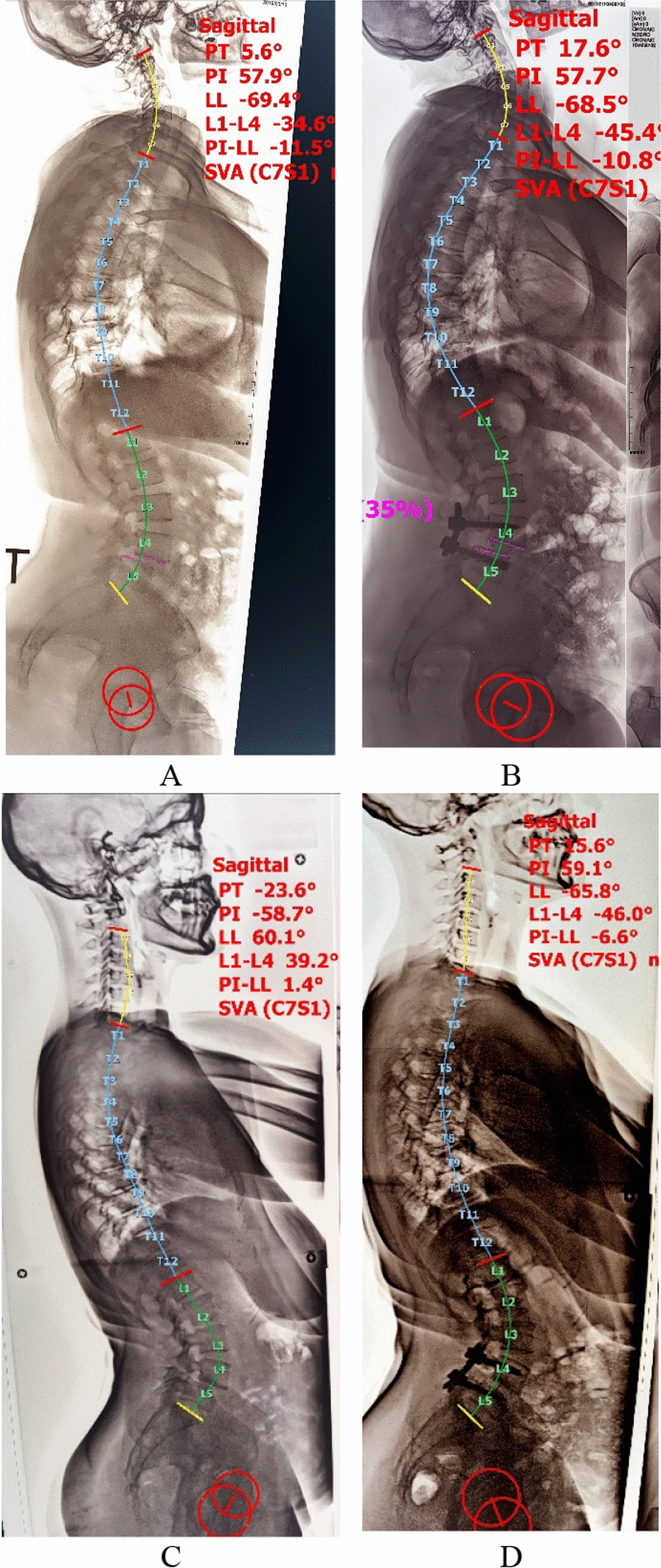
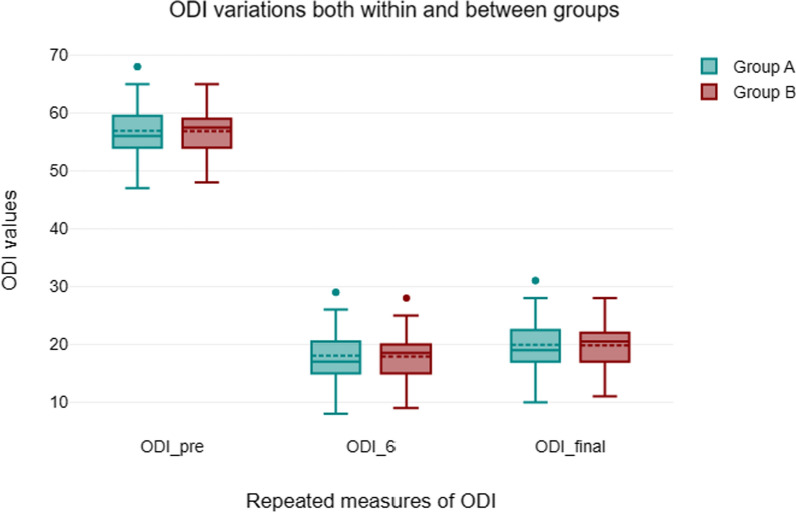
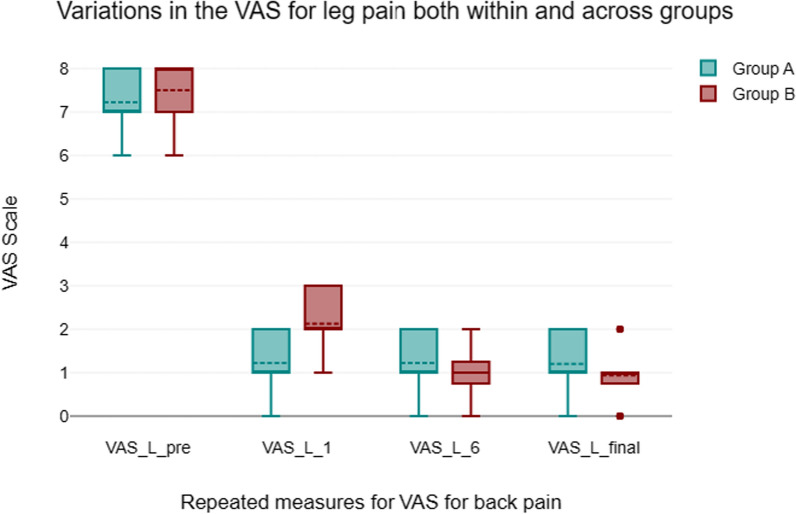
The seventy-two patients were 60 female and 12 males. There was no statistically significant difference in the duration of operation between the two groups. In the MIS group, there was a notable reduction in blood loss, higher radiation exposure, and a shorter hospital stay (P < 0.001). The back VAS showed more favorable outcomes in the MIS-TLIF, while the leg VAS showed better results in the Open-TLIF in the early outcome. Both procedures significantly reduced leg and back pain VAS scores and ODI, with no notable difference between the two groups at the final follow-up. Post-surgery, the pelvic incidence (PI) and lumbar lordosis (LL) matched properly in all patients, showing a rise in LL and sacral slope along with a decrease in pelvic tilt.
Both open-TLIF and MIS-TLIF are effective methods for correcting spino-pelvic parameters and improving HRQoL in patients with low-grade isthmic spondylolisthesis. The rapid improvement in back pain experienced by these patients favored the use of MIS-TLIF. However, the cost-effectiveness of this approach must be carefully evaluated.
腰椎滑脱是一种常见的腰椎疾病,可导致腰痛、腿痛、神经性跛行,并影响有症状个体的健康相关生活质量。
评估微创 TLIF(MIS-TLIF)与开放 TLIF 的结果,以及在低等级峡部裂性腰椎滑脱患者中纠正脊柱骨盆参数对健康相关生活质量(HRQoL)的影响。主要目标是比较两种方法在纠正脊柱骨盆参数方面的有效性。次要目标包括比较两种手术的临床改善、手术时间、出血量、并发症和术后住院时间。
这项回顾性队列对照研究纳入了 72 例低等级峡部裂性腰椎滑脱患者,随访时间至少 18 个月。采用 Oswestry 功能障碍指数(ODI)评估残疾,采用视觉模拟评分(VAS)评估每位患者的背部和腿部不适。测量包括骶骨斜率(SS)、骨盆倾斜(PT)、骨盆入射角(PI)和 Meyerding 滑脱分级。我们测量了腰椎前凸(LL)和节段性前凸。
72 例患者中,女性 60 例,男性 12 例。两组手术时间无统计学差异。在 MIS 组中,出血量明显减少,射线暴露量较高,住院时间较短(P<0.001)。MIS-TLIF 组背部 VAS 评分结果更优,而 Open-TLIF 组早期腿部 VAS 评分结果更优。两种手术均显著降低了腿部和背部疼痛 VAS 评分和 ODI,两组在最终随访时无显著差异。手术后,所有患者的骨盆入射角(PI)和腰椎前凸(LL)均得到适当纠正,骶骨斜率升高,骨盆倾斜度降低,腰椎前凸增加。
开放 TLIF 和 MIS-TLIF 均是治疗低等级峡部裂性腰椎滑脱、纠正脊柱骨盆参数和改善 HRQoL 的有效方法。患者背部疼痛迅速改善,有利于采用 MIS-TLIF。然而,必须仔细评估这种方法的成本效益。