Center for Biologics Evaluation and Research, FDA, Silver Spring, MD, USA.
Center for Devices and Radiological Health, FDA, Silver Spring, MD, USA.
Cell Mol Life Sci. 2024 Aug 30;81(1):376. doi: 10.1007/s00018-024-05342-9.
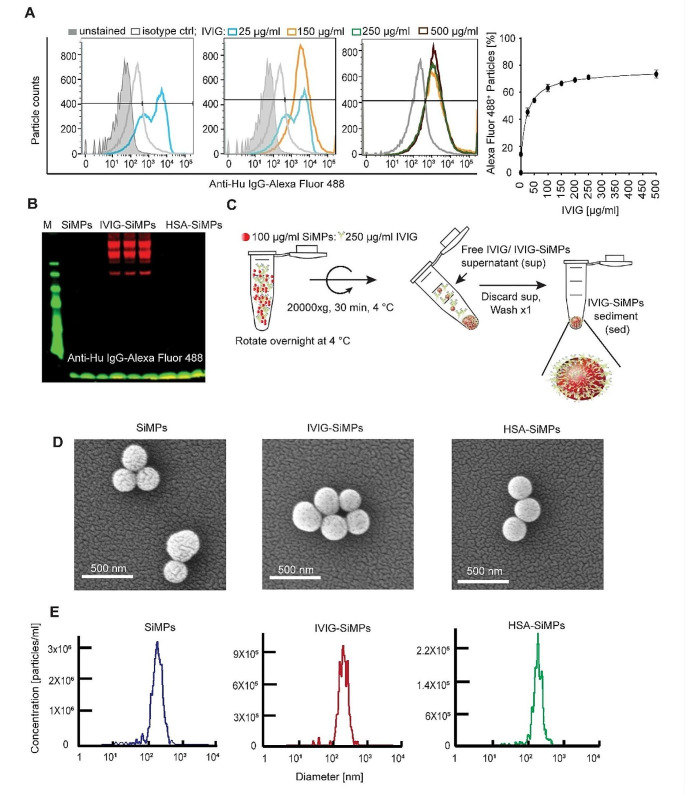
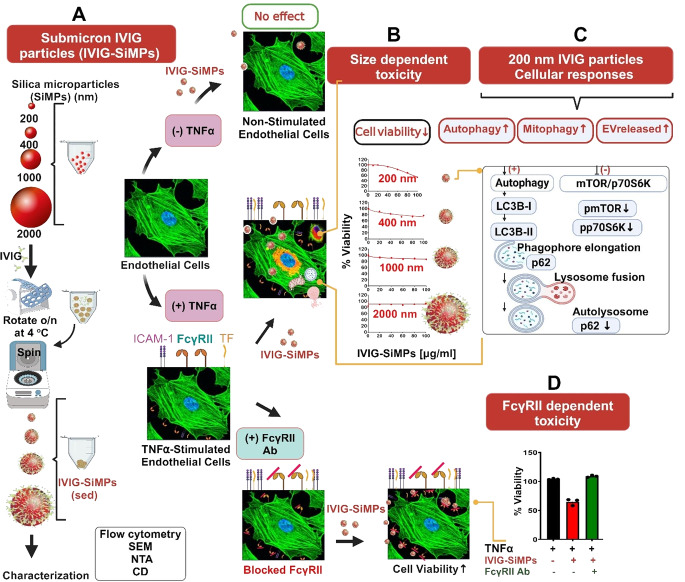
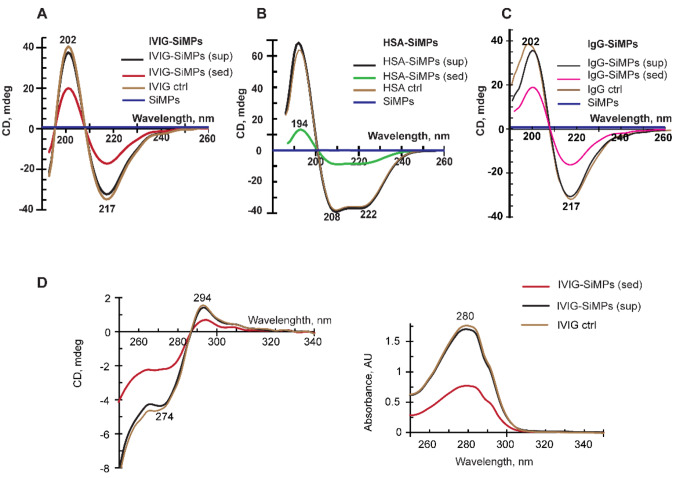
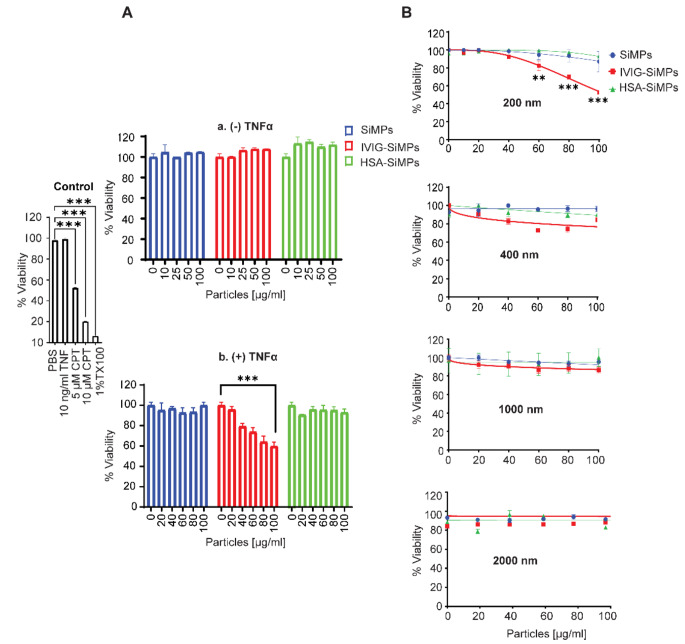
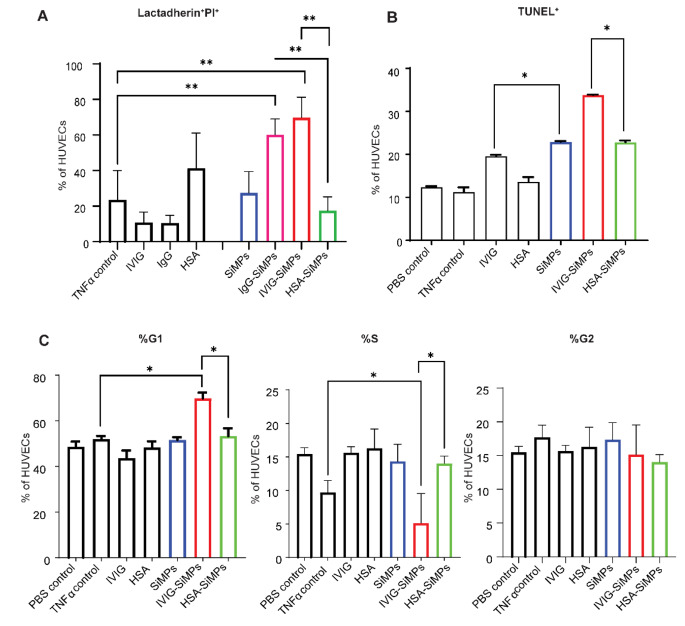
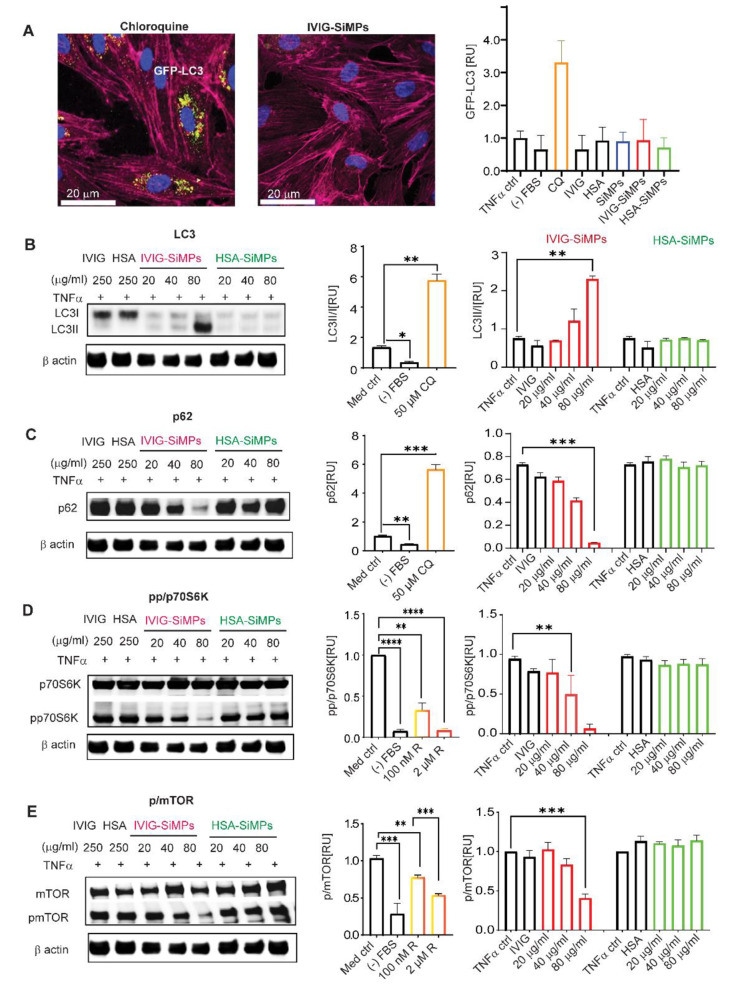
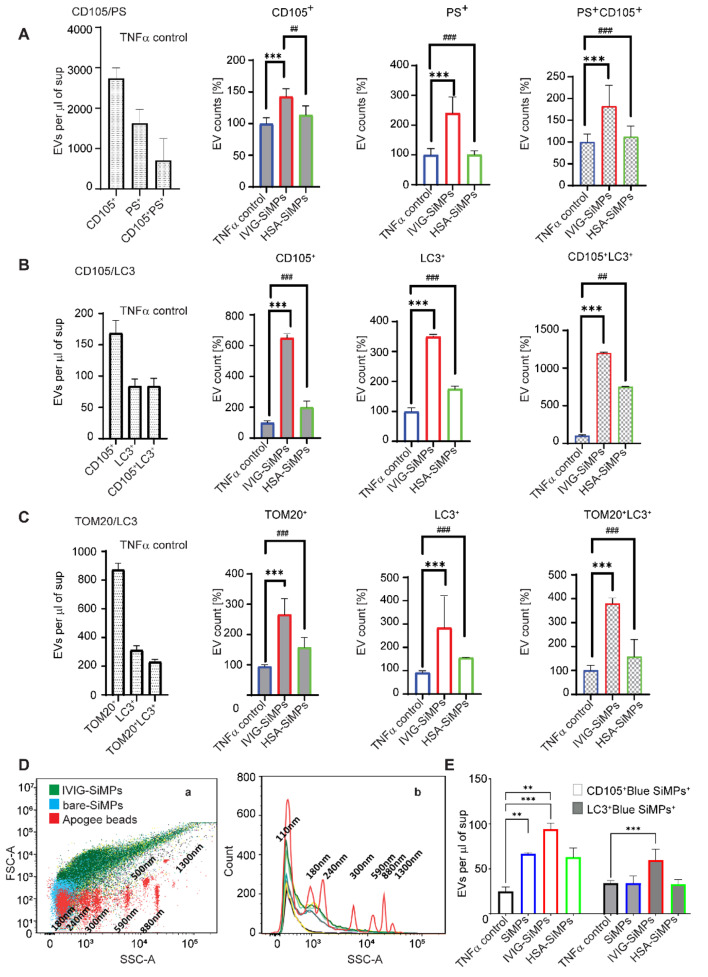
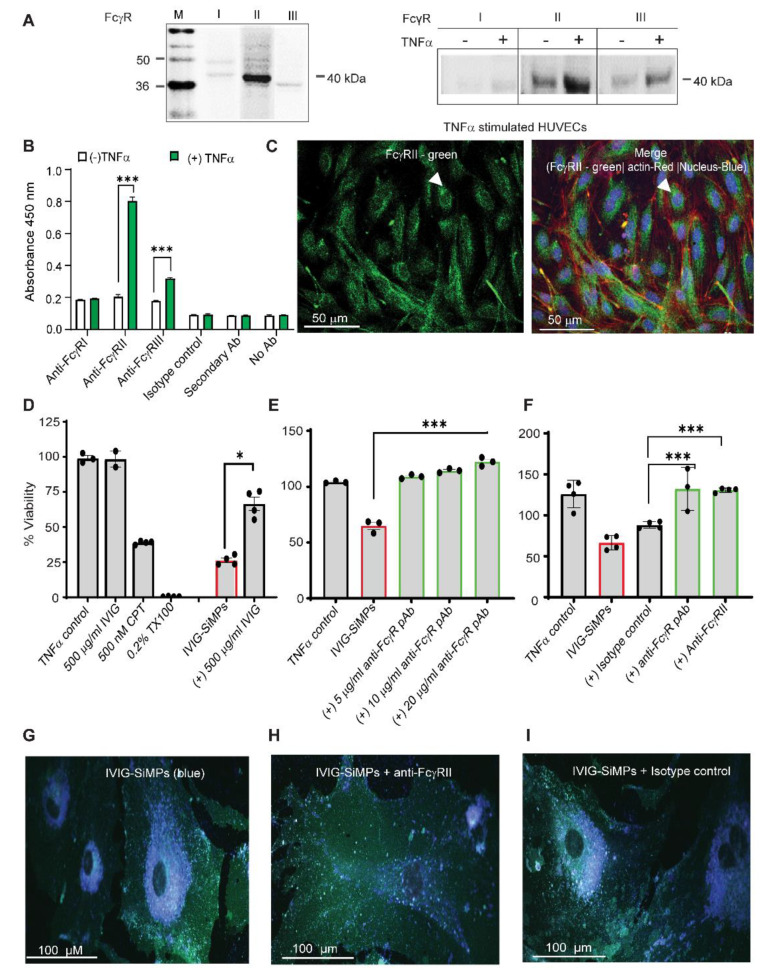
In intravenous immunoglobulins (IVIG), and some other immunoglobulin products, protein particles have been implicated in adverse events. Role and mechanisms of immunoglobulin particles in vascular adverse effects of blood components and manufactured biologics have not been elucidated. We have developed a model of spherical silica microparticles (SiMPs) of distinct sizes 200-2000 nm coated with different IVIG- or albumin (HSA)-coronas and investigated their effects on cultured human umbilical vein endothelial cells (HUVEC). IVIG products (1-20 mg/mL), bare SiMPs or SiMPs with IVIG-corona, did not display significant toxicity to unstimulated HUVEC. In contrast, in TNFα-stimulated HUVEC, IVIG-SiMPs induced decrease of HUVEC viability compared to HSA-SiMPs, while no toxicity of soluble IVIG was observed. 200 nm IVIG-SiMPs after 24 h treatment further increased ICAM1 (intercellular adhesion molecule 1) and tissue factor surface expression, apoptosis, mammalian target of rapamacin (mTOR)-dependent activation of autophagy, and release of extracellular vesicles, positive for mitophagy markers. Toxic effects of IVIG-SiMPs were most prominent for 200 nm SiMPs and decreased with larger SiMP size. Using blocking antibodies, toxicity of IVIG-SiMPs was found dependent on FcγRII receptor expression on HUVEC, which increased after TNFα-stimulation. Similar results were observed with different IVIG products and research grade IgG preparations. In conclusion, submicron particles with immunoglobulin corona induced size-dependent toxicity in TNFα-stimulated HUVEC via FcγRII receptors, associated with apoptosis and mTOR-dependent activation of autophagy. Testing of IVIG toxicity in endothelial cells prestimulated with proinflammatory cytokines is relevant to clinical conditions. Our results warrant further studies on endothelial toxicity of sub-visible immunoglobulin particles.
在静脉注射免疫球蛋白(IVIG)和其他一些免疫球蛋白产品中,蛋白质颗粒已被牵连到不良事件中。免疫球蛋白颗粒在血液成分和制造的生物制剂的血管不良影响中的作用和机制尚未阐明。我们已经开发了一种具有不同大小 200-2000nm 的球形二氧化硅微球(SiMPs)的模型,这些微球涂有不同的 IVIG 或白蛋白(HSA)冠,并研究了它们对培养的人脐静脉内皮细胞(HUVEC)的影响。IVIG 产品(1-20mg/mL)、裸 SiMP 或带 IVIG 冠的 SiMP 对未刺激的 HUVEC 没有显示出明显的毒性。相比之下,在 TNFα 刺激的 HUVEC 中,IVIG-SiMP 诱导的 HUVEC 活力降低与 HSA-SiMP 相比,而可溶性 IVIG 没有毒性。24 小时治疗后,200nm 的 IVIG-SiMP 进一步增加了细胞间黏附分子 1(ICAM1)和组织因子表面表达、细胞凋亡、哺乳动物雷帕霉素靶蛋白(mTOR)依赖性自噬激活和细胞外囊泡释放,这些囊泡对噬菌斑标记物呈阳性。IVIG-SiMP 的毒性作用在 200nm SiMP 中最为明显,随着 SiMP 尺寸的增大而减小。使用阻断抗体,发现 IVIG-SiMP 的毒性依赖于 HUVEC 上的 FcγRII 受体表达,这种表达在 TNFα 刺激后增加。不同的 IVIG 产品和研究级 IgG 制剂也观察到了类似的结果。总之,带有免疫球蛋白冠的亚微米颗粒通过 FcγRII 受体在 TNFα 刺激的 HUVEC 中诱导了大小依赖性毒性,与细胞凋亡和 mTOR 依赖性自噬激活有关。在有促炎细胞因子预刺激的内皮细胞中测试 IVIG 的毒性与临床情况相关。我们的结果证明了对亚可见免疫球蛋白颗粒的内皮毒性进行进一步研究的必要性。