Institute of Oncology Research (IOR), Bellinzona Institutes of Science (BIOS+), 6500 Bellinzona, Switzerland; Faculty of Biomedical Sciences, Università della Svizzera Italiana, 6900 Lugano, Switzerland.
Center for Stem Cell Biology and Developmental Biology Program, Memorial Sloan Kettering Cancer Center, New York, NY 10065, USA.
STAR Protoc. 2024 Sep 20;5(3):103280. doi: 10.1016/j.xpro.2024.103280. Epub 2024 Aug 29.
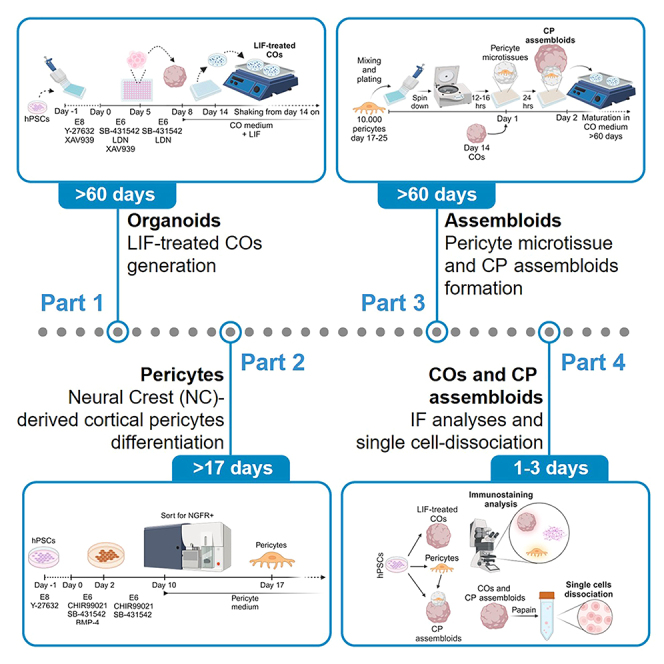
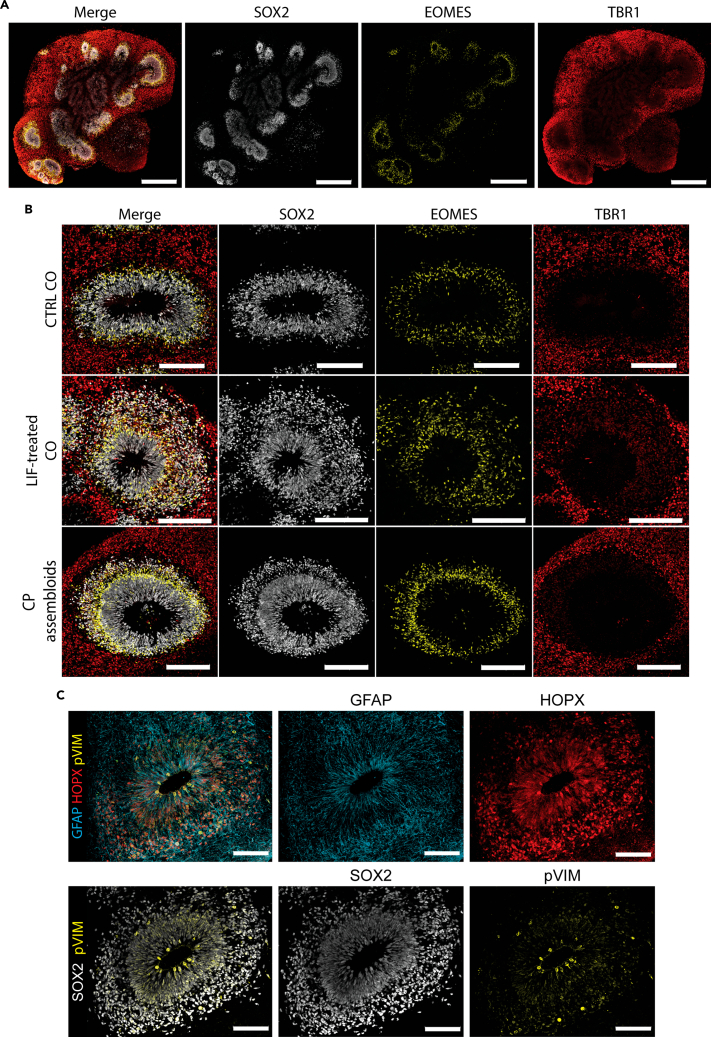
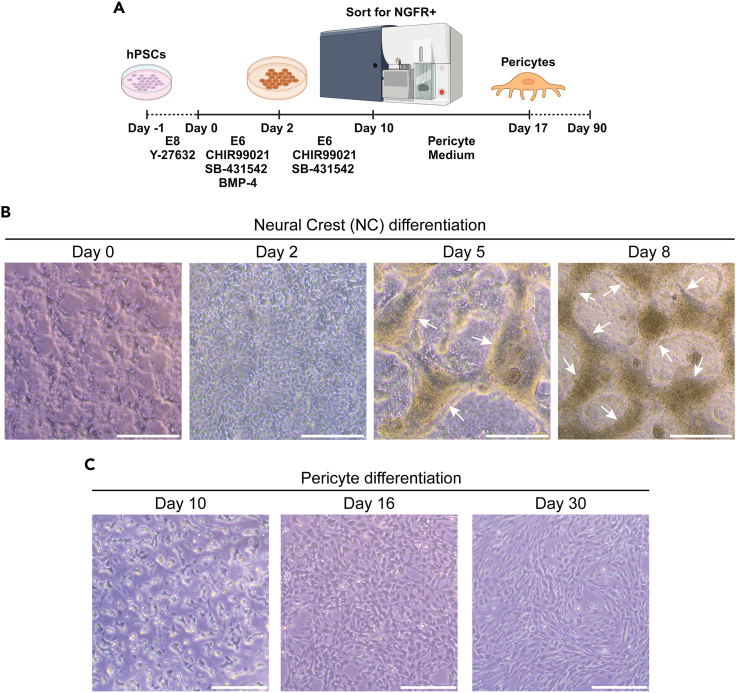
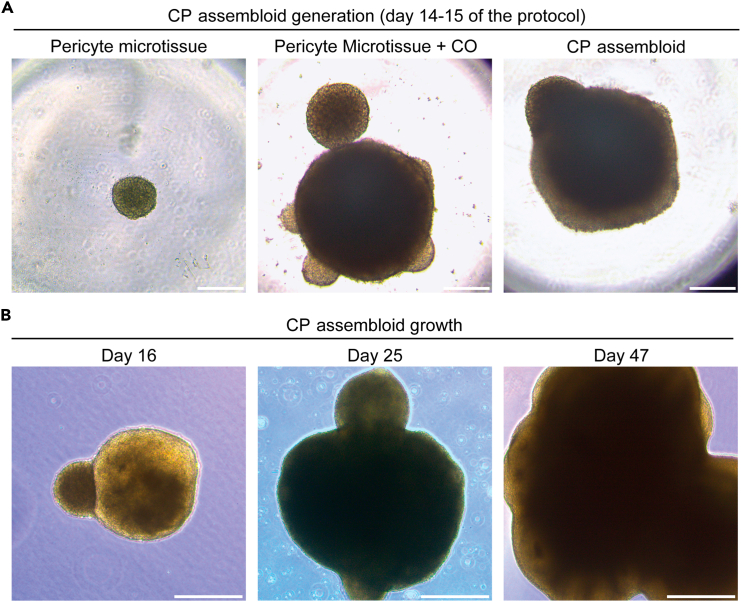
The generation of human pluripotent stem cell (hPSC)-derived brain organoids is continuously refined, enhancing their reproducibility and complexity. Here, we present a guided differentiation protocol for generating cortical forebrain organoids and cortico-pericyte (CP)assembloids composed of a robust outer radial glia (oRG) population and an expanded outer subventricular zone (oSVZ). We describe the steps to generate hPSC-derived cortical organoids (COs), cortical pericytes, and CP assembloids. Moreover, we outline the procedures to characterize the organoids by immunostaining and to perform single-cell dissociation. For complete details on the use and execution of this protocol, please refer to Walsh et al..
人多能干细胞(hPSC)衍生脑类器官的生成技术不断得到改进,提高了其再现性和复杂性。在此,我们提供了一种生成皮质前脑类器官和皮质周细胞(CP)集合体的定向分化方案,该方案由丰富的外放射状胶质(oRG)群体和扩大的外脑室下区(oSVZ)组成。我们描述了生成 hPSC 衍生的皮质类器官(COs)、皮质周细胞和 CP 集合体的步骤。此外,我们还概述了通过免疫染色和单细胞解离来对类器官进行特征分析的程序。有关该方案使用和执行的完整详细信息,请参阅 Walsh 等人的研究。