Fujian Key Laboratory of Oral Diseases and Fujian Provincial Engineering Research Center of Oral Biomaterial and Stomatological Key Lab of Fujian College and University, School and Hospital of Stomatology, Fujian Medical University, Fuzhou, China.
Department of Preventive Dentistry, School and Hospital of Stomatology, Fujian Medical University, Fuzhou, China.
Sci Rep. 2024 Aug 30;14(1):20183. doi: 10.1038/s41598-024-71277-7.
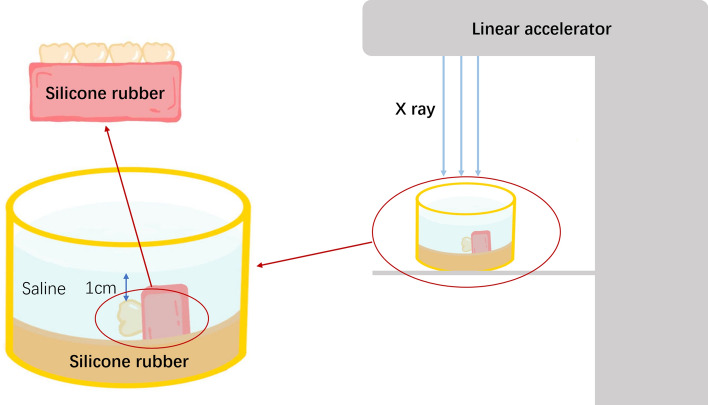
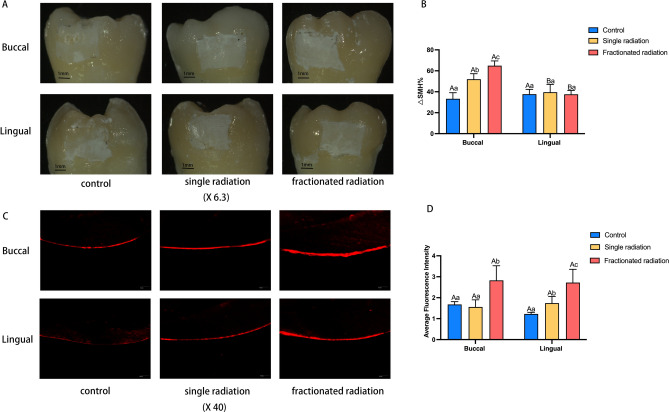
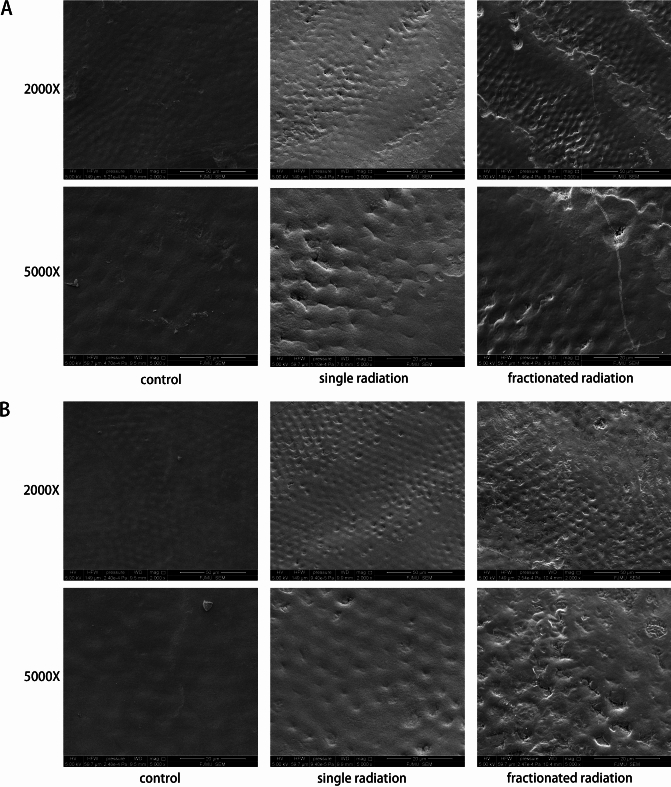
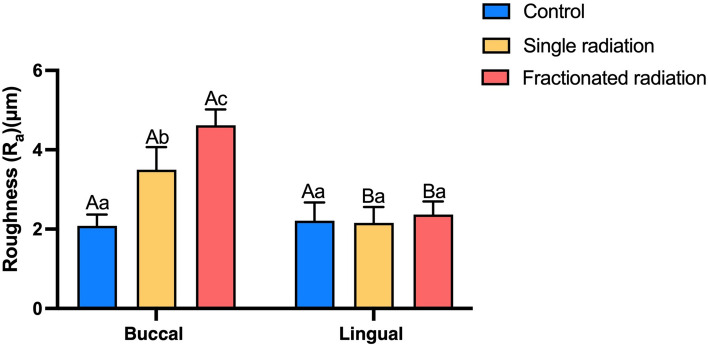
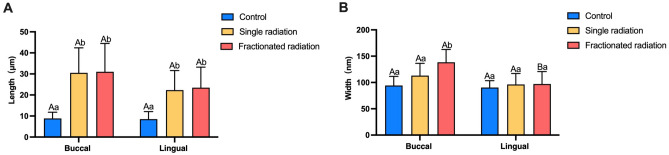
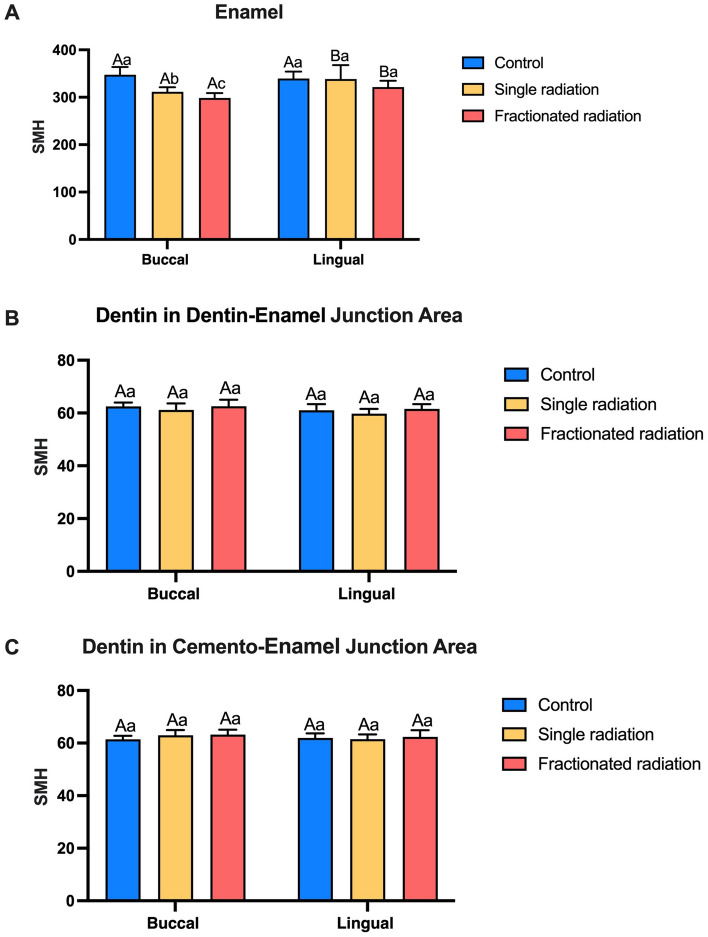
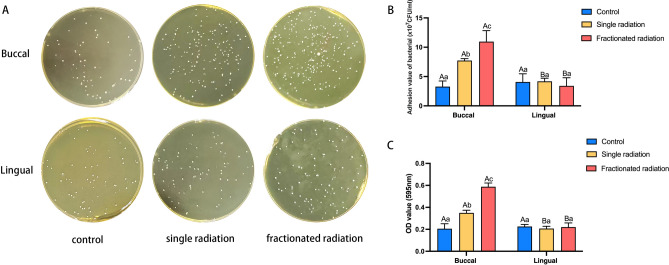
It is not clear whether different radiation methods have different effects on enamel. The purpose of this study was to compare the effects of single and fractionated radiation on enamel and caries susceptibility and to provide an experimental basis for further study of radiation‑related caries. Thirty-six caries-free human third molars were collected and randomly divided into three groups (n = 12). Group1 (control group) was not exposed to radiation. Group 2 received single radiation with a cumulative dose of 70 Gy. Group 3 underwent fractionated radiation, receiving 2 Gy/day for 5 days followed by a 2-day rest period, for a total of 7 weeks with a cumulative dose of 70 Gy. Changes in microhardness, roughness, surface morphology, bacterial adhesion and ability of acid resistance of each group were tested. Scanning electron microscope revealed that the enamel surface in both radiation groups exhibited unevenness and cracks. Compared with the control group, microhardness and acid resistance of enamel decreased, while roughness and bacterial adhesion increased in both the single radiation and fractionated radiation groups. Compared with the single radiation group, the enamel surface microhardness and acid resistance decreased in the fractionated radiation group, while roughness and bacterial adhesion increased. Both single radiation and fractionated radiation resulting in changes in the physical and biological properties of enamel, with these changes being more pronounced in the fractionated radiation group. Therefore, fractionated radiation is recommended as a more suitable method for constructing a radiation‑related caries model in vitro.
不同的辐射方法是否对牙釉质有不同的影响尚不清楚。本研究旨在比较单次和分次照射对牙釉质和龋易感性的影响,为进一步研究辐射相关龋病提供实验依据。收集 36 颗无龋的人第三磨牙,随机分为三组(n = 12)。第 1 组(对照组)不接受辐射。第 2 组接受单次照射,累积剂量为 70Gy。第 3 组接受分次照射,每天 2Gy,连续 5 天,休息 2 天,共 7 周,累积剂量为 70Gy。测试每组的显微硬度、粗糙度、表面形态、细菌黏附能力和耐酸能力的变化。扫描电子显微镜显示,两组辐射组的牙釉质表面均出现不均匀和裂纹。与对照组相比,单次照射组和分次照射组的牙釉质显微硬度和耐酸性降低,粗糙度和细菌黏附性增加。与单次照射组相比,分次照射组牙釉质表面显微硬度和耐酸性降低,粗糙度和细菌黏附性增加。单次照射和分次照射均导致牙釉质物理和生物学性质发生变化,且分次照射组变化更为明显。因此,推荐分次照射作为构建体外辐射相关龋病模型的更合适方法。