• 文献检索
  • 文档翻译
  • 深度研究
  • 学术资讯
  • Suppr Zotero 插件Zotero 插件
  • 邀请有礼
  • 套餐&价格
  • 历史记录
应用&插件
Suppr Zotero 插件Zotero 插件浏览器插件Mac 客户端Windows 客户端微信小程序
定价
高级版会员购买积分包购买API积分包
服务
文献检索文档翻译深度研究API 文档MCP 服务
关于我们
关于 Suppr公司介绍联系我们用户协议隐私条款
关注我们

Suppr 超能文献

核心技术专利:CN118964589B侵权必究
粤ICP备2023148730 号-1Suppr @ 2026

文献检索

告别复杂PubMed语法,用中文像聊天一样搜索,搜遍4000万医学文献。AI智能推荐,让科研检索更轻松。

立即免费搜索

文件翻译

保留排版,准确专业,支持PDF/Word/PPT等文件格式,支持 12+语言互译。

免费翻译文档

深度研究

AI帮你快速写综述,25分钟生成高质量综述,智能提取关键信息,辅助科研写作。

立即免费体验

忽视非蜜蜂传粉者可能会导致对传粉者之间竞争风险的严重低估。

Neglecting non-bee pollinators may lead to substantial underestimation of competition risk among pollinators.

作者信息

Requier Fabrice, Abdelli Myriam, Baude Mathilde, Genoud David, Gens Hadrien, Geslin Benoît, Henry Mickaël, Ropars Lise

机构信息

Université Paris-Saclay, CNRS, IRD, UMR Évolution, Génomes, Comportement et Écologie, 91198, Gif-sur-Yvette, France.

Université d'Orléans, Chateau de la Source, BP 6749, Cedex2, 45067, Orléans, France.

出版信息

Curr Res Insect Sci. 2024 Aug 2;6:100093. doi: 10.1016/j.cris.2024.100093. eCollection 2024.

DOI:10.1016/j.cris.2024.100093
PMID:39220234
原文链接:https://pmc.ncbi.nlm.nih.gov/articles/PMC11364274/
Abstract

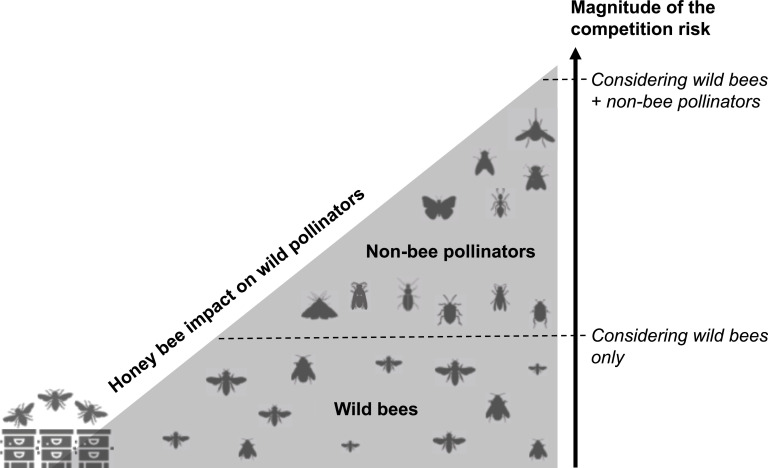
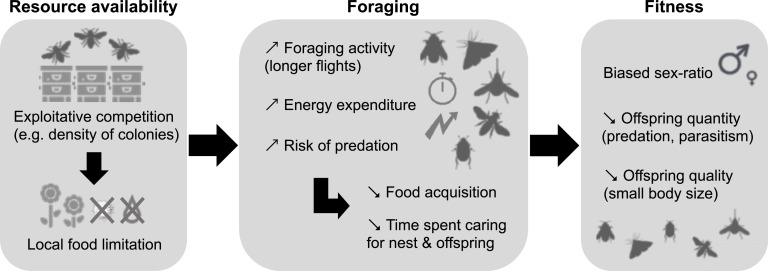
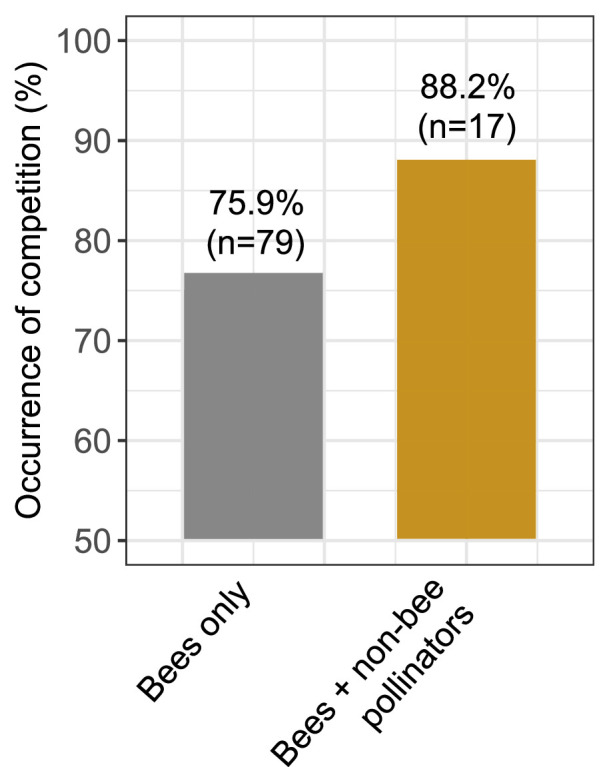
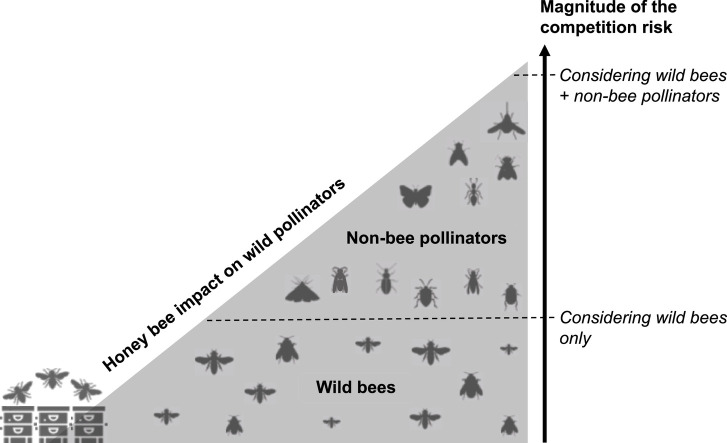
Due to the increasing pressures on bees, many beekeepers currently wish to move their managed livestock of into little disturbed ecosystems such as protected natural areas. This may, however, exert detrimental competitive effects upon local wild pollinators. While it appears critical for land managers to get an adequate knowledge of this issue for effective wildlife conservation schemes, the frequency of this competition is not clear to date. Based on a systematic literature review of 96 studies, we assessed the frequency of exploitative competition between honey bees and wild pollinators. We found that 78% of the studies highlighted exploitative competition from honey bees to wild pollinators. Importantly, these studies have mostly explored competition with wild bees, while only 18% of them considered other pollinator taxa such as ants, beetles, bugs, butterflies, flies, moths, and wasps. The integration of non-bee pollinators into scientific studies and conservation plans is urgently required as they are critical for the pollination of many wild plants and crops. Interestingly, we found that a majority (88%) of these studies considering also non-bee pollinators report evidence of competition. Thus, neglecting non-bee pollinators could imply an underestimation of competition risks from honey bees. More inclusive work is needed to estimate the risks of competition in its entirety, but also to apprehend the context-dependency of competition so as to properly inform wildlife conservation schemes.

摘要

由于蜜蜂面临的压力不断增加,许多养蜂人目前希望将他们管理的蜂群转移到受干扰较小的生态系统中,如自然保护区。然而,这可能会对当地野生传粉者产生有害的竞争影响。虽然对于土地管理者来说,充分了解这个问题对于有效的野生动物保护计划至关重要,但迄今为止这种竞争的频率尚不清楚。基于对96项研究的系统文献综述,我们评估了蜜蜂与野生传粉者之间剥削性竞争的频率。我们发现,78%的研究强调了蜜蜂对野生传粉者的剥削性竞争。重要的是,这些研究大多探讨了与野生蜜蜂的竞争,而其中只有18%考虑了其他传粉者类群,如蚂蚁、甲虫、蝽象、蝴蝶、苍蝇、飞蛾和黄蜂。迫切需要将非蜜蜂传粉者纳入科学研究和保护计划,因为它们对许多野生植物和作物的授粉至关重要。有趣的是,我们发现,这些也考虑了非蜜蜂传粉者的研究中,大多数(88%)报告了竞争的证据。因此,忽视非蜜蜂传粉者可能意味着低估了蜜蜂的竞争风险。需要开展更具包容性的工作,以全面评估竞争风险,同时了解竞争的背景依赖性,从而为野生动物保护计划提供恰当的信息。
https://cdn.ncbi.nlm.nih.gov/pmc/blobs/4753/11364274/919cb51f7ea0/gr4.jpg
https://cdn.ncbi.nlm.nih.gov/pmc/blobs/4753/11364274/accb9b4a7591/ga1.jpg
https://cdn.ncbi.nlm.nih.gov/pmc/blobs/4753/11364274/ce64b7a0392a/gr1.jpg
https://cdn.ncbi.nlm.nih.gov/pmc/blobs/4753/11364274/3dc7820e2968/gr2.jpg
https://cdn.ncbi.nlm.nih.gov/pmc/blobs/4753/11364274/4848af5cae97/gr3.jpg
https://cdn.ncbi.nlm.nih.gov/pmc/blobs/4753/11364274/919cb51f7ea0/gr4.jpg
https://cdn.ncbi.nlm.nih.gov/pmc/blobs/4753/11364274/accb9b4a7591/ga1.jpg
https://cdn.ncbi.nlm.nih.gov/pmc/blobs/4753/11364274/ce64b7a0392a/gr1.jpg
https://cdn.ncbi.nlm.nih.gov/pmc/blobs/4753/11364274/3dc7820e2968/gr2.jpg
https://cdn.ncbi.nlm.nih.gov/pmc/blobs/4753/11364274/4848af5cae97/gr3.jpg
https://cdn.ncbi.nlm.nih.gov/pmc/blobs/4753/11364274/919cb51f7ea0/gr4.jpg

相似文献

1
Neglecting non-bee pollinators may lead to substantial underestimation of competition risk among pollinators.忽视非蜜蜂传粉者可能会导致对传粉者之间竞争风险的严重低估。
Curr Res Insect Sci. 2024 Aug 2;6:100093. doi: 10.1016/j.cris.2024.100093. eCollection 2024.
2
Decline in wild bee species richness associated with honey bee ( L.) abundance in an urban ecosystem.城市生态系统中野生蜜蜂物种丰富度的下降与(L.)蜜蜂丰度有关。
PeerJ. 2023 Feb 3;11:e14699. doi: 10.7717/peerj.14699. eCollection 2023.
3
Non-bee insects are important contributors to global crop pollination.非蜜蜂类昆虫是全球作物授粉的重要贡献者。
Proc Natl Acad Sci U S A. 2016 Jan 5;113(1):146-51. doi: 10.1073/pnas.1517092112. Epub 2015 Nov 30.
4
Wild pollinator activity negatively related to honey bee colony densities in urban context.在城市环境中,野生传粉者的活动与蜜蜂种群密度呈负相关。
PLoS One. 2019 Sep 12;14(9):e0222316. doi: 10.1371/journal.pone.0222316. eCollection 2019.
5
Honey bee introductions displace native bees and decrease pollination of a native wildflower.引进的蜜蜂取代了本地蜜蜂,减少了对一种本地野花的授粉。
Ecology. 2023 Feb;104(2):e3939. doi: 10.1002/ecy.3939. Epub 2023 Jan 3.
6
Evidence of exploitative competition between honey bees and native bees in two California landscapes.在加利福尼亚的两个景观中,发现了蜜蜂蜜蜂和本地蜜蜂之间的剥削性竞争的证据。
J Anim Ecol. 2023 Sep;92(9):1802-1814. doi: 10.1111/1365-2656.13973. Epub 2023 Jun 29.
7
The Conservation of Native Honey Bees Is Crucial.保护本土蜜蜂至关重要。
Trends Ecol Evol. 2019 Sep;34(9):789-798. doi: 10.1016/j.tree.2019.04.008. Epub 2019 May 6.
8
Divergence and convergence of gut microbiomes of wild insect pollinators.野生传粉昆虫肠道微生物组的趋同与趋异。
mBio. 2023 Aug 31;14(4):e0127023. doi: 10.1128/mbio.01270-23. Epub 2023 Jul 28.
9
Viruses of commercialized insect pollinators.商业化昆虫传粉者的病毒。
J Invertebr Pathol. 2017 Jul;147:51-59. doi: 10.1016/j.jip.2016.07.010. Epub 2016 Aug 3.
10
Plant evolution can mediate negative effects from honey bees on wild pollinators.植物进化可以调节蜜蜂对野生传粉者的负面影响。
Ecol Evol. 2020 Apr 12;10(10):4407-4418. doi: 10.1002/ece3.6207. eCollection 2020 May.

引用本文的文献

1
Anthophilous insects' seasonal variation in Corsican thermo-Mediterranean shrubland maquis.科西嘉岛暖地中海灌木丛林地中嗜花昆虫的季节变化
Biodivers Data J. 2025 Mar 7;13:e144560. doi: 10.3897/BDJ.13.e144560. eCollection 2025.

本文引用的文献

1
First large-scale study reveals important losses of managed honey bee and stingless bee colonies in Latin America.首次大规模研究揭示了拉丁美洲管理的蜜蜂和无刺蜂群的重要损失。
Sci Rep. 2024 May 2;14(1):10079. doi: 10.1038/s41598-024-59513-6.
2
Evidence of exploitative competition between honey bees and native bees in two California landscapes.在加利福尼亚的两个景观中,发现了蜜蜂蜜蜂和本地蜜蜂之间的剥削性竞争的证据。
J Anim Ecol. 2023 Sep;92(9):1802-1814. doi: 10.1111/1365-2656.13973. Epub 2023 Jun 29.
3
Honeybees () decrease the fitness of plants they pollinate.
蜜蜂会降低它们授粉的植物的适应性。
Proc Biol Sci. 2023 Jun 28;290(2001):20230967. doi: 10.1098/rspb.2023.0967.
4
The Impact of Beehive Proximity, Human Activity and Agricultural Intensity on Diptera Diversity in a Mediterranean Mosaic of Agroecosystems, with a Focus on Pest Species.蜂箱距离、人类活动和农业集约化对地中海农业生态系统镶嵌区双翅目多样性的影响,重点关注害虫种类。
Animals (Basel). 2023 Mar 10;13(6):1024. doi: 10.3390/ani13061024.
5
Decline in wild bee species richness associated with honey bee ( L.) abundance in an urban ecosystem.城市生态系统中野生蜜蜂物种丰富度的下降与(L.)蜜蜂丰度有关。
PeerJ. 2023 Feb 3;11:e14699. doi: 10.7717/peerj.14699. eCollection 2023.
6
Bee and non-bee pollinator importance for local food security.蜜蜂和非蜜蜂传粉者对当地粮食安全的重要性。
Trends Ecol Evol. 2023 Feb;38(2):196-205. doi: 10.1016/j.tree.2022.10.006. Epub 2022 Dec 8.
7
Uptrend in global managed honey bee colonies and production based on a six-decade viewpoint, 1961-2017.全球管理的蜜蜂群数量和产量呈上升趋势,基于六十年的观点,1961-2017 年。
Sci Rep. 2022 Dec 9;12(1):21298. doi: 10.1038/s41598-022-25290-3.
8
Honey bee introductions displace native bees and decrease pollination of a native wildflower.引进的蜜蜂取代了本地蜜蜂,减少了对一种本地野花的授粉。
Ecology. 2023 Feb;104(2):e3939. doi: 10.1002/ecy.3939. Epub 2023 Jan 3.
9
Low resource availability drives feeding niche partitioning between wild bees and honeybees in a European city.资源匮乏促使欧洲城市野生蜜蜂和蜜蜂之间的取食生态位分化。
Ecol Appl. 2023 Jan;33(1):e2727. doi: 10.1002/eap.2727. Epub 2022 Oct 11.
10
Mounting evidence that managed and introduced bees have negative impacts on wild bees: an updated review.越来越多的证据表明,人工养殖和引入的蜜蜂会对野生蜜蜂产生负面影响:最新综述。
Curr Res Insect Sci. 2022 Jul 22;2:100043. doi: 10.1016/j.cris.2022.100043. eCollection 2022.