van Ede Anna Francisca Teresia Maria, Goodwin Nicholas, Bruijnzeels Marc Abraham, Stein Katharina Viktoria
Health Campus The Hague, Leiden University Medical Centre, NL.
Central Coast Research Institute for Integrated Care, University of Newcastle and the Central Coast Local Health District, Gosford, New South Wales, AU.
Int J Integr Care. 2024 Aug 30;24(3):18. doi: 10.5334/ijic.8575. eCollection 2024 Jul-Sep.
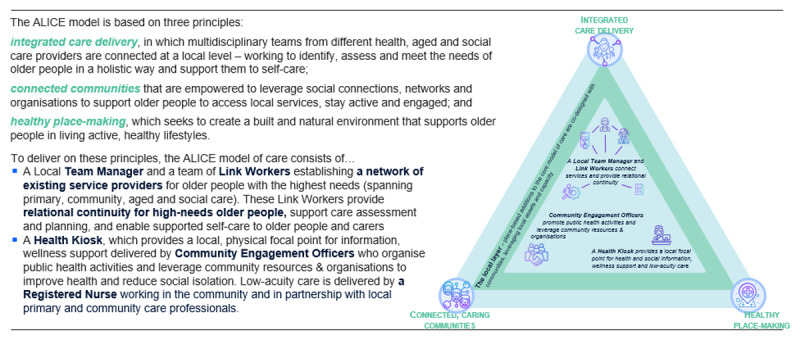
Population health management is increasingly being used to support place-based models of care. This case study provides an account of the use of the Population Health Management - Maturity Index (PHM-MI) tool to inform the future development of a neighbourhood model of care for older people in the Central Coast region of Australia.
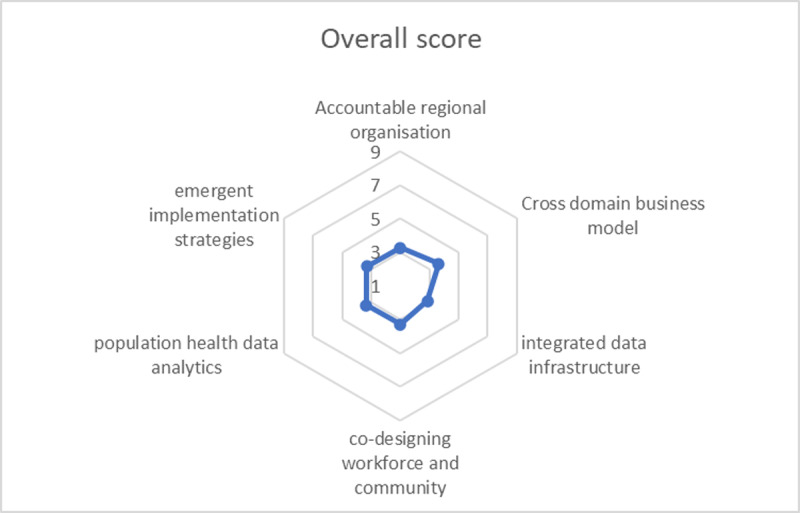
The PHM-MI tool comprises a set of six evidence-informed elements known to be important in enabling PHM in practice. As part of a joint strategic needs assessment, 17 selected stakeholders from key regional organizations were invited to undertake the PHM-MI tool survey. Three follow-up workshops were held to interpret the results and determine priority actions.
The PHM-MI scores revealed that the overall maturity of the Central Coast to successfully deliver PHM was low across all six elements, findings that were corroborated through participant workshops. Systemic fragmentations, most pertinently of funding and regulation, incentivised silo-based working. The need to formalise and strengthen regional collaborations, enable data integration, find creative ways to use existing funding streams, and promote community engagement were highlighted as core priorities.
Using the PHM-MI tool was enabled by it being embedded within a pre-existing regional strategic process. The results were used to inform future regional priorities. The PHM-MI tool has the potential for use across regional or national contexts.
人群健康管理越来越多地被用于支持基于场所的护理模式。本案例研究介绍了使用人群健康管理成熟度指数(PHM-MI)工具为澳大利亚中央海岸地区老年人邻里护理模式的未来发展提供信息的情况。
PHM-MI工具包括一组六个基于证据的要素,已知这些要素在实践中实现人群健康管理方面很重要。作为联合战略需求评估的一部分,邀请了来自关键区域组织的17名选定利益相关者进行PHM-MI工具调查。举办了三次后续研讨会来解释结果并确定优先行动。
PHM-MI得分显示,中央海岸在所有六个要素上成功实施人群健康管理的总体成熟度较低,这一结果在参与者研讨会上得到了证实。系统性碎片化,最突出的是资金和监管方面的碎片化,促使了各自为政的工作方式。正式化和加强区域合作、实现数据整合、找到创造性地利用现有资金流的方法以及促进社区参与的必要性被突出为核心优先事项。
使用PHM-MI工具是因为它被嵌入到现有的区域战略过程中。结果被用于为未来的区域优先事项提供信息。PHM-MI工具具有在区域或国家范围内使用的潜力。