
具有增强的铜死亡和cGAS-STING激活作用的可吸入纳米颗粒用于协同性肺转移免疫治疗。
Inhalable nanoparticles with enhanced cuproptosis and cGAS-STING activation for synergistic lung metastasis immunotherapy.
作者信息
Yan Chongzheng, Lv Huaiyou, Feng Yafei, Li Yuhan, Zhao Zhongxi
机构信息
Department of Pharmaceutics, Key Laboratory of Chemical Biology of Ministry of Education, School of Pharmaceutical Sciences, Cheelloo College of Medicine, Shandong University, Jinan 250012, China.
Key University Laboratory of Pharmaceutics & Drug Delivery Systems of Shandong Province, School of Pharmaceutical Sciences, Cheeloo College of Medicine, Shandong University, Jinan 250012, China.
出版信息
Acta Pharm Sin B. 2024 Aug;14(8):3697-3710. doi: 10.1016/j.apsb.2024.04.028. Epub 2024 May 3.
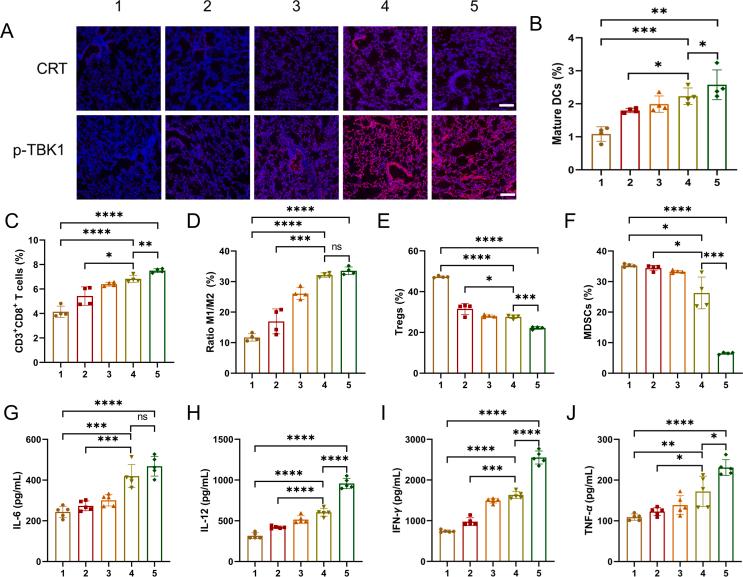
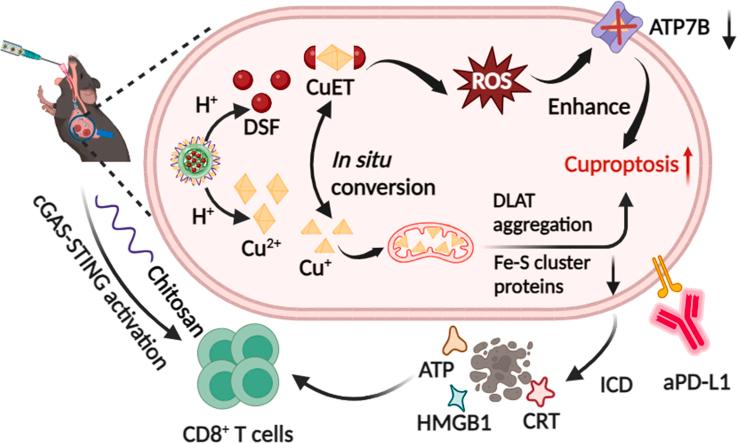
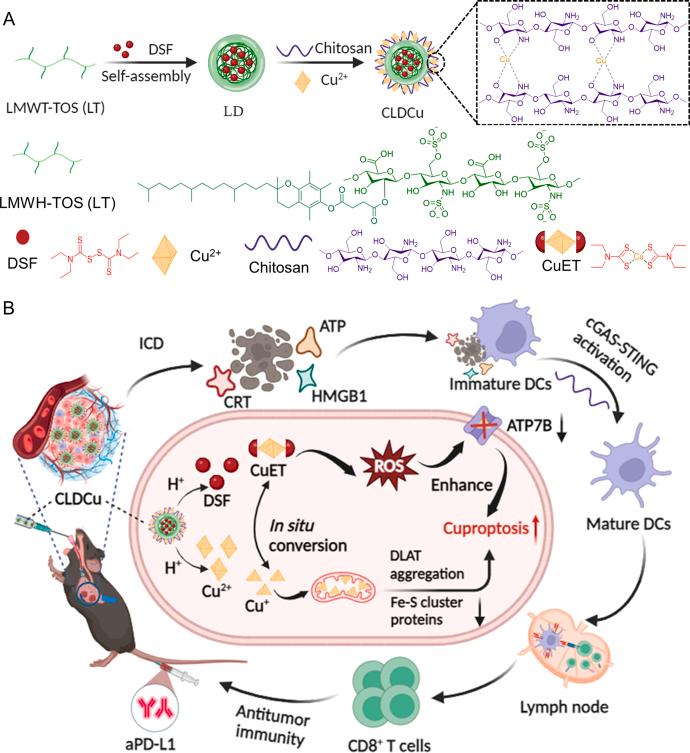
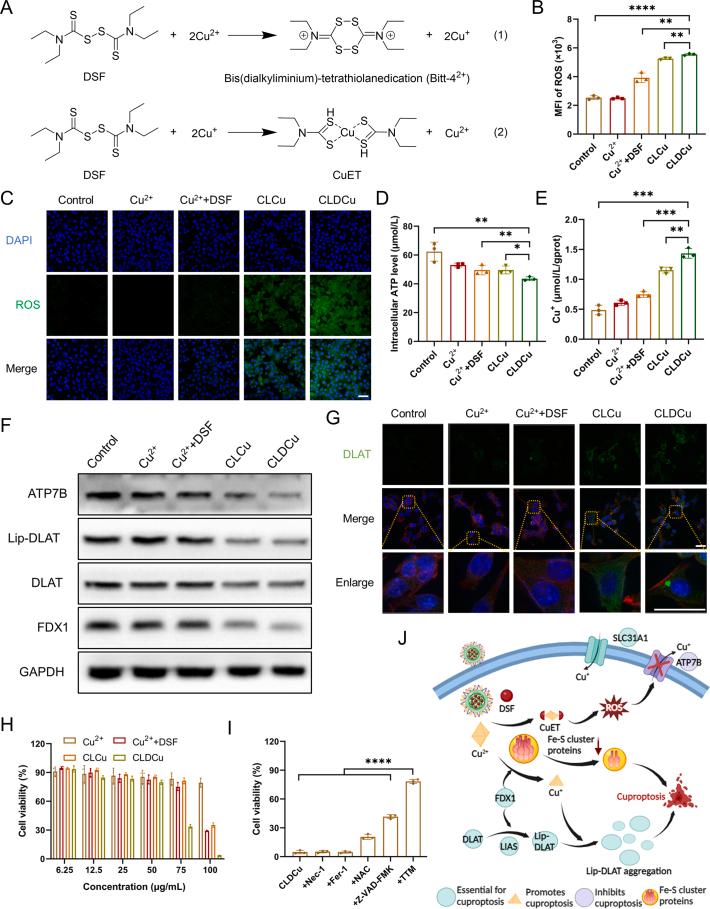
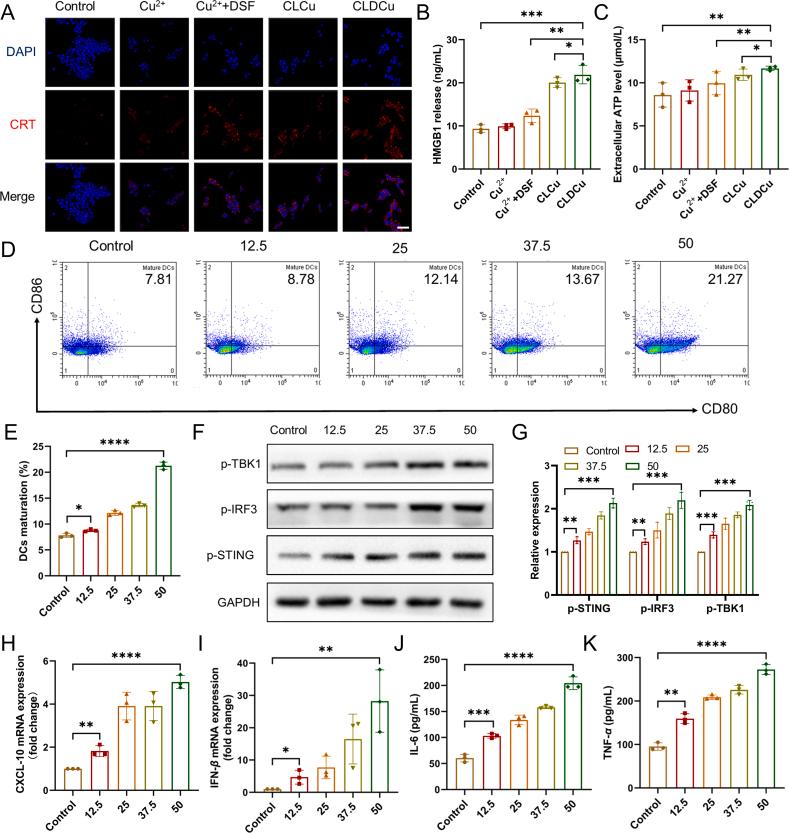
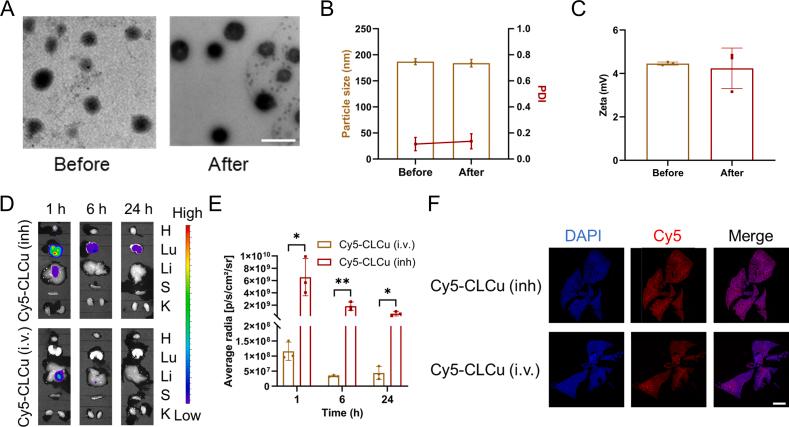
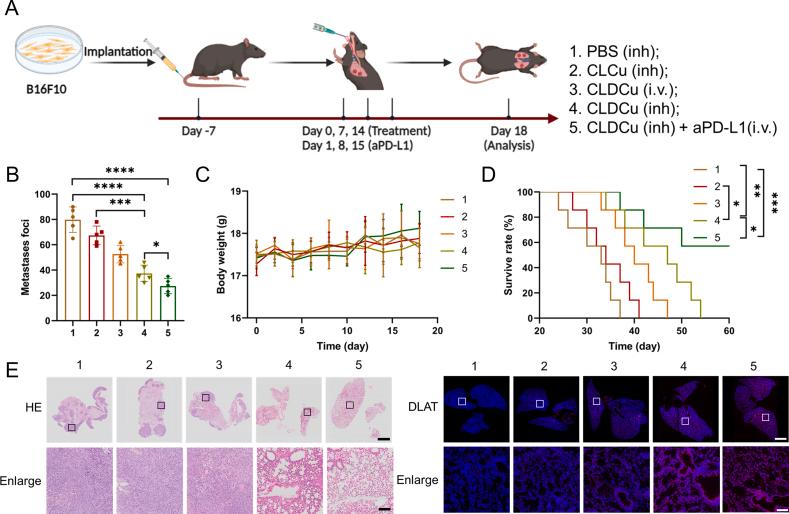
Due to the insufficient Cu accumulation, Cu efflux mechanism, and highly immunosuppressive tumor microenvironment (TME) in lung metastasis, the cuproptosis efficacy is limited. Herein, an inhalable nanodevice (CLDCu) is constructed to successfully overcome the drawbacks of cuproptosis. CLDCu consists of a Cu-chitosan shell and low molecular weight heparin-tocopherol succinate (LMWH-TOS, LT) core with disulfiram (DSF) loading. The prepared CLDCu can be inhaled and accumulate in large amounts in lung lesions (63.6%) with 56.5 times higher than intravenous injection. Within tumor cells, the mild acidity triggers the co-release of DSF and Cu, thus generating bis(diethyldithiocarbamate)-copper (CuET) to block Cu efflux protein ATP7B and forming toxic Cu, leading to enhanced cuproptosis. Meanwhile, the released chitosan cooperates with CLDCu-induced cuproptosis to activate stimulator of interferon genes (STING) pathway, which significantly potentiates dendritic cells (DCs) maturation, as wells as evokes innate and adaptive immunity. In lung metastatic mice model, CLDCu is found to induce cuproptosis and reverse the immunosuppressive TME by inhalation administration. Moreover, CLDCu combined with anti-programmed cell death protein ligand-1 antibody (aPD-L1) provokes stronger antitumor immunity. Therefore, nanomedicine that combines cuproptosis with STING activation is a novel strategy for tumor immunotherapy.
由于肺转移中铜积累不足、铜外排机制以及高度免疫抑制的肿瘤微环境(TME),铜死亡疗效有限。在此,构建了一种可吸入的纳米装置(CLDCu)以成功克服铜死亡的缺点。CLDCu由铜-壳聚糖外壳和负载双硫仑(DSF)的低分子量肝素-生育酚琥珀酸酯(LMWH-TOS,LT)核心组成。制备的CLDCu可被吸入并大量积聚在肺部病变中(63.6%),比静脉注射高56.5倍。在肿瘤细胞内,轻度酸性触发DSF和铜的共同释放,从而生成双(二乙氨基二硫代甲酸酯)-铜(CuET)以阻断铜外排蛋白ATP7B并形成有毒铜,导致增强的铜死亡。同时,释放的壳聚糖与CLDCu诱导的铜死亡协同作用以激活干扰素基因刺激物(STING)途径,这显著增强树突状细胞(DCs)成熟,并引发先天性和适应性免疫。在肺转移小鼠模型中,发现CLDCu通过吸入给药诱导铜死亡并逆转免疫抑制性TME。此外,CLDCu与抗程序性细胞死亡蛋白配体-1抗体(aPD-L1)联合引发更强的抗肿瘤免疫。因此,将铜死亡与STING激活相结合的纳米药物是肿瘤免疫治疗的一种新策略。

 Zotero 插件